What if the strongest competitive advantage in your organization is the quality of connection between people? Kevin sits down with Dr. Jamie Shapiro to discuss why culture functions as an organization’s operating system and how leaders can create workplaces where people and performance thrive together. Jamie introduces five essential elements of a connected culture: connection, candid communication, clarity, collaboration, and contribution. She explains why trust and genuine care accelerate results, how clear expectations and purpose give people greater freedom in how they work, and why employees are more engaged when they understand the impact of their contributions. Kevin and Jamie also discuss building connection across hybrid teams, creating cultures where ideas can come from anywhere, and using AI to elevate people rather than simply eliminate work.
Listen For
0:00 Intro — thriving teams and cultures
1:25 Meet Dr. Jamie Shapiro
2:49 Why she wrote Connected Culture
4:53 Culture as an "operating system"
6:18 The five C's — and why connection is the heart of it
9:18 Candid communication and idea meritocracy
11:27 Clarity and the dog-park metaphor
14:51 Get clear on the what, expansive on the how
16:31 Contribution — the "lowercase y" why
20:36 Collaboration vs. teamwork (and remote work)
23:51 Culture as a competitive advantage in the age of AI
27:29 Solving the "busy badge" with AI
29:05 Connection is the hardest business goal
29:22 What Jamie's reading
30:48 Where to find Jamie and Connected Culture
31:20 Now what?
00:00:08:23 - 00:00:34:12
Kevin Eikenberry
I can bet you want these two things. Thriving teams and thriving cultures. Yet for many of us, they are elusive and might even seem like a mirage. Like we see them, but we can't ever get them. The vision of those outcomes and how we reach them will be clearer to you. No longer a mirage after our conversation today.
00:00:34:14 - 00:01:00:16
Kevin Eikenberry
Welcome to another episode of the Remarkable Leadership Podcast, where we are helping organizations and their leaders grow and lead more effectively and make a bigger, positive difference across their teams, communities, and the world. If you're listening to this podcast, you could be live for future episodes on your favorite social platform. Just to get all of that information, know when they're happening, and be just generally in the know.
00:01:00:21 - 00:01:25:01
Kevin Eikenberry
You can go to our Facebook or LinkedIn groups. Two of the platforms these live stream on, just go to remarkable podcast.com/facebook or remarkable podcast.com/linkedin and you'll be in the know. If you want to get more from this episode and from every podcast you listen to, download my short practical guide. It's called, How to Get More from Podcasts.
00:01:25:01 - 00:01:49:14
Kevin Eikenberry
And just go to Kevin eikenberry.com/get more and you will get that for free. And so with that, let me bring in my guest. And you're going to be excited to get to know her. Her name is Doctor Jamie Shapiro. She is the author of Connected Culture The New Science for Thriving Teams and Cultures, as I promised. She is a CEO, coach, and organizational psychologist.
00:01:49:19 - 00:02:20:01
Kevin Eikenberry
She's the founder and CEO of connected EQ, a leadership coaching firm known for its team based whole person approach to developing executives and transforming corporate culture. She's a master certified executive coach, a professional speaker, a researcher, an expert facilitator. And I think for the first time ever on our show, she's a certified nutritionist. If someone has been one, they didn't tell me, she brings a deeply integrated lens to leadership.
00:02:20:02 - 00:02:34:23
Kevin Eikenberry
She holds a PhD in positive positive organizational psychology, an MBA and a master of science in I.T. Reinforcing her evidence based practical approach. And I've already got her laughing, so I must be doing something right. Jamie, welcome to the show.
00:02:35:04 - 00:02:38:16
Jamie Shapiro
Thank you. Kevin, thank you for that amazing introduction.
00:02:38:18 - 00:02:49:19
Kevin Eikenberry
So I think we should dive in and start with the book. Your bio. Okay. My introduction started with the book, so we should start with the book, so I love it. Why did you write the book?
00:02:49:21 - 00:03:12:06
Jamie Shapiro
Well, I wrote the book because I found in my own practice and my own research that we were lacking a model that brought together what we understand about high performing teams and thriving cultures. I was noticing that when we were talking about teams and leadership and culture, it felt a little bit like the flavor of the week. Am I talking about psychological safety or trust or communication?
00:03:12:06 - 00:03:31:06
Jamie Shapiro
And people were getting a little bit of whiplash from it. And we know these things are all integrated and connected, but I wanted to create a map and a truly a roadmap for people to see. Where are you? How do we celebrate our strengths? How do we understand where we need to focus, and how are these concepts integrated?
00:03:31:06 - 00:03:36:20
Jamie Shapiro
And that's what felt like it was lacking and why I created the model and really wrote the book.
00:03:36:22 - 00:03:45:10
Kevin Eikenberry
Integrated, interconnected, like our work. Right. So, what's the big idea then, of the book?
00:03:45:12 - 00:04:11:02
Jamie Shapiro
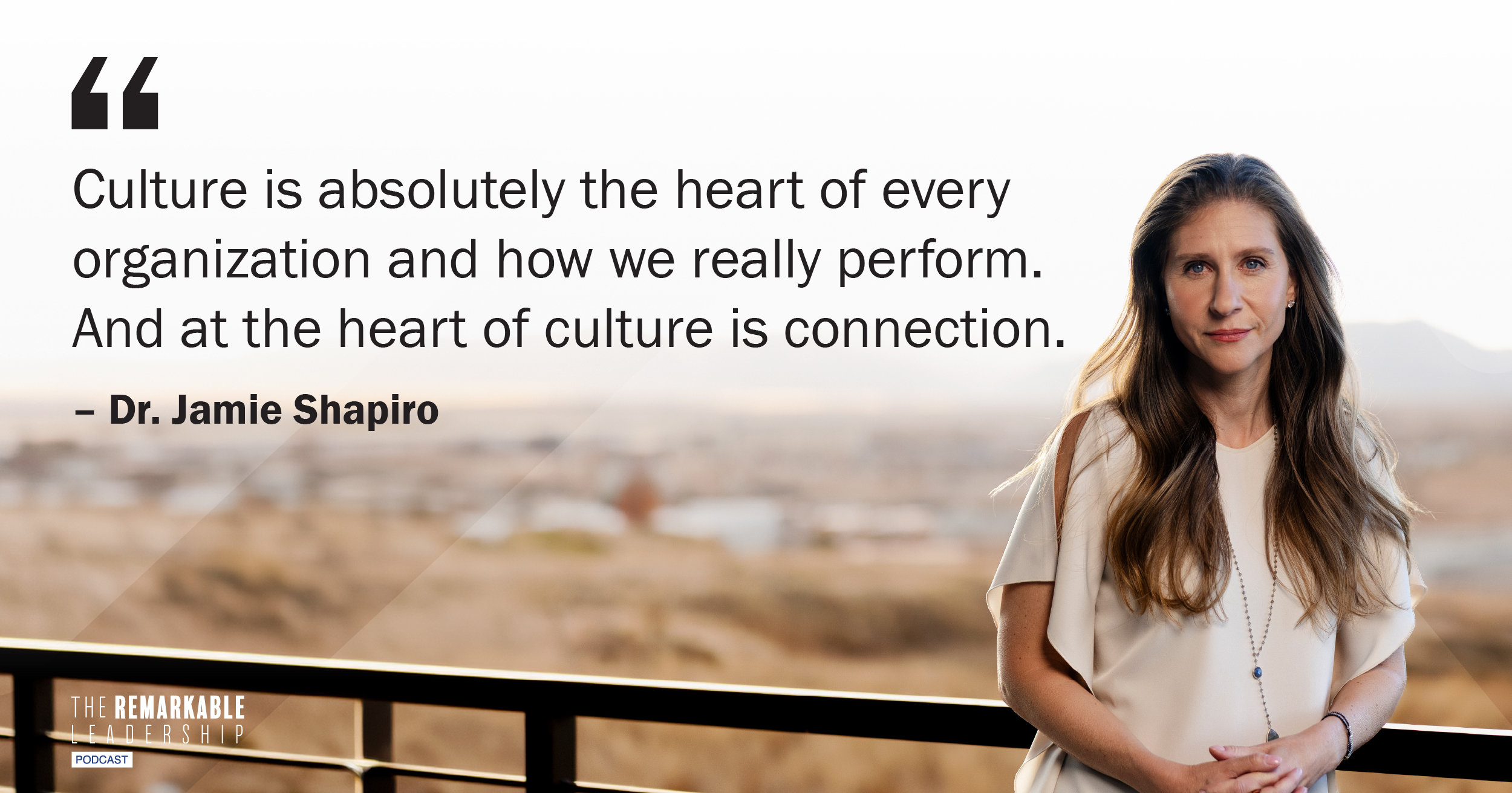
The big idea is that culture is absolutely the heart of every organization and how we really perform and at the heart of culture is connection, and that's the heart of our model. And people are always asking in every conversation and every relationship can I trust you? And do you care about me? And whether we're conscious of it or not, that is what we want to know.
00:04:11:02 - 00:04:19:21
Jamie Shapiro
And when we can answer yes to those things, that's what creates the highest performing teams and cultures. And yet it's the thing we don't focus on enough.
00:04:19:23 - 00:04:45:12
Kevin Eikenberry
And the more emphatic those yeses. Yes, the more successful will be. So, I have long said, in my work talking about culture and writing about culture, that my simple definition is that culture is the way we do things around here. Yes, you call it an operating system, which I absolutely love. So just talk about that, because we're going to get into the five seasons in which connection is one.
00:04:45:14 - 00:04:53:00
Kevin Eikenberry
Before we get there, tell me why you say, culture is an operating system and why you think that metaphor is helpful.
00:04:53:02 - 00:05:20:08
Jamie Shapiro
I think we focus a lot on operating systems in our business, right? We look at the processes and we look at how technology is integrated into our companies or how things flow from an information standpoint. And we're always saying, what's the operating system? Culture is the foundational operating system that we're not talking enough about. And sometimes when we talk about culture, we talk about the visible elements of culture, but we don't talk about the invisible elements of culture.
00:05:20:08 - 00:05:37:10
Jamie Shapiro
And every operating system has both. It's the behaviors. It's how we're interacting with each other. It's how work gets done. And if we start thinking about this as both the visible and invisible parts, not just the words we have on our web page or our wall, but the behaviors.
00:05:37:10 - 00:05:39:12
Kevin Eikenberry
They don't even really count. Let's be right.
00:05:39:14 - 00:06:02:00
Jamie Shapiro
It's the behaviors. And it's not just the behaviors we're living by. It's also the behaviors that we are willing to tolerate. Because culture is defined by the things that we are willing to tolerate as much as it is as the things we are willing to reward. And so thinking about culture as an operating system, to me, takes the invisible elements and starts to make them visible.
00:06:02:00 - 00:06:18:14
Jamie Shapiro
So we can say, yes, this is what our culture is. It's not just the words, it's not just the behaviors. It's every aspect of our company and how we get work to done together, how that's actually done. So that's why I call it an operating system.
00:06:18:16 - 00:06:31:19
Kevin Eikenberry
Awesome. So I want to get to the five C's okay. You said that at the heart of all of this is connection. So you defined it as care and trust.
00:06:31:21 - 00:06:32:05
Jamie Shapiro
Yes.
00:06:32:11 - 00:06:49:21
Kevin Eikenberry
That's how you talk about in the book is how you just said it here. And so, by the way, we use a very similar model UN trust, which made me happy, made me smile. Yeah. And you modified the original, and so did I. We built this for you differently. But that's okay. But I want to talk about the care part.
00:06:49:23 - 00:06:51:13
Jamie Shapiro
Yes. Yeah.
00:06:51:15 - 00:07:10:00
Kevin Eikenberry
Because you said earlier that, you know, we don't talk about culture enough, and yet some people probably are saying, holy crap, we talk about it all the time. And, I think you can say the same thing about trust about it enough. And yet someone say, and that's all we talk about. It doesn't mean we're getting better at either one of them.
00:07:10:00 - 00:07:14:15
Kevin Eikenberry
But. But one, we don't even talk. I'd say we don't talk about. Really?
00:07:14:17 - 00:07:36:19
Jamie Shapiro
Yeah, I we don't talk about that. Yeah. It's it really is the combination. Right. People want to know that you care about them mentally, physically, emotionally and that you're not just caring about their output, that you're not just caring about what they can do for the business, but you care about them as a human being. And I talk a lot about humanity in the workplace.
00:07:36:21 - 00:08:03:15
Jamie Shapiro
I am so grateful that we are more focused on that now than ever. And it's about bringing our whole selves and bringing our humanity back into the workplace. And that requires care. And I want people to understand that when we show each other care, it actually accelerates how we get work done together. It doesn't hold it back. And I think sometimes people will say to me, well, Jamie, if I have that conversation with that person, that takes too much time.
00:08:03:15 - 00:08:25:13
Jamie Shapiro
I don't have time to have all those conversations. And my response is, you don't have time not to have them, right. It's your job. It's your job, right? And I know from my research that when we take the time to develop those relationships, it matters to how we get work done. And I always ask people to think about this.
00:08:25:15 - 00:08:43:00
Jamie Shapiro
So I want you to think about the relations and relationships in your life that feel transactional. You know them. You know what they feel like. And I want you to think about the relationships that actually are founded. Interesting care. And I want you to think about this from the workplace perspective. Who are you more likely to collaborate with?
00:08:43:02 - 00:09:01:17
Jamie Shapiro
Who are you more likely to ask for help? Who are you likely to lean into? Who are you likely to go and pop into their office for a quick converse ation? You know the answer, right? And I can ask rooms of thousands of people this question who are you more likely to actually do work with? And it's always the relational people.
00:09:01:19 - 00:09:18:08
Jamie Shapiro
So why do we ignore this? Why do we get into these transactional relationships at work when we know that real work and productive work gets done when we're in relationship with people? And it's just something that I think is so important that we refocus on.
00:09:18:10 - 00:09:49:13
Kevin Eikenberry
I completely agree. The second. See, not just communication, candid communication. Yes. And this is perhaps where our psychological safety, you toss that out without earlier would show up. Other things that can show up here. The thing, I mean, this is something that we all kind of know what it is. Yes. And, so what I want to do, rather than sort of diving into sort of the general the answer to what is what do you mean by this?
00:09:49:15 - 00:09:56:07
Kevin Eikenberry
Yeah. Jamie, is to talk about one of the ideas you shared in it in this section of the book, which is idea meritocracy.
00:09:56:12 - 00:09:57:02
Jamie Shapiro
Oh, yeah.
00:09:57:02 - 00:10:05:01
Kevin Eikenberry
I've never heard it described. I don't think I'm going to I'm going to assume that those two words put together is yours. No, I love it.
00:10:05:02 - 00:10:08:16
Jamie Shapiro
No, I wish I could. It's really Ray Dalio and his concept.
00:10:08:16 - 00:10:09:12
Kevin Eikenberry
It's okay.
00:10:09:13 - 00:10:39:08
Jamie Shapiro
It's Ray. And I learned everything I know about idea meritocracy from Ray and his work. And here's what it is. It's that ideas can come from anywhere within the organization. And they are valued the same. And when we recognize that the best ideas in an organization are usually coming to the from the people who are closest to the customer, the member of the patient, whoever that is, whoever the business is serving.
00:10:39:10 - 00:11:04:11
Jamie Shapiro
That's when we start to see really great ideas to help the business move forward. The best ideas come from those people. And if you create a culture where you can have ideas come from anywhere and you value them the same, that's what idea meritocracy is about. And I want organizations to recognize the importance of this, because it is a really foundational part of candid communication, for sure.
00:11:04:11 - 00:11:27:21
Kevin Eikenberry
Because why would I be candid if I don't think you're going to value my ideas? Listen to my idea. Right. So, that's exactly right. Now, the third of your keys holds a special place in my heart, because I think it is something that is vastly missing, in our in our world, in our organizations, for sure. And that's clarity.
00:11:28:01 - 00:11:41:06
Kevin Eikenberry
Yes. You talk about goals and roles and expectations and workflows and all those things. But like, why is from your perspective, why is clarity so important as it relates to culture?
00:11:41:08 - 00:12:03:11
Jamie Shapiro
Great question. And what's interesting about the clarity ring of the model is that I did a lot of work in the research space, and clarity was one of the places that came more out of my practice than my research. I call myself a pro academic, so I'm a practitioner and an academic and clarity was the thing I heard the most in my practice that were lacking this.
00:12:03:11 - 00:12:21:17
Jamie Shapiro
It's frustrating. And the the metaphor I like to use, is if I was at a dog park and there were all these dogs hanging out and I threw a ball, all the dogs would start chasing that ball, right? And it would be wonderful chaos. That is so adorable in a dog park.
00:12:21:19 - 00:12:24:20
Kevin Eikenberry
Says the woman who has two dogs, two who has two dogs.
00:12:24:22 - 00:12:51:14
Jamie Shapiro
That is so expensive and business. And it is literally happening all of the time. We are putting goals out there. We are putting tasks out there and we have multiple teams running at them at once. Duplicative work is happening, frustration builds. It is so frustrating when you know you've been working six months on something and you find out another department has been working on the exact same thing, and now your work is actually not needed.
00:12:51:16 - 00:13:19:02
Jamie Shapiro
That is incredibly energizing. Demotivating creates lack of engagement. So we've got to get better at this because we've got to make sure and people get worried all the time that too much clarity creates bureaucracy. Our brains don't like uncertainty. The more certainty we can create in an organization, the more we can help people understand their lane, their roles, their responsibilities, the goals that we're aligned on.
00:13:19:07 - 00:13:30:03
Jamie Shapiro
The more we actually have more flexibility to move outside of our lane. And that's what I want organizations to understand is like, clarity doesn't hold you back. It actually creates more agility.
00:13:30:05 - 00:13:50:21
Kevin Eikenberry
100%. So so two comments. Number one is, I've, I've observed, a lot of bureaucracies and maybe that's supposed to be creating clarity. It isn't doing it there either. So let's just let that part go and then let me, let me make a, a more sort of down to earth specific sort of observation and something that I do with leaders all the time.
00:13:50:22 - 00:14:09:12
Kevin Eikenberry
I'd say. Have you ever had, a boss that you were working for and you didn't know? Exactly. Really didn't know exactly what they wanted? You didn't really know what was expected. And everyone will not have their head. And I say, so were you able to be your most effective and productive? And they'll neither had the other direction?
00:14:09:12 - 00:14:15:12
Kevin Eikenberry
Because, of course, not because you're spending some or a lot of your time just trying to figure that out.
00:14:15:17 - 00:14:16:07
Jamie Shapiro
Exactly.
00:14:16:09 - 00:14:27:00
Kevin Eikenberry
Doing the work. So I tell leaders all the time that, you know, nine Kevin's belief is 95% of people want to do great work 95% of the time.
00:14:27:02 - 00:14:27:18
Jamie Shapiro
I couldn't agree.
00:14:27:18 - 00:14:38:00
Kevin Eikenberry
More. Now the expectations defines the great work. And so if they don't know what that is, how can they possibly.
00:14:38:02 - 00:14:38:22
Jamie Shapiro
Yes.
00:14:39:00 - 00:14:51:23
Kevin Eikenberry
It's not possible. It's just not possible. And then then you you call it a force multiplier. So as we pulled that across the entire team or across the entire organization, we're back to the we're back to the chaos with the dogs and the ball.
00:14:51:23 - 00:15:24:15
Jamie Shapiro
Yes, exactly. One of my dear friends, Doctor Jessica Diaz and I were talking the other day, and she said something that landed with me so deeply. She said, leaders need to get so clear on the what and so expansive on the how. And I thought that was such a brilliant way to think about things. If we can get really clear on what success looks like, what our expectations are, but really understand there are multiple ways to get there and be a little more free with people and empower them on the how that's going to create the best work.
00:15:24:15 - 00:15:37:14
Jamie Shapiro
And so when I think about clarity, clarity is all about making sure we're really clear on what success looks like, what we are going to do to get there, and then giving people the freedom and the empowerment to do so.
00:15:37:16 - 00:15:42:18
Kevin Eikenberry
I'm going to I love that I'm going to add something to it, and I'm going to say, we got to add y oh.
00:15:42:18 - 00:15:43:10
Jamie Shapiro
Amen.
00:15:43:12 - 00:16:08:17
Kevin Eikenberry
So because here's the thing. If we give people what and why, yes, then it's far easier to trust them with how the reason we micromanage is what they don't really like. Well, they just don't quite get it because you haven't helped them get it. You don't give them what and why. Yes. When you give them what and why, it's much easier, even if you want to hold it yourself, it's much easier to let go of how.
00:16:08:19 - 00:16:13:04
Kevin Eikenberry
Yes, what ends up happening is how and what are the same.
00:16:13:05 - 00:16:15:01
Jamie Shapiro
Yes, you are so right.
00:16:15:06 - 00:16:17:23
Kevin Eikenberry
The only way is to do it the way I do it.
00:16:18:01 - 00:16:31:21
Jamie Shapiro
Yeah, you are so spot on. And the why? And this. I won't jump ahead in the model. But when we understand the impact, when we understand the why, that's where our greatest motivation comes from. So I won't jump ahead. But I couldn't agree on that.
00:16:31:22 - 00:16:35:00
Kevin Eikenberry
We're going to skip one and come back because that's my contribution. Right.
00:16:35:05 - 00:16:36:04
Jamie Shapiro
That is.
00:16:36:06 - 00:17:02:09
Kevin Eikenberry
And so like what I love about the word I love the word contribution. I love the idea of the word contribution. It is that it's not as overused as some of the other words that we put in here often. And, I think all of the great work that's been done by Gallup and others around engagement, which is great work.
00:17:02:10 - 00:17:03:09
Jamie Shapiro
It is great work.
00:17:03:09 - 00:17:23:20
Kevin Eikenberry
We've we've diluted, we've diluted, not diluted, we've diluted the meaning of that word engagement. And we've also sort of spread it across everything. And if we can, if we can say, hey, if people see how they're contributing, they're going to be engaged, they're going to choose.
00:17:23:21 - 00:17:24:06
Jamie Shapiro
Yes.
00:17:24:08 - 00:17:28:06
Kevin Eikenberry
The the choice they're making is not something we're doing to them. It's a choice they're making.
00:17:28:08 - 00:17:57:20
Jamie Shapiro
Yes. And people do great work not because you tell them to, but because they understand the impact of it. And if we could get better at the why, which is what you said, if we can really explain the impact, if we can find different ways to show people how they matter, why they matter, and how their work impacts the people that they're serving, oh my goodness, just what we've seen, not only in practice but in the research performance goes off the charts, but we are not doing that enough.
00:17:57:20 - 00:18:11:22
Jamie Shapiro
We are not helping people understand the why or seeing their impact. We're losing connection throughout the organization to that person who's getting served by the organization, and that's a huge problem.
00:18:12:00 - 00:18:35:10
Kevin Eikenberry
So you said something that's really important. I mean, you said a lot of stuff's important, but you said something really important is the how does it impact the individuals and that but that's not just the customer, although it's important with the customer. It's also, the problem we have as leaders, especially if we're further up, you know, if, you know, we're in the C-suite where you're the senior leader, is that that stuff's all obvious to us.
00:18:35:12 - 00:18:50:23
Kevin Eikenberry
Yes. And we I think we even if we get past that and we're pretty good at the capital. W-why? We're not very good with the lowercase y, which is how is it going to impact the person down the hall?
00:18:51:04 - 00:18:51:16
Jamie Shapiro
Yes.
00:18:51:16 - 00:19:06:08
Kevin Eikenberry
How's it going to impact the person that I know in this other department? Right. Like it's not it is the customer. Yeah, 100%. But it's also the internal customer. It's the colleague. It's the which is going to take us partly back to our other going to go back.
00:19:06:09 - 00:19:06:19
Jamie Shapiro
Yeah.
00:19:06:19 - 00:19:09:13
Kevin Eikenberry
Well but you want to comment on that.
00:19:09:15 - 00:19:35:10
Jamie Shapiro
I couldn't agree more. And when we have people who are thriving in an organization and feel like they matter to each other and that their work matters, that's when we're going to see the greatest results in an organization, and we don't focus enough on the internal customer and the external customer, and how we are supporting and collaborating together.
00:19:35:14 - 00:19:58:04
Jamie Shapiro
That is something that if we got better at as an organization, we would again see our results soar. And these are the reasons we've got to focus on culture is these things matter. They matter not just. But it's not that we're just trying to create thriving workplaces. We are, but ultimately thriving workplaces create thriving businesses. And that's what we're after.
00:19:58:06 - 00:20:05:06
Kevin Eikenberry
Yeah, it's if we can have a thriving business without a thriving team, kind of who cares? It's just that we can't we can't.
00:20:05:08 - 00:20:05:16
Jamie Shapiro
Just not.
00:20:05:16 - 00:20:28:22
Kevin Eikenberry
Possible. Exactly. I love this conversation because it's talking about how these things are all interconnected, right? Because if we get that, if we get that, if we get the contribution part right, especially my language now lowercase y, it helps with candid communication. It helps with clarity. It does all that. And and but we've we've got to see we haven't talked about yet and it's.
00:20:28:22 - 00:20:36:11
Kevin Eikenberry
Yes collaboration. Yes. And I want to start here by having you talk about you say collaboration and teamwork aren't the same thing.
00:20:36:13 - 00:20:53:06
Jamie Shapiro
Yeah I think teamwork. And so listen they can be it's so interesting that with language right. You can say collaboration and teamwork are the same. And I just get really specific. That's part of my academic side, is that I want to get really specific with words. And when I'm talking about teamwork, I'm really talking about all the C's.
00:20:53:08 - 00:21:14:06
Jamie Shapiro
When I'm talking about collaboration, it's how people are working together. How are they supporting each other? How are they driving for accountability and excellence together? What does that look like? So while you could use these as Cinnamon M's, in my world, I really try and just get really specific on this is the word I'm using and this is how I'm using it.
00:21:14:08 - 00:21:17:09
Jamie Shapiro
So that people understand that distinction.
00:21:17:11 - 00:21:35:06
Kevin Eikenberry
So there was lots of conversation in the world, in the working world, in the, in the, post. I mean, we are post Covid, but in this sort of more immediately post Covid era. Yes. Right. Which said, like if we want collaboration, they have to be together physically physical proximity.
00:21:35:10 - 00:21:35:18
Jamie Shapiro
Yes.
00:21:35:18 - 00:21:39:23
Kevin Eikenberry
Our thoughts about that agree disagree I disagree.
00:21:40:00 - 00:22:06:04
Jamie Shapiro
Listen, I, I study human energy for a living, so I understand the importance of being in proximity with each other. And there's no substitute for that human to human connection in person. But that doesn't mean that we can't create it in virtual environments as well. Does it take more intentionality? Yes it does. And do we need to be really thoughtful about how we do it and, you know, making sure we're creating the space for it?
00:22:06:04 - 00:22:38:09
Jamie Shapiro
Absolutely. But we can create deep connection with each other. We can collaborate with each other in virtual environments. We just have to focus more and be more intentional about what that looks like and creating the space for it. And the companies that I think are doing it really, really well have created a hybrid approach. And that looks different for every organization, some organization, it looks like, hey, we're going to be mostly virtual because we've seen the benefits of it, and we're going to create these moments that matter in person.
00:22:38:11 - 00:22:59:04
Jamie Shapiro
That's great. We've also seen companies that have figured this out in a different rhythm and cadence that's working for them. So I think it's very specific for industry company size, trying to figure out what matters. What I don't want companies to do is try and press the easy button, because there is no easy button anymore. And that's the mistake that I've seen where it's like, we're all in the office.
00:22:59:04 - 00:23:10:18
Jamie Shapiro
That's the easy button. Oh, but half of the meetings, you're actually still on virtual costs and everybody's got their door shut and on their computer. That is not what we're after.
00:23:10:20 - 00:23:13:17
Kevin Eikenberry
So that's what we're getting. That's exactly what we're getting.
00:23:13:17 - 00:23:27:08
Jamie Shapiro
We're getting a lot of that. And that's that's the lack of intentionality. That's the lack of understanding. If you want to create powerful connection, you gotta think through how you create that connection. And it's not the easy button. It's just not.
00:23:27:11 - 00:23:51:12
Kevin Eikenberry
Unfortunately, as we're having this conversation in June. Yeah. You're not supposed to do this on a podcast as we're having this conversation on in June of 2026. And if you are, if you are a subscriber to the podcast, which you should be and you're listening to this in August of 26, like it's it's almost seems to be imperative that the question of AI should show up.
00:23:51:14 - 00:24:01:16
Kevin Eikenberry
Oh yeah. You have a you have a belief that culture can be a competitive advantage in the absence of AI.
00:24:01:18 - 00:24:02:10
Jamie Shapiro
Absolutely.
00:24:02:10 - 00:24:03:23
Kevin Eikenberry
I would you say that.
00:24:04:01 - 00:24:36:21
Jamie Shapiro
Well, I think when we have created a culture that is thriving with all the things we've been talking about psychological safety, trust and care, we are willing to embrace things and try things and learn things because we've created a learning based culture. When we've done the opposite, when we've created a lot of fear in a system, and you introduce a new technology like AI and say, hey, everybody, just try this out, you are going to get an unbelievable amount of resistance because people aren't willing to take the risk around it.
00:24:36:23 - 00:24:59:12
Jamie Shapiro
So when you've created a thriving culture where people feel safe sharing ideas with each other, taking risks with each other, being vulnerable and open, what happens is we start the mindshare. And that's what I've seen with AI organization, is that have a thriving culture. They're trying new things, they're sharing new things. They're willing to say, hey, I just used AI for this.
00:24:59:12 - 00:25:21:01
Jamie Shapiro
What do you all think? Instead of the opposite, where people are doing the shadow AI, right. They're using it on the side. They're not telling anybody. They're using it here. Like it just it becomes very unhealthy. And then we also see a lot of resistance. The other thing that really high performing cultures understand is that language matters and how we talk about things matters.
00:25:21:03 - 00:25:45:23
Jamie Shapiro
And when you look at what's going on in the media and in organizations right now, there is a lot of fear based language around AI. And that is causing a big problem. And so I talk a lot about in my work. How do you talk about AI from an elevation perspective? How are we elevating people, not eliminating people with AI?
00:25:45:23 - 00:26:11:03
Jamie Shapiro
Because I think there's an incredible, incredible unlock with capacity when we start using these tools to actually create more human human connection and have AI doing the cognitive load that is linear and not needing the human to human connection. So I'm excited about what I can do, but we've got to think about how are we using it and how are we talking about it.
00:26:11:05 - 00:26:34:03
Kevin Eikenberry
It's so interesting. As as you and I are having this conversation live earlier today on our team meeting, we're we're doing a book club on a book, and I'm going to turn the book. It's almost timeless. 48 Foundational Principles of generational of generation generative AI. And it's and and for our team, which we've been working on just for a long time, like the part of it is.
00:26:34:03 - 00:26:47:23
Kevin Eikenberry
And I told people before we started, like part of this book is going to be like, okay, we know this, we know this, we know this. One of the observations that we made today is that even though it's a bunch of us that we know there's a whole lot of people that don't even know, like principle one, let alone principle 48.
00:26:48:01 - 00:27:06:14
Kevin Eikenberry
And, but everything you were just saying is what we're doing in this conversation. And you know what surprised it was surprising us. What what are we what are we doing? Or how can we learn from what we're learning in this book and all this other stuff? But I ended I mean, I flipped it because we talked about what's exciting, how can we use this?
00:27:06:16 - 00:27:29:10
Kevin Eikenberry
And then I said, but what's scaring you? Right. And there is so much of that language we do and and listen, there are, you know, there are opportunities and there are threats. And, and we talked about both and I think that, you know, this happens to be we've been working on it and our team for a couple of years, two and a half years, and sort of very significant ways.
00:27:29:10 - 00:27:36:07
Kevin Eikenberry
But this book is helping us continue that conversation. And however you're doing it in your organization, I encourage you to do that.
00:27:36:12 - 00:27:56:06
Jamie Shapiro
Yes. One of that's wonderful. And one of the things I always say is never, ever in the history of me doing this, have I gone into an organization and someone has and said, we don't have enough time and resources, right? They just never it's just never been out of someone's mouth. And so how do we use AI to help with that problem?
00:27:56:08 - 00:27:57:17
Jamie Shapiro
That's what I want to focus on.
00:27:57:18 - 00:28:02:04
Kevin Eikenberry
Exactly. Like no one is worrying because their To-Do list is empty.
00:28:02:05 - 00:28:20:04
Jamie Shapiro
No, never. I have never heard someone said, you know what? I have so much time, Jamie, I'm going to go journal today and relax for an hour because that's how much space I have in my calendar. Never, ever I I've been doing this for a very long time. So of you, we don't hear those statements. And so I want us to think about AI that way.
00:28:20:04 - 00:28:27:11
Jamie Shapiro
How do we help? I solve for the busy badge that we all have on,
00:28:27:13 - 00:28:55:18
Kevin Eikenberry
That man that that right there. I'm going to predict that Marissa is going to make that a clip, but that's going to be a clip right there. Because because you're absolutely right. 100% right. Before we go, I want to ask you a question. The only thing well, I have to do one more thing is, okay, if you could tell, whether whether it's a CEO, this listing, or maybe it's the head of Ellen or the head of H.R.
00:28:55:20 - 00:29:05:12
Kevin Eikenberry
Like, what's one thing that you would encourage senior leaders to be thinking about in this area right now?
00:29:05:14 - 00:29:10:11
Jamie Shapiro
Connection is the hardest business goal. Stop.
00:29:10:13 - 00:29:22:01
Kevin Eikenberry
Okay. I love that, and I agree. So the question you knew I was going to ask is, what are you reading?
00:29:22:03 - 00:29:43:14
Jamie Shapiro
So I was thinking about all the different things that I'm reading, and, I read a lot of research. I had the joy of reading, someone's research yesterday that was so intellectually dense. It was like I needed popcorn to get through. Is so great. So I do love reading, research, and, really understanding what's the science right now.
00:29:43:14 - 00:30:05:09
Jamie Shapiro
And I like staying on the cutting edge of that. I also, I, I've been speaking a lot more lately, and so I just read the book The Referable Speaker, which I thought was absolutely fantastic for people who are out there speaking on a regular basis, understanding, you know, what keynote speaking is all about and how to deeply impact audiences.
00:30:05:11 - 00:30:27:11
Jamie Shapiro
And then I also recently, you know, I, I work with CEOs and so I like to read any book that's coming out about being a CEO. So I just read the book as CEO for all Seasons as well. And and I'm a very I love reading. I'm very woo I'm science and woo. So I love reading, any, any kind of woo book out there as well.
00:30:27:13 - 00:30:48:08
Kevin Eikenberry
All right. Well, you're in Colorado, so. Yeah. Okay. Thanks. So, listen, we all have links to those books as well as, as well as Jamie's book Connected Culture on, the show notes in the show notes, if you'll you'll take advantage of those. Before we go, Jamie and I'm going to hold the book up for those watching while you answer.
00:30:48:10 - 00:30:56:12
Kevin Eikenberry
Where, where can where do you want people to go? How can they connect? Where do you want to point them? Anything. Here's Jim.
00:30:56:14 - 00:31:20:15
Jamie Shapiro
Thank you. Well, we have a ton on our website connected ecom. You can also buy connected culture anywhere you buy books. So Amazon, Barnes and Noble, target, Walmart and I'm on LinkedIn a ton. So if you want to connect on LinkedIn, I absolutely love connection obviously, and would love to connect with you on LinkedIn as well.
00:31:20:17 - 00:31:42:12
Kevin Eikenberry
Those links will be in the show notes too. So please take care. Take the chance to do those things. So before I say goodbye to Jamie, before I say goodbye to you, I have a question for you. My dear listener and viewer. It's a question I ask you every single episode. It's simply this. Now what is simple to say?
00:31:42:12 - 00:32:06:00
Kevin Eikenberry
It's just two words, but it's more important that you take action on something you got today, rather than just saying, oh, that was good. Oh, I agree with that. Or I'm not sure about that, but rather what action will you take as a result of today? Because if you do, when you do that, this will have been of far more value to you and have more.
00:32:06:02 - 00:32:23:12
Kevin Eikenberry
You'll get more return on the investment of your time that you've invested with us. And we thank you for doing exactly that. So I hope that you will take action on what you got. Starts with that question. Now what? So, Jamie, thank you for being here. It's a pleasure to have you.
00:32:23:14 - 00:32:25:22
Jamie Shapiro
It was so much fun, Kevin. Thank you.
00:32:26:00 - 00:32:40:21
Kevin Eikenberry
And so, everybody, Jamie had fun. I hope you did, too. Which means that you probably want to come back. Right? So make sure you're subscribed so you can come back and you won't miss any future episodes of the Remarkable Leadership podcast.
Meet Jamie

Jamie's Story: Dr. Jamie Shapiro, author of Connected Culture: The New Science for Thriving Teams and Cultures, is a CEO coach and organizational psychologist. She is the founder and CEO of Connected EC, a leadership coaching firm known for its team-based, whole-person approach to developing executives and transforming corporate culture. A Master Certified Executive Coach, professional speaker, researcher, expert facilitator, and certified nutritionist, Jamie brings a deeply integrated lens to leadership. She holds a PhD in Positive Organizational Psychology, an MBA, and a Master of Science in Information Technology, reinforcing her evidence-based, practical approach to executive performance.
Follow The Remarkable Leadership Podcast


Want More from Your Podcasts?
If you want more from every podcast episode you listen to, not just this one, grab my free guide, How to Get More from Podcasts.
Book Recommendations
Like this?
Join Our Community
If you want to view our live podcast episodes, hear about new releases, or chat with others who enjoy this podcast join one of our communities below.
Leave a Review
If you liked this conversation, we'd be thrilled if you'd let others know by leaving a review on Apple Podcasts. Here's a quick guide for posting a review.