How can leaders adapt their approach to give people what they need in each specific situation? In this episode, Kevin is joined by Suzie Bishop and Sam Shriver to revisit situational leadership and discuss why this decades-old model may be more relevant than ever. They explain how effective leadership begins by clearly identifying the task, skill, or behavior involved, then assessing an individual’s ability, confidence, commitment, and motivation before choosing the right leadership response. Kevin, Suzie, and Sam discuss why no leadership style is inherently good or bad, how empowerment can feel like abandonment and direction can feel like micromanagement when misapplied, and why leaders must step beyond their comfort zones to serve others' needs.
Listen For
0:00 Why Situational Leadership still matters after 50 years
3:13 Why write this book now
5:17 The big idea: adaptability
6:50 What "situational" actually means
8:11 How the model got typecast — and where it's expanded
12:55 The primer: task, readiness, and the R1–R4 scale
15:49 Where leaders get "style" wrong
23:15 "Power is the battery of leadership"
25:56 Leading through disruptive change
28:34 Situational leadership in the age of AI
32:12 The best next step for your organization
36:11 What are you reading?
00:00:08:10 - 00:00:30:20
Kevin Eikenberry
As we are in our 11th year, it seems that fitting that we talk about something that's been around much longer than that situational leadership specifically, even if you don't know much about it. And if you don't stick around and you will, you've likely heard of it. Situational leadership. And if you have learned about it and used it, you know how valuable it is.
00:00:30:22 - 00:00:54:10
Kevin Eikenberry
Today, we're going to refresh and refocus on the methodology and talk about how it is as relevant now as ever. Welcome to another episode of the Remarkable Leadership Podcast, where we are helping leaders and organizations grow and lead more effectively and make a bigger difference across their teams, communities, and the world. If you are listening to this podcast, you could join us in the future.
00:00:54:10 - 00:01:16:23
Kevin Eikenberry
Live on your favorite social platform. You can find out about when those live future episodes are happening, and so you can interact with us and see them sooner by joining either our Facebook or LinkedIn groups. Just go to remarkable podcast.com/facebook or remarkable podcast dot coms LinkedIn to learn more and get in the know. And before we get started in, I introduce our guests.
00:01:16:23 - 00:01:42:15
Kevin Eikenberry
I want to give you, a way to get more from this episode and any other podcast you listen to by downloading our short practical action guide. Just go to Kevin. I can pre-comp get more. You can even pause right now and go do that and use the special the special guide before we get started today, my guests are let me bring them on stage with me and let me introduce them to you.
00:01:42:18 - 00:02:07:07
Kevin Eikenberry
My guests today are Susie Bishop and Sam Shriver. They're the authors of Situational Leadership, the model for leading others, navigating change and unlocking performance. Susie is an established leader in the workplace education and leadership development, currently serving as Vice President of Product Development at the center for Leadership Studies. She holds a bachelor's degree in Communication and Media from North Carolina State University.
00:02:07:08 - 00:02:35:12
Kevin Eikenberry
She's a certified professional in training management and a stakeholder centered coach. She's also a marshall Goldsmith 100 coach and a 30 under 30 leader recognized by Elliot Macy. Sam has over 45 years of experience with situational leadership, executive coaching, human behavior, and leadership development in general. He's a frequent contributor to industry publications and coauthors. A leadership column with Marshall Goldsmith for the Training History Magazine.
00:02:35:18 - 00:02:55:15
Kevin Eikenberry
He publishes regular blogs, whitepapers, and articles. And in addition to spearheading all of the research initiatives he's involved in, he's designed, developed and delivered over 200 custom leadership programs. So, Susie and Sam, welcome to the show. We had a great time chatting before we went live, and I'm excited to have you here.
00:02:55:17 - 00:02:58:12
Sam Shriver
Thank you Peter. Thank you very much.
00:02:58:14 - 00:03:13:16
Kevin Eikenberry
All right. Well, it's we should probably dive in with the most of what? Sam, I'm going to have you ask this question. Answer this question. I guess the question is, situational leadership been around a long time? Why do we write a book about it now?
00:03:13:18 - 00:03:18:15
Sam Shriver
Okay. I was really hoping for an easier question coming out of the gate here, Kevin.
00:03:18:15 - 00:03:22:02
Kevin Eikenberry
But if I can't ask the author why the book?
00:03:22:04 - 00:03:42:02
Sam Shriver
Yeah, you got you got to ask that when you're right, but I, I think I think that the main thing is it's kind of, embedded in your question. It's how could, a model that was developed over 50 years ago. Okay. Introduced over 50 years ago in the book Management of Organizational Behavior. And it's been around all of that.
00:03:42:04 - 00:04:06:20
Sam Shriver
How could it possibly still be relevant? And how could a book, you know, that that was written literally in the early 1970s still be relevant? And I think what we at least attempt to do, I think we do a good job of it in the book, is saying that the situation of leadership is probably it's never been more relevant than it is today.
00:04:06:22 - 00:04:30:13
Sam Shriver
And it's it's more relevant today because of the connection between leadership and change. I was on your website and read a recent article that you had on change, and it was a very good one, for what it's worth. But but the more you you, you are embedded in change. And who isn't right? Well, the more you care about leadership, because that's what leadership does.
00:04:30:14 - 00:04:57:00
Sam Shriver
It's kind of a language of and the pace of that change used to be far different. And now it's just, you know, wildly aggressive with no end in sight. So the more you are in a position where you have to influence others through this thing called change, the more relevant a concept in a book like Situational Leadership is.
00:04:57:02 - 00:05:17:05
Kevin Eikenberry
I love that. I often say that leaders are in the business of change and, and and that business is more complex now than ever. As you said, Sam, with so much change going on. So. So, Susie, from your perspective, what's the big idea? And perhaps Sam talked about this a little bit, but what's the biggest idea of the book?
00:05:17:07 - 00:05:42:01
Suzie Bishop
Yeah, I think the big idea is just adaptability and that we all have our comfort zone. We all have what we call our natural style, which we might get into. But because of the pace of change, because of the needs of others and because of our view of it's about giving others what they need to be more successful, you have to learn how to adapt for a particular situation.
00:05:42:03 - 00:06:05:21
Suzie Bishop
So how do you give a person what they need when they need it for a specific task? That takes a lot of self-awareness around, you know, your natural tendencies, but it also takes awareness around the other individual in getting to know and diagnosing what their needs are. So really adapting to that particular situation is the big idea.
00:06:05:23 - 00:06:26:21
Kevin Eikenberry
I find it really interesting because you all might know, but listeners may know that my last book is called Flexible Leadership, and I often talk about it as sitting on the shoulders of flexible leadership. In some ways. And what I noticed in your conversation just now, Suzy, and in the book is that you use the word adapt a lot or adaptable a lot.
00:06:26:21 - 00:06:50:13
Kevin Eikenberry
I use the word flexible. Same idea. And in both cases it's talking about adapting to the situation. So when if we're going to talk about situational leadership and I'll let either of you take this, whoever wants if we're talking about situational leadership, what are the situations we're talking about here?
00:06:50:15 - 00:07:16:07
Suzie Bishop
Really can be anything. It can be a workplace situation. It can be when things are going really well, it can be when a change came into play. It can be, outside of the workplace, in your community. It can be at home, it can be with your kids. It can be in any particular situation where two people are in dialog and you're trying to influence the other individual.
00:07:16:08 - 00:07:29:14
Suzie Bishop
And if that's the situation, Sam would love to hear your your thoughts on that one or maybe make it a little bit more specific, but the situation is the context in which we're sitting in and having dialog with one another.
00:07:29:16 - 00:07:38:12
Sam Shriver
Yeah, I was definitely going to cut in here because you answered two questions in a row and I was the member of the panel. No, but I think,
00:07:38:14 - 00:07:41:12
Kevin Eikenberry
Well, I can see how this author, they're.
00:07:41:15 - 00:08:11:08
Sam Shriver
Like a little, coauthor banter or. No, but I, I think, you know, you know, like, what is the situation? And I think if you take a look again, back to your first question to me about the 50 years, I think historically, situational leadership has kind of been typecast. And in this thing where there was a manager that had position, power and control and what they were doing was accelerating the development of somebody that was in charge of technical skills and individual contributor.
00:08:11:10 - 00:08:37:04
Sam Shriver
So we were trying to teach a salesperson how to sell. We were trying to teach somebody how to do a task right. And and I think for many years, kind of situational leadership got typecast that into that. It was just for frontline managers and it was just for them kind of getting people up to speed, you know, on on what they were doing, getting them to the point where they were able and willing to do what they were supposed to do.
00:08:37:06 - 00:08:55:08
Sam Shriver
But but I think it is as far expanded as Suzy has mentioned. I mean, you know, today it's it's about a lot of the human skills. It's about coaching people on on how to be better team players, how to resolve conflict, how to listen to other people. You know, how to be a team player. What does that really mean?
00:08:55:08 - 00:09:17:05
Sam Shriver
Let's break it down. So it's all that working together stuff. I mean, those are tasks. Those are those are things that a leader can and should, you know, focus attention upon. And we define, you know, in the book is what's leadership? Everybody has the definition of it. Right? So ours is you know, leadership is a is an attempt to influence.
00:09:17:05 - 00:09:45:11
Sam Shriver
That's what it is. And by its very nature, that's a multi-directional answer. So that certainly includes top down. You know that if you're the boss and you have people that report to you at this, you know, situational leadership can help you. But boy oh boy, with ever increasing regularity, it's it's about how do you influence your peers, you know, how how do you influence people in an organizational setting that you don't have, quote unquote, control over or position power over?
00:09:45:13 - 00:10:08:18
Sam Shriver
And so much more of our emphasis in this book. And I think in, in real life leadership is, boy, how do you tell your boss something? How do you influence up? And I know that's that's kind of been a topic for for a number of years, but it's getting real now. And I think it's getting real big because nobody has answers like we're involved in sets of circumstances.
00:10:08:18 - 00:10:34:14
Sam Shriver
Any disruptive changes, as you've talked about in your article where it's like nobody knows the playbook, nobody knows. Okay, here's what we do. Here's this change. Okay. This is this is so ideas and emphasis in many cases for, you know, the solution to problems. It comes from the base of the organization. You know much more than it does from somebody sitting in a managerial position.
00:10:34:16 - 00:10:56:11
Sam Shriver
And the more you can free people up to feel safe to lead, even though it's in a very nontraditional, hierarchical setting. Well, the better off you're going to be. So leadership is all over the place, right? In situations. You know, it's it's almost like there's, you know, almost an infinite number of situations that you could find yourself in.
00:10:56:17 - 00:11:06:18
Sam Shriver
But pinpointing that is so key and it's where the model starts. What is the task? How do we put parameters around what we're going to focus upon?
00:11:06:20 - 00:11:25:08
Kevin Eikenberry
I want to get to a, a short primer, on on the model in a second. But I want to I want to highlight something that I read will be one of the things that I remember from the book, because it talks about something I talk about, you quote Paul Hershey, one of the one of the creators of situational leadership, with this.
00:11:25:08 - 00:11:46:22
Kevin Eikenberry
And he said it in a different way than I say it, but we're saying the same thing. He said. Leadership is a function of a whole bunch of stuff. And basically what that whole bunch of stuff is, is context. Yeah. Right. And and Sam, I think what you said, we're saying in some ways is that the context that many people have thought about situational leadership has been, more limited than it needed to be?
00:11:47:00 - 00:12:04:21
Kevin Eikenberry
Not because it was built that way, but that's sort of how people started to frame it. But we live in a world where context matters greatly. We talk about it in AI, we talk about it in all sorts of stuff. And and if when we get the context right, it makes everything else go a whole lot easier.
00:12:04:21 - 00:12:30:10
Kevin Eikenberry
And, and at some level, that's the underpinning of, of situational leadership for me, for for Kevin, I'm not not the author's. Everybody that's Kevin's thought about that. So, in this back and forth, I'm going back to Susie. Sam, I hope that's okay. So, Susie, if we're if we're going to. And this is dangerous, everybody, if I'm going to ask the authors of a book about the about their model, it could take forever.
00:12:30:10 - 00:12:33:06
Kevin Eikenberry
So I'm going to I'm going to.
00:12:33:08 - 00:12:37:10
Suzie Bishop
Go to the one who's more, likely to answer with brevity.
00:12:37:15 - 00:12:55:21
Kevin Eikenberry
And that's well, I wasn't I wasn't going there. But but as a primer of situational leadership, there's basically two dynamics. There's, there's performance readiness and task and support of behaviors in that context. Susie, talk about what it actually is.
00:12:55:23 - 00:13:24:09
Suzie Bishop
If you and so task like Sam described truly can be a technical task. But it's so much broader in terms of task and also be a behavior like how you show up to meetings may be inappropriate or doesn't fit the culture. And I need to have a conversation with you about that, or it can be a skill I need you to develop, you know, more collaborative behaviors or to work within the team, you know, things like that.
00:13:24:10 - 00:13:54:00
Suzie Bishop
More assertiveness. So you can pull in people's emotional intelligence assessments or so tasks can be truly a task, a behavior or a skill for that particular task. We looked at performance readiness, which is the combination of their ability and willingness. So we put that on a scale from what we call R1 to R4. So if you are an R1 you would be unable, unwilling, insecure.
00:13:54:06 - 00:14:18:12
Suzie Bishop
And then that develops throughout the continuum until you get to R4, which is you're able, willing and confident. And so that spectrum, as Sam was also talking about typecasting, nothing is good or bad. None of us are R4 for everything. None of us are R1 or anywhere in between for everything. It depends on that task, skill or behavior.
00:14:18:12 - 00:14:46:13
Suzie Bishop
So it's most important to never put anybody in any of those boxes. Kevin's not my star R4 Sam's not like a man. He continues to be an R1 for, it's it's a continuum. It depends on a particular task. And then you get into the leadership styles. After you diagnosed that situation and diagnosed that readiness to know how you should adapt or flex into the proper style as a leader.
00:14:46:15 - 00:14:58:21
Kevin Eikenberry
And so we so what you're saying, Susie, is we need to lead differently based on what people's, readiness is for any given task, behavior or skill.
00:14:58:23 - 00:15:00:22
Suzie Bishop
Yeah, we're talking about recognizing.
00:15:01:00 - 00:15:03:14
Kevin Eikenberry
All right. What a shocking idea. But, you know, 50 years.
00:15:03:14 - 00:15:07:22
Suzie Bishop
Ago, a little bit of golden rule in there. Oh, sorry. I talked over there, you.
00:15:08:02 - 00:15:29:20
Kevin Eikenberry
Know, but but like 50 years ago, that was kind of a shocking idea, right. I'm going to go to the elder statesman now, Sam, and I want you. And you asked me. You asked me when we. Before we went live and what my favorite chapter was. And I said my favorite chapter. And as soon as you just mentioned the word styles, my favorite chapter was a chapter on leadership style.
00:15:29:22 - 00:15:49:11
Kevin Eikenberry
So. So, Sam, since Susie teed us up, talk about what the model tells us about style and how we and I'm saying we mean the three of us and people like us have screwed this up for a long time.
00:15:49:12 - 00:16:19:08
Sam Shriver
Yeah, well, I'm very glad you came to me with a question on how we screwed things up, because, you know, during my career, I'll tell you, nobody screwed it up more than me. But I think that the the message that we're trying to get across. And you're right, it's common sense. And it's a lot of people have said it's unfortunate that common sense isn't common practice, but, as it applies to styles, you know, there's there's no such thing as a good style or a bad style.
00:16:19:08 - 00:16:56:06
Sam Shriver
Empowerment is great, right? Except when it is, then it's perceived as abandonment. You know, giving people direction is wonderful, you know, unless it's perceived as micromanagement. Participating with people and talking things through and coming to some sort of a consensus is it's great. You know, as long as it's not perceived as manipulation. So whatever it is you're doing as a leader, and this is the thing I think we got wrong historically, but, you know, quite naturally, by the way, I'll explain that in a second, but but it's like when you're a leader, you think the world revolves around you.
00:16:56:08 - 00:17:13:07
Sam Shriver
It's like, okay, here's a set of circumstances. Now I'm going to go do this leadership thing. And we all have images of who that is and what that looks like. So then you go and you do it and you do it. And what you do is you skip the steps associated with, okay, what are we doing here? What is the task?
00:17:13:07 - 00:17:32:13
Sam Shriver
What is that? You know, and then then again, I mean, use our words. Use your own. How much experience to the people that I'm asking to do this task. How much? Oh, yeah. How have they done this before? Do they have transferable skills? Is this something they're familiar with, or is this the first time, especially in change? Is this the first time they're taking a shot at this?
00:17:32:15 - 00:17:59:14
Sam Shriver
And the other side of it is on the willingness side of it. How how confident are they? How committed are the how motivated are they to really do this task? Not, as Suzy mentions in general, but but for this thing that we're asking them to do, like how able and willing are they? How confident, committed, motivated, you know, like how much experience and education and skill do they have around that particular task.
00:17:59:14 - 00:18:25:12
Sam Shriver
And that's what has to dictate my approach. And here's the where we screwed everything up, by the way, whether it's comfortable for me or not, because some of us are natural going haters, some of us, many are not. Yeah, many, many. You're absolutely right. Statistically many. You're not right. Most people are naturally participative. They get into a leadership position and they hear a lot about building trust.
00:18:25:12 - 00:18:45:19
Sam Shriver
And they think what building trust translates to is asking people, so what do you like? What do you think? Which is a great question. If somebody has some experience and knows what they're doing, it's a it's a very intimidating question to somebody that has no idea to somebody that is just like, dear, gracious, give me to show me what to do.
00:18:45:19 - 00:19:19:07
Sam Shriver
So I don't make a mistake here because I don't want to mess everything up so that your approach, whether it's comfortable for you or not, it's that's really secondary. It's what is the situation need, you know, kind of what what does this dictate. And my comfort aside you know, what should I be doing. So so I think to your, you know, your primary question there, the reason why, you know, a lot of leaders have messed this up over the years and continue to is, is that they're just going at it with their perspective.
00:19:19:09 - 00:19:31:11
Sam Shriver
They're not asking the diagnostic questions and not really assessing the readiness. And they don't have that all important adaptability or flexibility that you and Susie were talking about.
00:19:31:13 - 00:19:58:15
Kevin Eikenberry
I think the others. So I'm going to add two things to that, Sam and I love I love that perspective. I'm going to add two perspectives. Number one is that I think the other reason why leaders don't do anything with this is that they you mentioned several times because because changing it might not be comfortable. So we end up understandably doing what's comfortable doing what we've done before, doing what worked once, like all of that stuff.
00:19:58:15 - 00:20:24:00
Kevin Eikenberry
So all of that compounds and and that's part of it. But the other thing, I'm gonna go back, I'm going to be a little harder on all of us in this business that we're in. If you go back, you know, the everyone wanted to create the idea of styles to help us understand what was going on. And they didn't create styles to make them, paragons, but to be descriptors.
00:20:24:00 - 00:20:47:04
Kevin Eikenberry
But they became paragons, and they became not just styles, but identities. And when they become, not just styles, but identities, which I think has become more prevalent, I think that makes situational leadership a very practical way to break past that. In, at the micro daily working level, really, really important.
00:20:47:06 - 00:20:52:05
Sam Shriver
Yeah. And I'll, since you, I can cut in here again and say one more thing. I know I probably chatted because he's.
00:20:52:05 - 00:20:54:21
Kevin Eikenberry
Like, you can't stop him. He might not.
00:20:54:23 - 00:21:24:10
Sam Shriver
She can. And she does. No, no, but it's it's like, you know, bless you, sir, on your 800th podcast for, for saying something about like what Doctor Hersey referred to as the leadership equation. And, and he way back when was was like ask, you know, tough questions like, you know, there's more to leadership than the task and the follower and in his response to that was, yeah, there's all sorts of forces, the context you were talking about, there's all sorts of things that impact leadership.
00:21:24:10 - 00:21:47:17
Sam Shriver
I mean, your boss, the way your boss leads, impacts at your associates, the culture of the company, how well the company is doing. I, you know, on and on and on and on, like all of these factors. But when, when the rubber meets the road, so to speak, you know, back in the good your days, the tagline, it's like it's you and somebody else that you're attempting to influence and really like.
00:21:47:17 - 00:22:15:08
Sam Shriver
All of those complexities aside, it boils down to what is the task, what what are we doing? And how can I help you? What what is it I can do as a leader to both help you do the task, but also help develop you as an individual? It's kind of like what situational leadership does and what good leaders do, whether they use situational leadership or not, is is they form really meaningful relationships around the work.
00:22:15:10 - 00:22:39:17
Sam Shriver
So there's something to do, right? There's something we got to get done. But in the context of doing that, you know, boy, I can be a mentor. I can be a cheerleader, I can be somebody that, you know, kicks you in the backside every now there's all these different things that I can do to not only get the task done, but to help you as a person find out who you really are and achieve the potential that you really have.
00:22:39:19 - 00:22:42:04
Sam Shriver
Susie, over to you. Oh, wait, that's not my role. I'm sorry.
00:22:42:04 - 00:23:15:21
Kevin Eikenberry
I, welcome everybody to the remarkable leadership. Listen, there's another line in the book that I will remember. And I'm going to share it. And Susie, I want you to comment on it. Yeah. And the line that because, well, I'll say the line and then I'll say that the line gets at something that in every leadership conversation I have, and I know that you guys have had this word, this first word in this quote comes up all the time.
00:23:15:23 - 00:23:24:17
Kevin Eikenberry
And the quote is power is the battery of leadership. What does that mean? Susie.
00:23:24:19 - 00:23:48:08
Suzie Bishop
Yeah, you know, the power today can be thought of as like almost like the dirty word because it, you know, in the past it's very much hierarchy. We still see that hierarchy. We still see power being abused in very many leadership contexts. We think of power as power with so what is my ability to influence that individual?
00:23:48:08 - 00:24:15:19
Suzie Bishop
What connection do I have with them? And it can come in so many different forms. Like of course there is the legitimate power. I am the boss. I make the decisions. I'm the one accountable to the results. Sometimes that it like that's just fact. There's also, you know, you have your expertise and people may look to me for that because Susie has, you know, this particular background or certification or tenure within the organization.
00:24:15:19 - 00:24:41:16
Suzie Bishop
I look to her for her expertise, and that gives her power in certain dynamics and situations. But what we found in our research, again, one of those like, common sense things that you know, is, well, what's the power that really, whether you're the leader or the follower that really makes the connection happen, really makes your influence attempts, move forward in a positive direction.
00:24:41:16 - 00:25:12:20
Suzie Bishop
And that's when you have what we call referent power, which is really trust. And so is that trust there in that dynamic between those two people. And so when you have that, that's the battery. That's really fueling, your influence attempts to make you more successful as a leader. So all of them show up. But if you have legitimate and expert power, but you didn't have any referent power, you're only going to be able to get so far within your attempts to influence, in any style of leadership.
00:25:12:22 - 00:25:34:08
Kevin Eikenberry
Different than a car battery for your electric vehicle. Yeah, we're all those is one kind of power. We're talking about multiple kinds of power here and there. All the energy, that fill the battery, that help us move forward. I really love that analogy, and I appreciate you sharing that. Susie, there's really two more things I want us to talk about a little bit.
00:25:34:10 - 00:25:56:12
Kevin Eikenberry
And one of them, is change, and one of them is I, and they're obviously inextricably linked. And I'd like to talk about both of them briefly as it relates to situational leadership. So, there are two of them. I'm gonna I'm gonna let you guys decide which is which. Who's going to take which one. But let's start with change.
00:25:56:14 - 00:26:10:22
Kevin Eikenberry
Like the core question here is how in the midst of change, with all the changes going on, how does the situational leadership model help us lead change?
00:26:11:00 - 00:26:14:15
Suzie Bishop
Sam, do you want to take that one? I'll take the I one because I'm curious what it is. Yes.
00:26:14:15 - 00:26:19:03
Sam Shriver
Because yeah, if I took the I one, it would probably be a very short segment.
00:26:19:05 - 00:26:21:09
Kevin Eikenberry
I do not want to make any assumptions.
00:26:21:11 - 00:26:25:07
Sam Shriver
I live with you. Let's not do this generational bias thing I got.
00:26:25:07 - 00:26:26:20
Kevin Eikenberry
I didn't I didn't I left it to you.
00:26:26:21 - 00:26:42:01
Sam Shriver
No no no, it's talking to her. I was talking to. So, you know, I got a few things to say and I know, I know, she has a lot to say on change as well, but but if you if you take a look at change three Eyes and situational leadership. Here's a hypothetical. You you've got a team.
00:26:42:01 - 00:27:02:13
Sam Shriver
You've worked with that team for an extended period of time. They are humming, you know, they're clicking on all cylinders. You know, you've got people for the roles they play in the tasks they do. They're able, they're willing, they love what they do and they're very good at. You can and are in empowerment mode. You're letting them run, so to speak.
00:27:02:15 - 00:27:27:22
Sam Shriver
And then, boy, here comes Covid. Here comes, you know, I here comes disruptive change. Not just like the little kind of stuff, but like the big kind of stuff where you have to take a step back and go, whoa, you know, and through through the eyes of situational leadership, what happens to ability? Well, ability, you know, maybe your knowledge, maybe you don't know anything about this new thing.
00:27:28:00 - 00:27:52:07
Sam Shriver
Maybe your experience is not transferable. Maybe you don't have skill. So if we're assessing that, on the other side of this change, your ability has gone from high to at least moderate maybe to low. And usually along with that, there's there's kind of the motivational component to that. You know, you're afraid you're losing. You know, you're not confident you can learn these new things at the pace people want you to learn them.
00:27:52:07 - 00:28:18:19
Sam Shriver
You're not motivated. You want it to be the way things were before. So readiness has shifted, you know, significantly. And if you as a leader don't shift well, good. You know, good luck. Right. So through the eyes of situational leadership, you know, when change hits, readiness shifts. And as such the leader needs to shift style as well. They need to start paying more attention, be more involved.
00:28:18:21 - 00:28:34:06
Sam Shriver
You know, even if they don't have all the answers, they at least have to be with people talking through concerns and what people think we should be doing and all that sort of thing. So that would be my two seconds on, you know, kind of leadership and change.
00:28:34:08 - 00:29:05:13
Kevin Eikenberry
Yeah, I love that. So one of those big changes is I. And so Susie, what would be clearly right. So, the model was created 50 years ago, when I was just two letters, and now it's a whole thing. And so, Susie, how does specifically beyond what Sam has said, how does situational leadership help us think or lead differently in the land of I.
00:29:05:15 - 00:29:38:08
Suzie Bishop
Yeah, I mean, truthfully, if it's your team utilizing AI, it's the change that Sam described. So, you know, what are the parameters of the organization with, with utilizing AI? Where do you let your team kind of play so that it's like not a secret because, you know, they're using it in some form or fashion anyways, what's just like the trust and the open dialog around how you're able to use AI?
00:29:38:10 - 00:30:12:05
Suzie Bishop
You're going to have team members that are on all different performance readiness levels for these tools. So is it now a requirement of the organization? So we're seeing that a lot coming from top down of what skills and tasks can be eliminated. Now that we have AI. So you're working with your team on not only how to adopt these new skills, but there's also the fear involved of once we adopt these AI practices, what's the culture like amongst my department?
00:30:12:05 - 00:30:39:19
Suzie Bishop
So there's a lot of things going on at once in that conversation that leaders have to navigate. It's where that trust is so important. And also, I think the directives from the leader to be really clear on what's okay, not okay and how it is to be used. So I would consider that more on the right side of the model, which is our leader directed side, where you are providing the specifics.
00:30:39:19 - 00:31:19:08
Suzie Bishop
And here's the who, what, where, when, why? Because if it gets completely unleashed, that's where. Then the leader is accountable to. That's not what the organization said we could do or how we could use that, or we just gave all of our data away to x, y, z. So I think there's this really fine balance of having the open dialog and conversation putting some control around it, which means you're using, again, that right side of the model, but then also you're having trust conversations and building trust and dialog with your team because there is fear involved of, well, it's the organists organization is saying that we need to implement x, y, z.
00:31:19:09 - 00:31:40:10
Suzie Bishop
What does that mean for me here? So it's it's a really big mix when you throw AI into the leadership conversation of, you know, how much do you value the humans within your workplace? Or how can we be successful in using it? And you have to you have to be able to have both of those conversations really at the same time.
00:31:40:12 - 00:32:12:05
Kevin Eikenberry
Intention really in some ways. So there are organizations that have at some time or for some time used situational leadership. And if there are leaders of leaders, if there are folks here or C-suite folks who are listening, they might be one that you to answer this question, which is what are my organizational next steps either. Yeah, we've sort of done that before or we're sort of doing it now or man, I didn't know that was still around, whatever that might look like.
00:32:12:07 - 00:32:30:12
Kevin Eikenberry
What what is your what is your next Sam? What is your next best step for an organization? If they've been listening to this conversation, really interested, either reminded or refreshed about situational leadership. What's their which their best. Yeah, I think.
00:32:30:12 - 00:32:53:13
Sam Shriver
It's, it's a it's a great kind of, you know, moving to the close, close question here. It it's sort of like, what does this book give you? Well, you know, in kind of revisiting if you've already heard about situational leadership, you know, I think it's always good to go back to fundamental things and get a refresher, right?
00:32:53:14 - 00:33:13:20
Sam Shriver
I mean, are there certain things in leadership that no matter how diverse we become or how different things are now than they were 50 years ago, are there certain elements of leadership that will always be the same? You know, when you're tied, you know, I whatever projected into the future and, you know, I mean, there's always going to be a task.
00:33:13:22 - 00:33:37:03
Sam Shriver
There's always going to be somebody doing it, and you're always going to have the option as a leader to move in one direction or another. So I think that that this book, you know, what it does, it's it's a very good refresher or introduction to that whole thing. And Susie was talking about the whole idea of adaptability earlier, and we've been talking about adaptability for 50 years, literally.
00:33:37:03 - 00:34:15:12
Sam Shriver
Well, guess who else is talking about adaptability now? Everybody like Harvard has done its thing where they now have this new thing called AQ. You know, there was IQ, there was EQ and others AQ it's your adaptability quotient. And so Harvard, McKinsey, Gallup, you know, they're all doing significant research that suggests that managers and executives that have the ability to move in a variety of different directions are going to be far more effective and far more successful than those that are kind of locked in, you know, to a position, especially as fast is is change is coming, you know, so so my thing is it's, it's like whether it's our book, which I would
00:34:15:12 - 00:34:40:00
Sam Shriver
certainly encourage anybody listening to go get and buy 500 copies now, but whether it's our book or some other book, it's just like really, really invest in the whole idea. Learn a lot about leadership. Now, whatever it is, your, your, wherever it is, your whatever source you're going to, because leadership is getting far more cerebral, it's getting far more cognitive.
00:34:40:00 - 00:35:04:14
Sam Shriver
It's, you know, the ante is being upped and you have to be ahead of that curve. So that would be my long winded advice for pretty much everybody in the organization. It's not going to hurt. Get to know situational leadership. You're probably doing elements of it right now. It's going to confirm a lot of what you're probably doing that works right now.
00:35:04:16 - 00:35:19:20
Kevin Eikenberry
And give you some language, common language around it in the organization. Suzy, before we go, where can people learn more? Obviously, you'd like them to get a copy of the book. I'll hold it up. Where? Where can they go? Where do you want to point people? Where can they learn more, connect with you guys, etc.?
00:35:19:22 - 00:35:36:00
Suzie Bishop
Absolutely. So book is available on Barnes and Noble, Amazon, anywhere, any retailers? But our website is situational.com. And then Sam and I would love to connect with you on LinkedIn. So Sam Schreiber and Susie Bishop.
00:35:36:02 - 00:35:56:14
Kevin Eikenberry
And they'll come up easily because I did that same thing just a few days ago. So I have I have one more question for both of you. And normally, I, I, I tell people ahead of time this is coming, but we got so engaged in our conversation, beforehand that I didn't tell you. So I'm going to take a risk.
00:35:56:14 - 00:36:11:17
Kevin Eikenberry
I'm confident in both of your skills. So, the question is this I ask everybody, this question I learned a long time ago. I've been asking this on the show from the very beginning, and here it is. So I'll ask it and let whichever one of you think of your answer first, go first. Okay. The question is this.
00:36:11:17 - 00:36:15:02
Kevin Eikenberry
What are you reading these days?
00:36:15:03 - 00:36:16:07
Suzie Bishop
My reading these days.
00:36:16:10 - 00:36:21:10
Kevin Eikenberry
What are you reading or something that you've read recently?
00:36:21:12 - 00:36:44:18
Suzie Bishop
Well, excitingly enough, I have been working on a book. I know Sam mentioned his lessons from leaders, with Marshall Goldsmith and so I'm actually working on a second book with him called match. And, to be honest, right now I'm in editing format, so I've been reading a lot of manuscript, for what's to come in November.
00:36:44:20 - 00:36:49:08
Suzie Bishop
And I'm not going to lie, I've read my beach reads, which I'm not sure if your audience would have.
00:36:49:10 - 00:36:50:08
Kevin Eikenberry
Will give us a beach.
00:36:50:09 - 00:36:50:17
Suzie Bishop
Right.
00:36:50:18 - 00:36:58:18
Kevin Eikenberry
Like I didn't say. Tell me the most, in-depth leadership book you're reading. I'm like, what are you reading? Give me a title.
00:36:58:19 - 00:37:02:01
Suzie Bishop
Heart the Lover, which again, no one hold me to that.
00:37:02:01 - 00:37:06:09
Sam Shriver
So it's so weird because that's the book I'm reading.
00:37:06:12 - 00:37:07:13
Suzie Bishop
Yeah, right. Yeah.
00:37:07:13 - 00:37:39:03
Sam Shriver
No, it's really not. Yeah. I, on the personal say I'm a big, you know, John Grisham, John Sanford fan, you know, any of their novels, that kind of thing. But work wise, I'm going back and, you know, again, picking it up again and reading through it, Daniel Kahneman's book, Thinking Fast and Thinking Slow, I think, and by the way, that for anybody that's listening that that's, that's not an easy read, that is not a page turner, that is not a hey, but I mean, it's like you read this much.
00:37:39:03 - 00:38:01:19
Sam Shriver
I mean, this guy has an IQ that could boil water and and it's just like there's 400 pages and there's just something on every page, but it's almost like, you gotta you gotta find it. But the the the name of the book is thinking fast and thinking slow. And he really does an outstanding job describing getting you, Kevin, what you were talking about before, how most of us just react as leaders.
00:38:01:19 - 00:38:26:10
Sam Shriver
What we do is react. We don't think, you know, there's a part of our brain, the thinking fast part that just that boom stimulus response go and, you know, really good leaders or thoughtful people and and what they do is they they get the stimulus, they control it. And then they look for more data and more, you know, ask themselves the question, how is this going to affect, you know, an extended group of stakeholders?
00:38:26:10 - 00:38:39:14
Sam Shriver
And I just think that is a it's it's not only a classic leadership book, it's a classic economics book. And, you know, you know, philosophy book and whatever else. But I really I really like that one.
00:38:39:16 - 00:38:55:18
Kevin Eikenberry
So so everybody thinking fast and thinking slow, if you if you have heard people talk about it and most of them never finished it, if you want to really get smarter, make that a book that you choose to read and not just reference because it will make a difference for you.
00:38:55:18 - 00:38:57:16
Sam Shriver
Yeah. No, it is, crazy.
00:38:57:22 - 00:39:16:05
Kevin Eikenberry
So, so so thank you both for being here. It's been a pleasure to have you. I've got a question I want to ask all of you who are watching or listening. It's the question I ask every single episode, and it's simply this. Now what? Now that you've heard this conversation for the last 30 some minutes, the question is, what are you going to do?
00:39:16:07 - 00:39:31:19
Kevin Eikenberry
Because if you're not going to do anything, it won't have made any difference. I mean, you might have found it interesting, you might have found it mildly entertaining, but it won't change anything for you. It won't make you a more effective leader, a more confident leader, a more willing leader will make you do any. It won't do any of those things for you unless you take action.
00:39:31:19 - 00:39:48:22
Kevin Eikenberry
The question is, what did you get from this? Maybe it's ordering a copy of the book. Maybe it's taking action on one of the things that Susie or Sam said. But whatever that is, I've got my notes. My notes don't matter. Your notes matter. And when you take action, things will start to change. I hope you will do that.
00:39:49:00 - 00:39:53:21
Kevin Eikenberry
And I hope you'll be back next week for another episode of the Remarkable Leadership Podcast. We'll see you then.
Meet Suzie & Sam
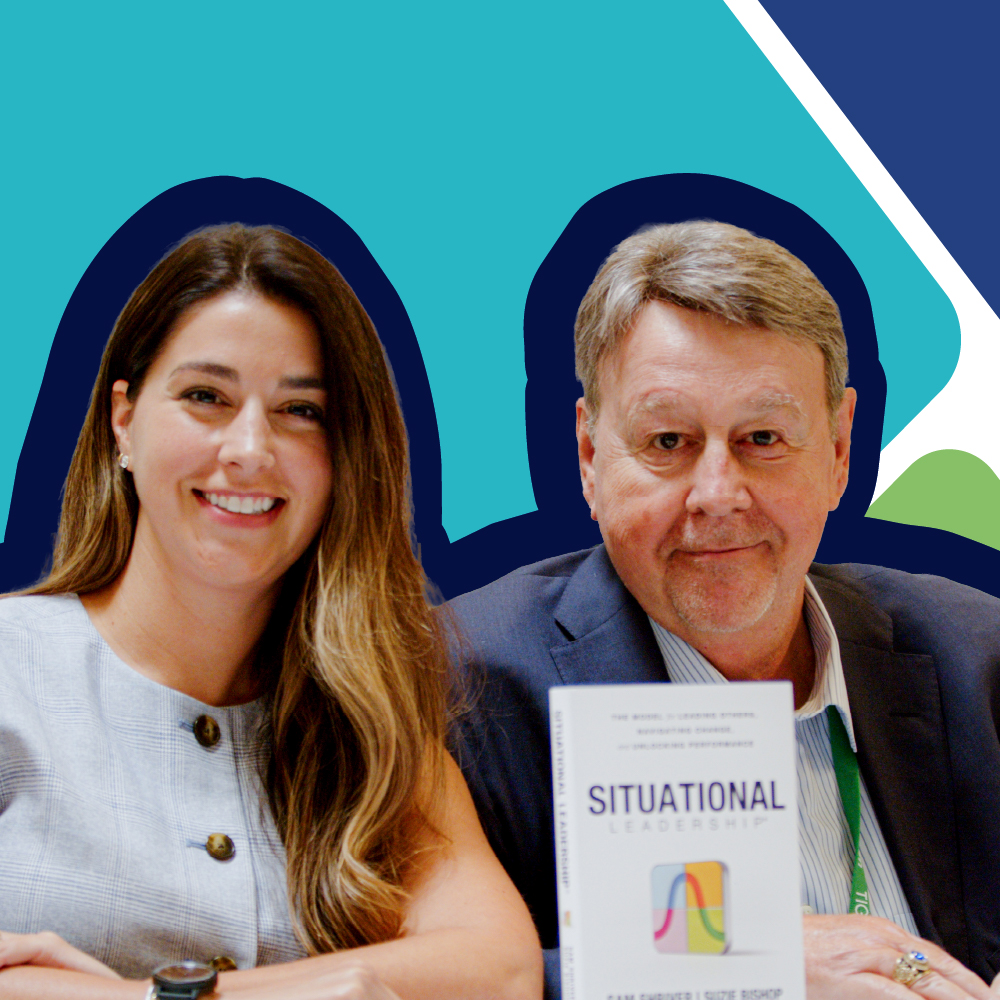
Their Story: Suzie Bishop and Sam Shriver are the authors of Situational Leadership®: The Model for Leading Others, Navigating Change, and Unlocking Performance. Suzie is an established leader in workplace education and leadership development, currently serving as Vice President of Product Development at The Center for Leadership Studies (CLS). She holds a Bachelor’s degree in Communication and Media from North Carolina State University. A Certified Professional in Training Management (CPTM) and Stakeholder Centered Coach, Suzie is also a Marshall Goldsmith 100 Coach and a Thirty Under Thirty Leader recognized by Elliot Masie.
Sam has over 45 years of experience with the Situational Leadership® Model, executive coaching, human behavior, and leadership development. A frequent contributor to industry publications, Sam also co-authors a leadership column with Marshall Goldsmith for Training Industry Magazine and publishes regular blogs, white papers, and articles on emerging trends in learning and development. His work has been recognized by Bersin, Brandon Hall, and the Association for Talent Development. Deeply inspired by his team’s commitment to delivering transformative learning experiences, Sam focuses on reintroducing the Situational Leadership® Model to the next generation of leaders to help them build meaningful impact within their organizations.
Follow The Remarkable Leadership Podcast


Looking to Develop Stronger Leaders?
Want help developing the leaders in your organization? Reach out to explore how the Kevin Eikenberry Group can support your team.
Book Recommendations
Like this?
Join Our Community
If you want to view our live podcast episodes, hear about new releases, or chat with others who enjoy this podcast join one of our communities below.
Leave a Review
If you liked this conversation, we'd be thrilled if you'd let others know by leaving a review on Apple Podcasts. Here's a quick guide for posting a review.