What do leaders need to understand about how beliefs shape people's responses to change? Kevin sits down with Owen Fitzpatrick to talk about the idea of “inner propaganda” and why changing beliefs requires more than logic, evidence, or data. Owen explains that for a new belief to take hold, it first needs to feel right, fit with a person’s identity, and then make sense. They discuss five kinds of truth—objective, past, emotional, shared, and desired—and how they shape how people see the same situation differently. Owen also shares why our brains can act as “double agents,” the idea of the “inner dictator.” Kevin and Owen go into how leaders can challenge these internal stories by asking whether a belief is useful and helping them achieve what they want.
Listen For
0:00 Intro
1:26 Meet Owen Fitzpatrick
2:44 Why Owen wrote Inner Propaganda
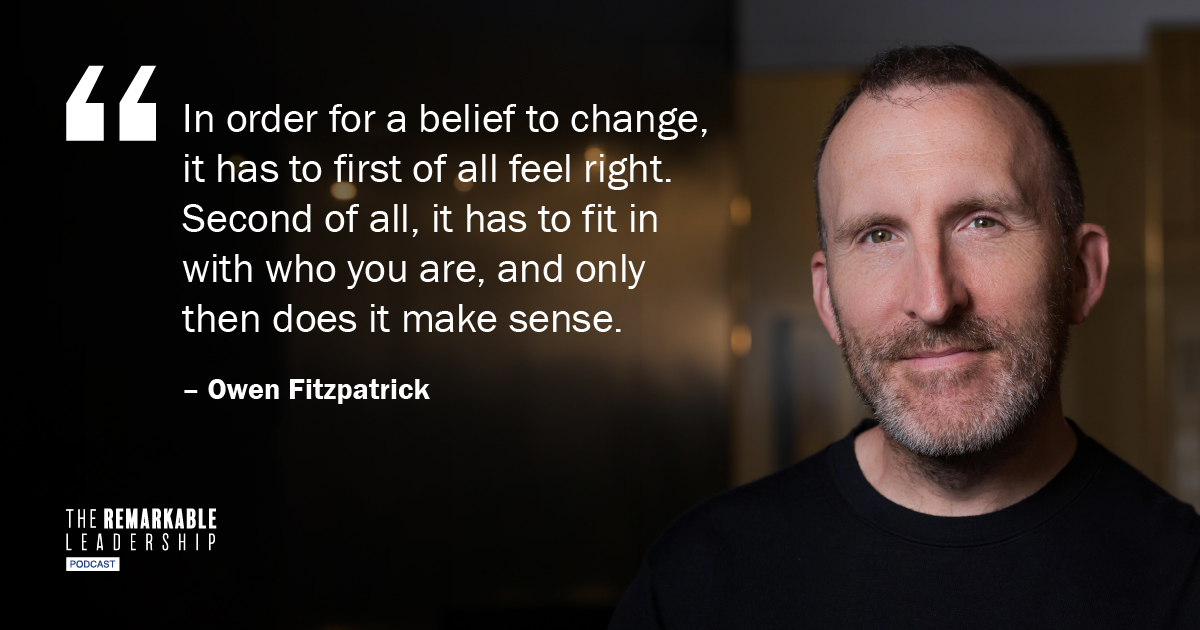
5:25 The big idea: a belief has to feel right first
8:30 Why this matters for AI adoption
9:53 Why "propaganda," and what belief leadership means
13:31 The five kinds of truth
18:11 Alan Mulally, Ford, and the red slide
20:40 Your brain is a double agent
23:27 Challenging your inner dictator
25:22 Who do we want to be now?
27:31 What Owen is reading
30:48 Where to find Owen and the book
32:14 Now what?
00:00:08:20 - 00:00:32:02
Kevin Eikenberry
Inner propaganda. It sounds ominous. A bit scary, at least to me. It's also the title of the book just authored by today's guest, and we're talking today about the stories we tell ourselves and how stories can help us lead hearts and minds, which is to say, how the stories we create and tell can help us lead. For excuse me far more effectively.
00:00:32:04 - 00:00:58:17
Kevin Eikenberry
Welcome to another episode of the Remarkable Leadership Podcast, where we are helping organizations and their leaders grow and lead more effectively or make a bigger difference across their teams, communities, and the world. If you are listening to this podcast in the future, you can join us live on your favorite social media platform. You can find out when live episodes are happening and therefore how you can interact with us and get this information sooner by joining our Facebook or LinkedIn groups.
00:00:58:17 - 00:01:26:01
Kevin Eikenberry
Just two of the platforms for these are live streamed. You can just go to remarkable podcast.com/facebook or remarkable podcast.com/linkedin to get all the inside scoop. And if you want to get more from this episode and every episode you listen to. You can download my short practical guide. Just go to Kevin. I can very.com/get more. If you're listening to podcast you can even pause and go there right now before we continue.
00:01:26:01 - 00:01:49:14
Kevin Eikenberry
But if you're live or if you don't want to stop right now, let me introduce my guest. Here he is. His name is Owen Fitzpatrick. And on the day we're doing this live, everyone. It's the day his new book is being released. He is the author of Inter Propaganda. He is a social psychologist, who has studied propaganda firsthand in North Korea, Rwanda and Afghanistan.
00:01:49:15 - 00:02:16:10
Kevin Eikenberry
He has studied the science of influence at Harvard and MIT. His TEDx talk has been viewed more than 1.4 million times, and he has delivered keynotes and leadership training for organizations like Google, LinkedIn, Citibank, Morgan Stanley and Coca-Cola across 33 countries. He's also an award winning filmmaker and storyteller. And today, on launch day, he is my guest on the Remarkable Leadership Podcast.
00:02:16:10 - 00:02:17:16
Kevin Eikenberry
Oh, and welcome.
00:02:17:18 - 00:02:26:17
Owen Fitzpatrick
Thank you so much, Kevin. It's a real pleasure to be here. Delighted to be chatting to you on this, prolific and legendary podcast. So thank you so much for the invite.
00:02:26:19 - 00:02:44:04
Kevin Eikenberry
Well, listen, it's a big day for you and I'm honored that this is the day that you chose to get on the calendar to do to do this conversation had this conversation. So you wrote this book called Inner Propaganda. And the subtitle is what I used as the title for the podcast, Leading Hearts and Minds through Turbulent Times.
00:02:44:12 - 00:02:48:20
Kevin Eikenberry
So the question, the big question is, why this book? Why'd you write the book?
00:02:48:22 - 00:03:05:10
Owen Fitzpatrick
So I struggled with my mental health when I was a teenager, and one of the things that that drove for me was a fascination in terms of beliefs, because my beliefs were the way in which I perceived the world, the way in which I thought about the world. And as a result of that, my reality back then was problematic.
00:03:05:10 - 00:03:25:08
Owen Fitzpatrick
A lot of times people talk about, you know, mental health as and you've got a negative voice or you've got negative thoughts, but it didn't feel like a negative thought. It felt like a negative beliefs. And so I think for me, I became fascinated with why was I so convinced of a particular way of thinking? And then how can that change or how did it change to me, transforming the reality that I had in my head?
00:03:25:10 - 00:03:45:09
Owen Fitzpatrick
So I began to investigate this question. I started studying psychology in university. I went and became a therapist, helping people overcome their own beliefs. For a while, I traveled around the world to more than 100 countries, including North Korea, Afghanistan, Iran, North Rwanda. Interviewing people that were in very different parts of the world but trying to understand their beliefs.
00:03:45:09 - 00:04:16:19
Owen Fitzpatrick
Why did they believe what they believed? I went to Washington, DC and I got some media training from, one of the top media coaches out there, someone who's coached Barack Obama and Bill Clinton, amongst others, again, trying to understand what is it that people do in order to shift or change beliefs from all of that work? I came down with a sort of a conclusion that surprised me, which was all this time I was looking at propaganda and persuasion and beliefs, and I always taught that the beliefs that the belief didn't change that happened always happened externally.
00:04:16:20 - 00:04:35:13
Owen Fitzpatrick
But a large part of my research helped me to figure out that actually most of belief change, in fact, all of belief change is really an internal process, and all you do externally is you create the conditions for that. So what I really wanted to know was how does this work? And that's exactly what my research took me to.
00:04:35:13 - 00:05:01:15
Owen Fitzpatrick
And I decided to write the book because I felt that this wasn't something that had been tackled in this way before. I think a lot of people I've studied beliefs in the lab, or a lot of people have study beliefs in terms of, you know, their everyday practice, what you know as a therapist or coach. But very few people have actually traveled as well and brought all different forms of all the different sources of information together to try to answer the question, why do we believe what we believe, how to believes work?
00:05:01:15 - 00:05:06:23
Owen Fitzpatrick
And most importantly, how could they change? And I think that's a relevant conversation for us to have in terms of leadership.
00:05:07:01 - 00:05:24:01
Kevin Eikenberry
And we'll get there. This is I'm going to tell everybody that already this is one of my favorite books of the year. I know we're in the middle of the year. It's one of my favorite books of the year. I think it's it's meaningful, which certainly means that it means something to me. And I'm going to try to help pull some of those those things out for all of us in this conversation.
00:05:25:02 - 00:05:36:23
Kevin Eikenberry
And I guess what I want you to do, you sort of given us the background of the book and sort of the set up, which is great, but from your perspective, what is the big idea of the book?
00:05:37:01 - 00:05:53:15
Owen Fitzpatrick
The big idea of the book is in order for a belief to change, it has to first of all, feel right. So the new idea that you're trying to suggest to another person, or even to suggest to yourself the new belief you want in first of all, has to feel right. It second of all, has to fit in with who you are, and only then does it make sense.
00:05:53:15 - 00:06:08:18
Owen Fitzpatrick
So traditionally we think in terms of convincing ourselves or convincing others what we need to do is we just need to make it make sense. I'm going to explain to you, Kevin, the 16 million reasons as to why you should believe me. I'm going to give you all the logic, all the evidence, and then your belief is going to change.
00:06:08:18 - 00:06:28:16
Owen Fitzpatrick
But it doesn't work like that. Anyone who's been a leader for more than five minutes will get so frustrated. Whenever they present the data they showcase exactly why they should do something, and yet the person still doesn't do it. Or even if they say yes, the yes is a yes as opposed to a yes, they're going to a place of compliance, not necessarily conviction or commitment.
00:06:28:18 - 00:06:49:20
Owen Fitzpatrick
And so for me, in order to get to that place of conviction, the idea has to feel right. That means the way we experience the world is first primarily through our feelings. So our feelings dictate the way in which we take in information, our feelings to determine where our focus goes, what we put our attention on, our feelings determine the kind of narrative that we begin to tell ourselves about whatever's going on.
00:06:49:22 - 00:07:08:06
Owen Fitzpatrick
Second of all, it needs to fit in with our identity. We have a, a need to preserve the identity that we have. And the identity we have is simply a story that we've sold to ourselves. So as a leader, we have a certain story that we've sold to ourselves about who we are. This could be who we believe we are, who we want to be, or even the group that that we feel a part of.
00:07:08:10 - 00:07:18:07
Owen Fitzpatrick
And we will protect that against all intruders, including beliefs. So we will reject or resist anything, even if it's logical, even if it has evidence, even it has data.
00:07:18:08 - 00:07:19:20
Kevin Eikenberry
Even if I think I want it.
00:07:20:01 - 00:07:39:01
Owen Fitzpatrick
Even if you think you want it, it will reject it because it needs to preserve a sense of stability in our identity. Once those two conditions are met, though, if it feels right, or at least it doesn't feel wrong. If it fits in with who you are, then logical reasoning will be stellar. And look, to me, data is like table stakes.
00:07:39:04 - 00:08:00:19
Owen Fitzpatrick
You need to have a good strong argument, of course, but there's lots of really smart people believing lots of really dumb things. Not because they're not smart, but because they're so smart that they have a phenomenal ability to convince themselves and other people of almost anything because they're so intelligent. That's a problem. And I think it's a problem that a lot of people don't see coming.
00:08:00:21 - 00:08:23:06
Kevin Eikenberry
I love that. And, you know, we can have this whole conversation. We're not, but we can have this entire conversation on that belief framework that you've just laid out. And just frame it around why people take training and even like what they got in the training and never go do anything with it, because at the end of the day, it doesn't fit in and it doesn't feel right, even if it makes sense.
00:08:23:06 - 00:08:29:23
Kevin Eikenberry
Even if they got five examples, even if they tried it in the workshop, like it doesn't matter. Not going to happen when they leave.
00:08:30:01 - 00:09:01:00
Owen Fitzpatrick
And on that, on that. Kevin, I think this is especially important in the AI world because I'm sure you I know you do a lot of work in terms of leadership. And one of the things that I'm seeing is there's a lot of requests for AI training. Now, the problem with that is, is that if you aren't making sure that it feels right, and most importantly, if you're not helping them to craft a new identity of who they are, now that AI is doing a lot of their work, if you don't help them with their identity piece, doesn't matter how much training you give and it doesn't matter how amazing the tools are, it's going
00:09:01:00 - 00:09:06:02
Owen Fitzpatrick
to be very limited in its positive impact on the culture and the organization.
00:09:06:08 - 00:09:27:04
Kevin Eikenberry
It's interesting. I've just in fact, I wrote about this yesterday. It's coming out today for the first time about this. I did some work with a bunch of folks in, HR and these sorts of areas, and I asked them some questions about AI and asked them a couple different questions. And basically what it came out is people are emotionally ahead of where their action is.
00:09:27:06 - 00:09:53:12
Kevin Eikenberry
Like they're generally I'm aware I'm oversimplifying. They're generally more excited about the possibilities than they are in terms of doing the real work. And it's related in part. Oh, and not entirely, but in part to what you just said. Without question. One of the one of the things about the book is, is we spent our in first all of our conversations so far about beliefs, the power of beliefs for ourselves and others use and and you use the word propaganda.
00:09:53:12 - 00:10:12:03
Kevin Eikenberry
I have to tell you, when I first saw the book to decide if we were going to invite you to be on, you know, I don't love that word propaganda. I said that in the open. Right? Like it's kind of a scary word, at least in Kevin's head. And, and yet you say that leadership is propaganda.
00:10:12:05 - 00:10:18:04
Kevin Eikenberry
Yeah. And you say that leadership is about, belief leadership. So talk about those two ideas. Rhetoric.
00:10:18:06 - 00:10:36:22
Owen Fitzpatrick
So propaganda itself is a word that came about around about a few hundred years ago. Right. The Pope sort of talked about the importance of propaganda or propagating the message. Right. So this idea of propaganda was initially relatively benevolent, right? There was no real problem about it. No one had an issue with it. In the early 20th century.
00:10:37:15 - 00:10:51:23
Owen Fitzpatrick
The British actually were the first to start to use it as a term to be able to talk about the communication around the war from their side in terms of World War One. And then, of course, we all know about use of gerbils, who during World War Two or before World War two, the Ministry for propaganda.
00:10:51:23 - 00:11:13:09
Owen Fitzpatrick
And once that came out, then it was like, you know, the most nefarious or negative term that you can imagine. And nowadays the connotation is that propaganda is brainwashing. It's how you control the population by manipulating their minds. The reality, though, is that what we're doing as leaders is that we're trying to control the narrative. We're trying to influence the folks that report to us.
00:11:13:09 - 00:11:33:02
Owen Fitzpatrick
We're trying to paint a picture of it. If I'm if I'm leading an organization, I need to get your buy in for the, to for the vision and for the mission. So I need to get all of the team aligned in a vision. I need to paint that picture clearly in your mind to make sure everyone is seeing reality the same way I am, so that we could all collaborate together and move towards it.
00:11:33:02 - 00:11:59:03
Owen Fitzpatrick
So when I say leadership is propaganda, I'm not saying leadership is a really bad thing. I'm saying quite the contrary. We have a responsibility because if we don't determine how people see the world, others, I'm more nefarious. Actors are going to get in on it. And so our goal as leaders is to ensure that every single person that we're leading is empowered to be able to handle the adversity, the challenge, the change, the pain, the problems that they're going to be facing in this turbulent world.
00:11:59:07 - 00:12:31:15
Owen Fitzpatrick
So my goal is to help people become what I call belief leaders. It's not just about thought leadership where you come up with innovative ideas. It's also about leading their beliefs, leading people to believe in themselves more, leading people to believe in you more, leading people to believe in each other more. Leading people to believe in the mission more leading people to believe in the product and the services and the offerings more, and cultivating belief, to me, is a skill that I think we need to learn to master, especially in a world where it's often a story war between different people are saying, this is what's true, this is what's true.
00:12:31:20 - 00:12:52:20
Owen Fitzpatrick
We need as leaders to be better equipped, to be able to paint the picture of a story that sells to other people more effectively, and that means recognizing the propaganda that's already going on inside people's head. The very specific reason why I called it inner propaganda is because that's how it felt to me. It's not like inner negative thinking or inner negativity or inner bad feelings.
00:12:52:22 - 00:13:04:15
Owen Fitzpatrick
It's inner propaganda. It takes over my brain. When I feel a certain way, I see the reality through that lens and recognizing that is where the term came from in the first place.
00:13:04:17 - 00:13:31:18
Kevin Eikenberry
It's also really good from a book marketing perspective, in Kevin's opinion. Like, I love that you just outlined why you picked the word and yet when I, when I, first picked up the book, I thought, well, this is a clever hook, right? Which I think it also is, but I love that you took it to that other level, because that describes sort of the, prevalence, of how that washes over our whole being, if you will.
00:13:31:22 - 00:13:47:07
Kevin Eikenberry
And I really love that thinking. One of the things you talk about early in the book that I want you to talk about, because I think it it frames everything else that we might spend our time talking about. And I also think it helps people, see why they might want to have a copy of this book. Because you talk about that.
00:13:47:11 - 00:14:09:16
Kevin Eikenberry
There isn't just truth, but that there's five kinds of truth. And, again, a lot of us, when we think of truth, we think of one of these five. And yet we do operate under all five of these five. So can you, can you lay these out for us? Because I think this further cements the foundation you're trying to build for us.
00:14:09:18 - 00:14:16:14
Owen Fitzpatrick
Sure. And I think this is one of the more, more controversial ideas in the book. Right. Because as soon as I talk about five, of course.
00:14:16:14 - 00:14:18:04
Kevin Eikenberry
That you pick it, then.
00:14:18:06 - 00:14:37:08
Owen Fitzpatrick
People. Yeah, of course, people are going to be like, well, no, there's only one type of truth, right? Because we all talk about truth. And oftentimes truth is like the barometer that says that we're completely right about something. So when I talk about five types of truth, I say, look, you have obviously objective truth. But if you look at what objective truth is, objective truth is really truth.
00:14:37:08 - 00:14:55:09
Owen Fitzpatrick
You know it's true because you've witnessed it, because you've measured it, because you can pretty much make predictions with it based upon what you've seen. So objective truth is what we use in order to create skyscrapers or make planes. You can't like guess about things. You can't kind of, think this might work. You have to know 100%.
00:14:55:09 - 00:15:17:07
Owen Fitzpatrick
The data doesn't lie in that context. And when it comes to science and engineering, most of those areas require objective truth. But then we have other things that, while they're not objective truth, we talk about things if they're true. What is past truth? This is I remember it. Therefore that's what happened. And the reality is the research suggests that our memories are notoriously unreliable.
00:15:17:09 - 00:15:42:09
Owen Fitzpatrick
So just because you remember it doesn't mean that that's exactly what happened. In fact, our brains actually are more likely to reconstruct what's happened as opposed to remember, we don't like, store it in our memory system. Then we take it out. That's not the way their brain works. Instead, we reconstruct the memory. And every time you've talked about a memory since that memory, since that experience actually influences and effects that memory itself.
00:15:42:09 - 00:15:44:22
Owen Fitzpatrick
Right. So that's the first type, besides object.
00:15:44:22 - 00:16:05:10
Kevin Eikenberry
First, let me just say, can I just make a comment about that one? Like anyone who's like, really not clear about that? You all have a story, a past story, that you have a version of it and someone else that you know who was there has a version. And so you both have a different past. Truth, right? It's not what the videotape shows is what we.
00:16:05:10 - 00:16:07:16
Kevin Eikenberry
Because that videotape doesn't exist. Right?
00:16:07:18 - 00:16:25:13
Owen Fitzpatrick
Yeah. And even when the videotape does exist, people will also interpret it in different ways. Right, though. So they'll look and go, well, what you're not seeing there is what's outside of that, right? You're missing this vantage point. You know, I wasn't like, people will argue about it forever. But the important thing to realize is, look, it might be based on truth.
00:16:25:13 - 00:16:45:07
Owen Fitzpatrick
It might be based among. But it's again, it's just a guess as to what you think happened back then to the best of your ability. Right? So it's not objective truth. So you got posture, you got objective truth. The third one is emotional truth. So this is, I believe it because I feel it's true. So it's just it feels true to me.
00:16:45:09 - 00:17:02:05
Owen Fitzpatrick
A lot of times we talk about things. Is that like, that's definitely true. Why? Like, I just know it's true, right? But they know it because of how they feel. And the challenge with that is it's not objective, but they will talk about it as if it's objectively true because it feels so right, feels so true. Then we've got shared truth.
00:17:02:05 - 00:17:20:17
Owen Fitzpatrick
That's if you agree with a bunch of other people on it. If you're watching your favorite news channel or you're in your favorite group, or your weight, your family and all of your like, yeah, yeah, yeah. Oh, and is really stupid. He's the stupidest person I've ever met. And you all agree on it. It becomes true. You go, okay, you know, since we're all agreeing, it must be true.
00:17:20:23 - 00:17:39:15
Owen Fitzpatrick
Even though, again, you haven't given me an IQ test, you haven't objectively measured my my intelligence. And then the final one is design truth. And this is the one that trips us up a lot as well. And this could be a all of these could be good or bad, by the way. No, none of this is necessarily a negative thing, but desired truth is you believe it's true because you want it to be true.
00:17:39:17 - 00:17:55:08
Owen Fitzpatrick
And this is when someone goes for, you know, X factor or, you know, America's Got Talent and they've got a terrible voice, but they keep wasting their life trying to improve as a singer. And they just do it. And if they ever have a problem, they go to ChatGPT and they say, hey, am I a good singer?
00:17:55:08 - 00:18:11:21
Owen Fitzpatrick
And then ChatGPT says, you're the greatest singer in the world. Oh my goodness, you're wonderful. And it's like, I believe it because I want it to be so. But the problem with that is, is just because you want it to be true doesn't make it true. Now, sometimes you're and I'll just give you a real specific example from a leadership perspective.
00:18:11:23 - 00:18:36:08
Owen Fitzpatrick
If we take, for example, Alan Mulally in terms of Ford. Right. And that incredible story where during, you know, one of the times of crisis in there, everyone would show up to a leadership team meeting and all of their slides will be color green. Everything's going great. But yet they were hemorrhaging money, and he turned around and he was like, hey, listen, we're losing money here.
00:18:36:08 - 00:18:53:01
Owen Fitzpatrick
We need to be able to get this figured out. And as a result of that, somebody started I think it was, Mark fields, used a red slider slide with, some warning signals on it. And as a result of that, all of a sudden, the cultural change, because they needed to be able to look at the objective data.
00:18:53:01 - 00:18:55:02
Owen Fitzpatrick
Right. So that's an example where disaster truth.
00:18:55:04 - 00:19:15:07
Kevin Eikenberry
Let me just add one thing to that. You know, what Allen did in that moment was he rewarded that everyone was afraid of what would happen if Red showed up. But what he did that that helped change the culture was he applauded it and he thanked him and he said, now what do we need to do? And that and so there's there's where the leadership piece comes back in, right.
00:19:15:07 - 00:19:27:16
Kevin Eikenberry
Like, what do we do in that moment? People the truth that people had was if I don't show green slides, then I'm going to be in trouble. But what happened was really the red slide was what Allen wanted to see.
00:19:27:22 - 00:19:49:20
Owen Fitzpatrick
And that speaks to a huge, important element of leadership in general as as you well know, cabinets. It's not just telling everyone, hey everyone, speak up. What do you do when they speak up? Why do you know? I've seen that in cultural change moments. I've gone into organizations, I've said, yo, we've got to speak up. The thing and I'm talking to people I you to speak up here.
00:19:49:20 - 00:20:08:06
Owen Fitzpatrick
Why aren't you speaking up? But they're like, well, I tried to speak up, but my manager said they didn't want to hear from me. I'm like, it doesn't matter what you say if you're not reinforcing it. So that's on the one side. But the other flip side is you take James Dyson. I think it was like 5127 or something ridiculous amounts of prototypes he built.
00:20:08:07 - 00:20:40:03
Owen Fitzpatrick
This was him being fueled entirely by desired truth. He believed that he wanted badly to believe in his Hoover, and because he believed that that's what kept him going through prototype after prototype over years. And he eventually made it a huge success. So sometimes desired truth actually can be the very thing that gets us getting through the tough times, but other times it can actually cause us to make really terrible decisions, and potentially ruin the, the organization as a result.
00:20:40:05 - 00:21:00:07
Kevin Eikenberry
So I so I spent a lot of time thinking about, oh, and how I would take the last part of this conversation. Right. And we could continue on the on the frame of what do we do as a leader here? And I think we've given people some foundation. They're what I'd like to do with the last little bit of our time is the internal part right back to inner propaganda.
00:21:00:07 - 00:21:17:20
Kevin Eikenberry
Not just how do we show, how do we shape and lead hearts and minds of others, but how do we do that inside with ourselves and you? One of the things that you say is our brains are double agents and that we have an inner dictator. So I'd really like to spend the rest of our time on those two ideas.
00:21:18:18 - 00:21:23:21
Kevin Eikenberry
And so if you want to take off on those two things before we start to wrap up, that'd be awesome.
00:21:23:23 - 00:21:40:16
Owen Fitzpatrick
Sure. So first of all, when I say our brains are double agents, what I mean by that is, is that our brains are not optimized for happiness or success. Our brains are optimized for survival. Right. And are they're optimized for stability. So our brains are constantly try to do whatever they need to do in order to keep us alive.
00:21:40:18 - 00:21:59:18
Owen Fitzpatrick
And in order for us to keep things stable. And by stable, I mean keep things coherent, keep things easy, use as little brainpower as possible. Our brain typically consumes about 20 to 25% of the calories we take in, and they only represent about 2% of our body mass. So our brains are trying to do whatever they can to be efficient and to keep us safe.
00:21:59:18 - 00:22:20:11
Owen Fitzpatrick
So with that in mind, the beliefs that we form aren't always beliefs based upon accuracy. What's actually going on, their beliefs that enable us to hopefully stay safe and also to keep things simple. The problem is, is that often in our efforts to keep things simple, these double agent brains are giving us sort of a story that we buy into.
00:22:20:12 - 00:22:41:14
Owen Fitzpatrick
They're making things simple, but they're creating this sort of reality. So, for example, let's take, the notion that as a leader, your biggest problem is, is that, you're you're not getting the results that you want and you're not sure why, and maybe you've got a blind spot as to what's going on. But the reason for that blind spot is because your brain is trying to protect you, so it doesn't want you to feel bad about yourself.
00:22:41:19 - 00:23:07:10
Owen Fitzpatrick
And it also needs to create a simplistic, stable explanation. So it creates this narrative whereby you are misunderstood and everyone else is the problem. And you know, you're a great leader and you've done, you know, this one time, six years ago, you made this great decision. Therefore, your brain is protecting you, but it's hiding certain knowledge and highlighting other knowledge, and it's crafting a story that makes you feel much better about yourself.
00:23:07:12 - 00:23:26:18
Owen Fitzpatrick
What we need to do as leaders is recognize this double agent and understand that just because we believe it or feel it's true, doesn't make it so. And then learn to challenge that particular way of thinking. Now, along the same lines, the inner dictator is the term I use to describe the negative voice inside my head whenever I am beating myself up, for example.
00:23:27:00 - 00:23:46:06
Owen Fitzpatrick
And this inner dictator, or the reason I call it a dictator, not a critic, is because a critic you can argue with a dictator, talks as if everything's true. And that's like it feels it's real. Therefore, whenever we need to beat or overcome whatever our inner critic saying, let's say I ran a critic saying the exact opposite you're useless.
00:23:46:06 - 00:24:07:22
Owen Fitzpatrick
You'll never amount to anything. You're not good enough. As a leader, who are you to be leading them? You're going to be found out at any moment if your brain is saying that to you, that's the inner dictator speaking. And so what we need to do is recognize that both our brain is a double agent, but we also have this inner dictator determining the way in which we see the world, that we need to be able to challenge whatever comes out of the inner dictator.
00:24:07:22 - 00:24:26:19
Owen Fitzpatrick
And we need to challenge the reality that our double agent brain shows us the way we do. That is, number one, understanding and acknowledging just because it feels true to me, just because it seems true to me doesn't necessarily mean it's true. Second of all, we can use a mini version of what I call a belief audit, where we can go.
00:24:27:00 - 00:24:46:08
Owen Fitzpatrick
Okay, so from my perspective, is this belief helping me achieve what is it that I want? So what am I trying to achieve with this belief and is it working as opposed to is this belief true? Because we could pretty much rationalize as anything is true. But if we go, is this belief serving to help me achieve what I want?
00:24:46:13 - 00:25:04:08
Owen Fitzpatrick
And if it is great, but if you believe that you're the greatest leader since sliced bread and yet you're not getting the results, is that belief helping? You know? Therefore, what would be a more useful belief that would empower you to be successful? Is the inner dictator telling you that you're useless? Is that helping you to be a better leader?
00:25:04:08 - 00:25:22:10
Owen Fitzpatrick
No. So what's the more useful way to believe in order for you to be much more successful? And when we can start to do that, number one, recognize when we're being fed the lies. And number two, challenge the lies not based on truth, but based upon usefulness. That's what allows us to turn things around.
00:25:22:12 - 00:25:51:00
Kevin Eikenberry
So other than having everyone in an organization buy a copy of the book and we are talking with oh, and Fitzpatrick, the author of Inner Propaganda Leading Hearts and Minds Through Turbulent Times like, I know you want everyone to buy a copy, I get that. Beyond that, organizationally, what would you say to leaders who have listened to, so read the book and what would be a first step they might take organizationally that might help the organization forward using some of these ideas.
00:25:51:03 - 00:26:13:22
Owen Fitzpatrick
I think they need to start asking the question, who is it that we want to be, not just as organizations, but who is it that we want to be individually moving forward in this new AI world? Like, what would it look like for us? What kind of identity do we need to build for ourselves such that as we start to embrace this as a tool, it becomes something that helps us in ages, becoming better versions of ourselves.
00:26:14:04 - 00:26:39:04
Owen Fitzpatrick
Because I think we're living in a world where the world is changing rapidly, and artificial intelligence, one of its biggest threats is it's threatening who we are and our identity. And I think it's really critical that we start having those conversations, because if you want to be able to ensure that your teams are changing, a lot of the work I do in terms of change management is largely about helping everyone to go, okay, now that AI is doing most of my job, what does that mean for me?
00:26:39:05 - 00:27:03:16
Owen Fitzpatrick
Who am I now in a world where I'm number one, scared that AI is going to take over my job, how do I become more even more remarkable or indispensable in this organization? And a large part of that is what is the identity I need to craft. So I think the identity piece is critical. And then the only other thing I would say is focus far more on how you make people feel with your messages, as opposed to just having the data.
00:27:03:16 - 00:27:21:16
Owen Fitzpatrick
Data is table stakes, right? You need it for before data. How are you impacting the way people feel? Like you said at the very beginning, Kevin, training. If you want training to work, you're not, you know, thinking about it as, oh, we need to give them the information of the skills. It's not enough. You need to change the way they feel about it.
00:27:21:16 - 00:27:31:12
Owen Fitzpatrick
You need to change their mindset about it. You need to change who they will become as a result of the training. And when you do that, then you're going to be a lot more likely to get long term impact.
00:27:31:14 - 00:27:42:20
Kevin Eikenberry
100%. So oh, and there was one question you knew I would ask. And here it is. What are you reading these days? And you said, well, what do you want me to answer? I said, you tell me whatever. What are you reading?
00:27:42:22 - 00:27:59:19
Owen Fitzpatrick
So I typically the reason I ask that question, I typically read like 7 or 8 books at the same time, when they're nonfiction. I'm reading one fiction book at the moment because I've been so busy, like, I've read dozens and dozens of books over the last six months or so, just in terms of, working around the book.
00:27:59:21 - 00:28:24:23
Owen Fitzpatrick
I'm reading one nonfiction at the moment called Inside the Box by David Epstein, which I'm a big fan of his his writing. But primarily I'm, I'm, I'm working through a series called the Will of the nanny. And it's a, science fiction, sort of fantasy type, fictional story. I consumed, a series called Red rising, which is wonderful.
00:28:24:23 - 00:28:45:08
Owen Fitzpatrick
It's six books, and it's again science fiction, but it's like, I don't read fiction all that much, but it let me lose myself in a different world. And given the fact that I'm constantly thinking psychology, talking psychology, speaking psychology, you know, breathing psychology, I like to get lost in the fiction at the moment. So I've loads of recommendations for books.
00:28:45:14 - 00:28:58:00
Owen Fitzpatrick
I'm a avid reader. I love books so much, but at the moment I'm trying to stay away from psychology just for another week or two until the launch is over. And then I'll, you know, look, look forward to it again.
00:28:58:02 - 00:29:14:09
Kevin Eikenberry
It's really interesting. Oh. And it probably won't be surprising to you, and it won't be surprising to people who have listened to the show for a long time. Is that it's very common for people to say both of what you said. Many people who are on the show say, I don't read that much fiction, but when I do, it feeds me.
00:29:14:12 - 00:29:32:02
Kevin Eikenberry
Now that was me paraphrasing you. But the other thing is, it's super common for people to say I'm always reading multiple books at once, and I just, I just highlight that not not really for you. I like that for listeners to say, because some people sort of say, well, I shouldn't do that. I'm not sure there's a story, right?
00:29:32:02 - 00:29:53:18
Kevin Eikenberry
I shouldn't do that. And I'm supposed to read them all the way to the end and all that stuff. And I think that, one of the reasons I've always asked this question is I want to give people insight into what other things they might dip into. But also, so often people have said exactly what you said, that I just wanted to I just want to comment on that sort of as a general statement.
00:29:53:20 - 00:30:08:15
Owen Fitzpatrick
Yeah, I think, I think for me, the, the, the nature of the reading is when I'm reading nonfiction, for me, they're all ideas and I'm good at keeping things structured in my own head. So I want to learn from a variety of sources. I read a lot of history. I read a lot of psychology. I read a lot of neuroscience.
00:30:08:15 - 00:30:25:22
Owen Fitzpatrick
I read some business books, not as many as I used to. But I'm really fascinated with trying to bring all of those different insights or ideas together. But for me, I only read one section at a time because otherwise, you know, I'm like, well, wait, I thought they were married. What? No. She's dead. I thought she was a lot.
00:30:26:04 - 00:30:44:15
Owen Fitzpatrick
You know, you you got confused with the things. But, for me, just anything that lets me just, you know, embrace new worlds. I love that I love story, any form of story. So when something sucks me in, it's the greatest thing in the world to to be reading a fictional story that draws you in. It's the best.
00:30:44:15 - 00:30:47:23
Owen Fitzpatrick
Is the best use of a person's time. I think.
00:30:48:01 - 00:31:02:07
Kevin Eikenberry
So there's one more story that you want to tell, and that's the story about the book. We've talked about the book, obviously, but like, where do you want to point people? Oh, and there's a you have a number of resources, like, and, where do you want to point people to learn more about you, about the book, your work, etc.?
00:31:02:09 - 00:31:21:08
Owen Fitzpatrick
Sure. So there's inter propaganda.com, which is where you can, you know, get free masterclass as well as, work, you know, a workbook as well for and I think an interview as well behind the scenes that will be done in a few weeks. So, all of that is available if you buy the book. At Inter proper got economy links there to different places, you can buy it.
00:31:21:21 - 00:31:45:03
Owen Fitzpatrick
I also have a website own fitzpatrick.com and I have a newsletter there. I'm a keynote speaker so you know more information there about me there. But I've in a newsletter called Inner Propaganda. And I also have a podcast called Inner Propaganda as well. You can find that on YouTube or Spotify or Apple as well. And the last few episodes of the next few were all about the book and all about the different concepts and ideas in the book.
00:31:45:03 - 00:31:55:22
Owen Fitzpatrick
And I'm also on LinkedIn, so reach out, connect with me. Let me know if, if you heard or to speak on this. Would love to be connected. And I'm on Instagram and Facebook and you know, etc., etc..
00:31:55:22 - 00:32:13:20
Kevin Eikenberry
So the short the short story, everybody is if you just remember inner propaganda, you're going to find out. And and I hope that you do find oh, and I hope you get a copy of the book. I hope that you find it as fascinating as I'm finding it. And, I believe that if you've listened to this conversation that that will be true for you.
00:32:14:04 - 00:32:33:10
Kevin Eikenberry
Before we go, I have a question that I ask you all every week. And the question is simple. The question is simple. Now what? The answer is personal. What action will you take as a result? Here's one of Kevin's stories. Like, if we don't take action, this didn't make much sense. Like, why did we spend our time here?
00:32:33:12 - 00:32:53:04
Kevin Eikenberry
We're not going to do something with it in one way or another. And if you did come here wanting to be a more effective leader or a more remarkable leader for you or your organization, then you have to take some action. And, and if you don't think about that and you just let these ideas wash over you, that's useful, but not as useful.
00:32:53:04 - 00:33:01:04
Kevin Eikenberry
If I say, here's what action I'm going to take as a result. Hope you'll do that. I really do. Oh, and thanks so much for being here. It's a pleasure to have you.
00:33:01:06 - 00:33:07:15
Owen Fitzpatrick
Thank you so much, Kevin. My pleasure. And, really appreciate the opportunity to to chat with you today.
00:33:07:17 - 00:33:21:13
Kevin Eikenberry
And so, everybody that's it for another episode of the Remarkable Leadership Podcast. Make sure you come back next week. Subscribe. You know, all of that stuff and tell somebody else, so they can join us as well next week for the next episode of the Remarkable Leadership Podcast.
Meet Owen
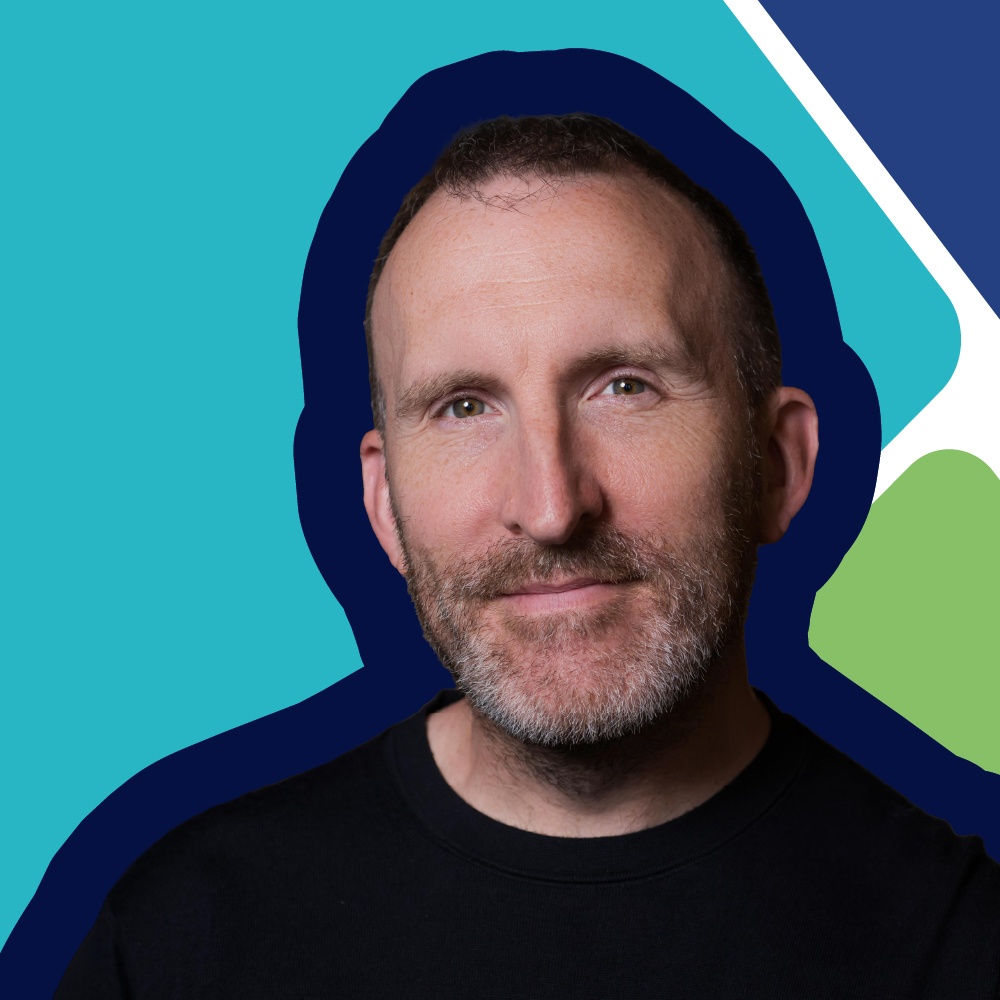
Owen's Story: Owen Fitzpatrick is the author of Inner Propaganda: Leading Hearts and Minds Through Turbulent Times. He is a social psychologist who has studied propaganda firsthand in North Korea, Rwanda, and Afghanistan. He studied the science of influence at Harvard and MIT. His TEDx Talk has been viewed more than 1.4 million times, and he has delivered keynotes and leadership training for organizations like Google, LinkedIn, Citibank, Morgan Stanley, and Coca-Cola across 33 countries. He is also an award-winning filmmaker and storyteller.
Follow The Remarkable Leadership Podcast


Looking to Develop Stronger Leaders?
Want help developing the leaders in your organization? Reach out to explore how the Kevin Eikenberry Group can support your team.
Book Recommendations
Like this?
Join Our Community
If you want to view our live podcast episodes, hear about new releases, or chat with others who enjoy this podcast join one of our communities below.
Leave a Review
If you liked this conversation, we'd be thrilled if you'd let others know by leaving a review on Apple Podcasts. Here's a quick guide for posting a review.