Are you using AI to transform your organization or simply doing the same things faster? As a leader, how do you move beyond automation to unlock opportunities you haven’t even imagined yet? In this episode, Kevin is joined by Brian Solis and Dave Wright to discuss why successful AI transformation requires more than adopting new technology. They talk about the “iteration trap,” where organizations focus on improving existing processes rather than reimagining what’s possible. Brian and Dave explain why leaders need to shift their focus from AI adoption and efficiency to creating new value and achieving meaningful business outcomes. Kevin, Brian, and Dave also discuss why the greatest opportunity for leaders isn't just changing how work gets done but rethinking what their organizations can become.
Listen For
0:00 Optimists and realists on AI
1:46 Meet Brian Solis and Dave Wright
3:17 Why they wrote Infinite
4:50 The big idea: leading, not managing, the AI shift
6:57 What “infinite” really means
8:35 A technology book that isn’t about technology
12:38 Escaping the iteration trap
14:42 Mode one vs. mode two thinking
16:16 Reimagining workflows end to end
18:11 “I don’t know what to do” and the beginner’s mind
20:22 Reverse mentoring
22:43 Dispelling the AI emperor’s new clothes
23:49 The AI fluency leaders actually need
27:51 Augmentation, not substitution
28:16 Where they stand on AI doom
33:44 Why culture makes or breaks transformation
35:56 From org charts to work charts
36:46 What they’re reading
40:19 Now what?
00:00:08:16 - 00:00:34:17
Kevin Eikenberry
Talk about AI in our organizations is everywhere, and it's all over the map with every kind of, opinion that you might imagine. Our guests today are optimists and realists about AI, with substantial experience in helping use AI to transform business results. If you want an unfettered view of how I can help your organization, you are in the right place.
00:00:34:19 - 00:01:00:17
Kevin Eikenberry
Don't go anywhere. And welcome to another episode of the Remarkable Leadership Podcast, where we are helping organizations and their leaders grow and lead more effectively to make a bigger, positive difference for their teams, organizations, communities, and the world. If you are listening to this podcast, you could be with us in the future. For live episodes on your favorite social media platform to find out when those are happening and how to get involved.
00:01:00:22 - 00:01:27:08
Kevin Eikenberry
You can join our groups on either Facebook or LinkedIn. Two of the locations where we live stream these just go to remarkable podcast.com/linkedin or remarkable podcast.com/facebook to get all the scoop and to get the inside data. And since you're here, I want to make sure that you get everything you can from this episode and any podcast you listen to, whether it's this or any other.
00:01:27:10 - 00:01:46:06
Kevin Eikenberry
You can download my short practical Action guide. Just go to Kevin I can Broadcom slash get more. And with that I'm going to bring in my guests. And I'm going to introduce them. Yes two guests two for the price of one today everybody. I'm going to introduce them and we're going to dive in. My guests today are Brian Solis and Dave Wright.
00:01:46:07 - 00:02:10:11
Kevin Eikenberry
Brian is the head of global innovation at ServiceNow. He's a world renowned digital futurist and nine time bestselling author and an international keynote speaker. He has published over 60 widely read research reports exploring the future of business, disruptive technologies, and shifts in consumer behavior. He regularly advises business and technology leaders and boards across the world on how to navigate an AI driven reinvention.
00:02:10:17 - 00:02:35:08
Kevin Eikenberry
And Dave Wright is the chief innovation officer at ServiceNow for nearly 30 years in the IT industry. He has spent his career helping organizations leverage technology to boost productivity, streamline operations, and create new value through business transformation, not just incremental improvement. His expertise spans virtualization, cloud infrastructure, service management, data center automation, and software development. Why are they both here?
00:02:35:08 - 00:02:48:14
Kevin Eikenberry
They've written this brand new book, Infinite How Visionary Leaders Transform Today's Businesses into AI forward companies. They're holding it up. I'm holding it up. Welcome, guys. Glad you're here.
00:02:48:16 - 00:02:49:16
Dave Wright
Thank you for having us.
00:02:49:18 - 00:02:50:21
Brian Solis
Thank you. Kevin.
00:02:50:23 - 00:02:59:18
Kevin Eikenberry
It's my pleasure to have you. And I think I was safe in my intro. I didn't tell you what I was going to say. That you are both optimists and realists. Is that fair?
00:02:59:20 - 00:03:03:08
Dave Wright
I'm an optimist, and Brian's a realist.
00:03:03:10 - 00:03:17:11
Kevin Eikenberry
Oh, there you go. You know, you watching? Brian had a bit of a funny look on his face when they said that. Just saying. So Dave will let you go first. Why this book and why so.
00:03:17:13 - 00:03:35:02
Dave Wright
So what had happened was for, for, like, the the past two years, Brian and I been going out and meeting all these customers and having conversations, and, and we were having the same conversation everywhere. And then we get together and have one on ones, and we be having the same conversation about these customers. We saw.
00:03:35:04 - 00:03:47:20
Dave Wright
And at one point, I said to Brian, I said, like, we're getting so much information here, we should write a book on this. And I said, it is a figure of speech. And because Brian's written nine books before, he said, yeah, you're right, we should write a book. So when do you want to start?
00:03:47:22 - 00:03:51:00
Kevin Eikenberry
So be careful what you ask for a day.
00:03:51:02 - 00:04:11:02
Dave Wright
So that started, that started a week of, I'm sorry. I started a year of of video conversations on weekends. Yeah, I wrote in a way. We used I for it. No, we spent about a year putting it together, which. And that's a challenge in itself, because write a book on AI in a year, and the chances that it's still relevant at the end of it are a minuscule.
00:04:11:02 - 00:04:20:07
Dave Wright
So. So we realized we couldn't write about the technology of AI. We had to write about, the business transformation elements that I was.
00:04:20:09 - 00:04:41:07
Kevin Eikenberry
It's one of the things I thought of as an author as well. Like, the challenge is how do you make sure that it's going to be relevant later? I think I think you've succeeded with that because you you're not it's sort of platform agnostic, and we're not talking about prompting and we're not doing any that kind of stuff or we're getting it, not getting into the deep, the deep weeds of, of alignment or anything like that.
00:04:41:07 - 00:04:50:03
Kevin Eikenberry
So, like I already went deeper than anyone wants to go. So, so, Brian, what's the big idea of the book?
00:04:50:05 - 00:05:26:21
Brian Solis
I think the big idea of the book is elevating the conversation, helping leaders lead versus manage this, this transition. The the hub for us was there's just a lot of varying levels of understanding of what's happening. Varying, ideas of what's possible. And there sure is a lot of I don't know what I don't know. So in the absence of that, Kevin, you know as well as we do that leaders tend to then lean on what they do know.
00:05:26:23 - 00:05:45:21
Brian Solis
And so that's what we had seen in every conversation that we were having with executives. Was this sort of incrementalism, applied to, an incredible technology. And the closest we would see people get to strategy around this was AI being the strategy. Yeah. Like what?
00:05:46:01 - 00:05:48:07
Kevin Eikenberry
What are what are is I.
00:05:48:08 - 00:06:19:23
Brian Solis
Yeah, it's basically basically the truth. And so the, the big was to help leaders understand what this moment really means, and also what this moment means in terms of opportunity, and then also where they can be on the other side of getting from cover to cover and understanding the challenges and the competition in ways to, to, to thrive, in all of this.
00:06:20:01 - 00:06:32:10
Brian Solis
Going back to the optimism in a way, to help people compete for the future with the technology that they don't know to fully understand yet. And we wanted to help them with that.
00:06:32:12 - 00:06:57:15
Kevin Eikenberry
So, I was because I've interviewed so many authors and read so many business books, both since starting the show and certainly way before that. I written a bunch of myself. I'm always fascinated by titles and and this part of the subtitle of the book is is what we titled this episode. But, but the main title of the book is infinite, which is kind of a big promise.
00:06:57:15 - 00:07:08:09
Kevin Eikenberry
And yet a little bit, unclear at the same time. So, Dave, what do you mean by that and why is that important to us?
00:07:08:11 - 00:07:38:09
Dave Wright
So there is a whole story about how we come up with the name for the book as well. But the the whole concept isn't to become a company that grows infinitely, it's to become a company that exists infinitely. There's a there's a possibility now when you start to use artificial intelligence to to free up resources, to automate processes, but you can take those resources, you can take those people, you can take that money, you can reinvest in different parts of your business.
00:07:38:09 - 00:07:59:04
Dave Wright
You can start to develop new business models. You can start to develop new strategies. So it kind of goes back to what Brian was saying before. We'll go to a lot of people and say, what's your AI strategy? And they'll say it's it's to deploy AI. It's it's awesome. Like 85% of AI calls. It's, to produce 10% more code.
00:07:59:06 - 00:08:21:20
Dave Wright
But that's that's not the strategy for the business. You know, you should be able to define what you want to achieve as a company for, for a car company, do we want to move into, automotive parts manufacturing for and for building goods in this country? Do we want to build them in this country as well? And when you define what that strategy is, that's what you really need to get to.
00:08:21:20 - 00:08:35:03
Dave Wright
And then you think, well, how can we apply AI to your business to allow you to achieve that business strategy? So it's about it's about infinite reinvention rather than infinite scale.
00:08:35:05 - 00:09:00:23
Kevin Eikenberry
I really like that a lot. And one of my observations from the book and you guys can, can, refute my observation if you like, is that the book is definitely about technology, like it is, I mean, on every page. And yet the big messages in the book aren't about technology at all. We're going to we're going to try to spend a lot of time talking about culture before we're done.
00:09:01:01 - 00:09:20:09
Kevin Eikenberry
And I would say that all the stuff you guys write about culture are the things that I would say we ought to be doing, even if we never use the words I, or if we didn't want to implement them at all. So, so talk to me, Brian, a little bit about about sort of that meta idea. First of all, do you agree?
00:09:20:09 - 00:09:32:02
Kevin Eikenberry
And second of all, the meta idea that while this is a book about technology, if we're going to really transform our organization using these tools, it's not just about the tools.
00:09:32:04 - 00:10:04:13
Brian Solis
And, there's a term that I'll use in presentations just to stir up the audience. And it's, it's AI Darwinism, and it's this concept of, the it it's actually not Charles Darwin's quote, it's actually Leon Magazine's quote, but he said it's not the, the strongest survive. It's the it's those who are most adaptable to change. And that that really was what Dave and I had noticed before.
00:10:04:13 - 00:10:26:01
Brian Solis
I going back to the days of digital transformation, we wrote a piece together, I dunno, about 2 or 3 years ago now, for CIO magazine, where we had said that there was very little transformation that happened as a result of digital transformation. We just saw a whole bunch of digitization, and we were starting to see the whole the whole sequence repeat itself with artificial intelligence.
00:10:26:01 - 00:10:52:05
Brian Solis
Yet Dave and I are not just optimists. We're also we're also self self-professed geeks. And so we we were using this stuff ourselves. And we both being creative and open minded individuals, we were able to see what's on the other side of a real creative problem. There were a series of creative prompts, and that there were there were a whole bunch of new things that we hadn't imagined that were now possible.
00:10:52:07 - 00:11:18:22
Brian Solis
And so seeing it personally and also witnessing with executives what we weren't hearing from them, we we felt that you could have a technology conversation, but you also have to have a leadership conversation with it. You know, Dave and I also worked a lot with startups. And AI native companies. And we also get to see what.
00:11:19:00 - 00:11:47:09
Brian Solis
But like, if you could start from scratch, if you've never built a business before and you have AI, what would it look like? And the answers to those questions, I wouldn't even have imagined myself, you know, not without a glass of wine. And I would have I would have I would have loved to have had those insights as an incumbent leader, in order to be able to inspire my ideas or strategies or or just different sets of questions.
00:11:47:14 - 00:12:09:07
Brian Solis
And so we brought all of that together in a room and tried to make sense of it in a way that the C-suite and someone who's getting overwhelmed with news and models and frontier, agents taking over other agents to just kind of inspire them to see what could be on the other side of curiosity.
00:12:09:09 - 00:12:25:21
Dave Wright
It is true what you said, though, Kevin, like, because I remember I remember talking a lot in this book around how you you needed to be able to build, a framework of trust and you needed to have transparency with the organization. And it was it was a conversation, as happened yesterday. And, the guy was speaking to several.
00:12:25:23 - 00:12:38:01
Dave Wright
Shouldn't your company have had that anyway? And I'm like, well, yeah, that's the first point. I thought we should, but most of them haven't. So but that's the reality.
00:12:38:02 - 00:13:10:10
Kevin Eikenberry
So I think one of the big ideas of the book, from my perspective is that, and I'm, I'm seeing exactly what you guys are seeing and that is that most people are looking at AI as a way to, fix existing processes. Right? They're thinking about iterating. You call it the iteration trap, and what you. But we need to shift our if we want to transform our organization, we have to shift our leadership philosophy here.
00:13:10:12 - 00:13:24:00
Kevin Eikenberry
So one of if for every one of you you're both nodding, one of you take that. Like, what do you mean by a philosophical shift and how that's why that's necessary for us to achieve the stuff that we're talking about today.
00:13:24:02 - 00:13:48:09
Dave Wright
So. So I don't mind starting and and I'm sure Brian's got thoughts on this as well. The, the big challenge we found with people, because as you say, they're using AI to to automate existing processes. And, and what happens when you do that is you spend the money on buying AI, you automate the existing processes. And then you start complaining about ROI, that, hey, I'm not getting a return on investment.
00:13:48:09 - 00:14:19:05
Dave Wright
I'm not I'm not seeing any benefit. Because if you if you just want to do something more often or you just want to be able to execute scale your only real savings at that point of people costs. And a lot of companies, are being very specific. This isn't, a people take down routine. So you have to define upfront whether you're going to reduce bottom line costs or whether you're going to increase top line revenue, or whether you're going to do both, or whether you're going to use one to fuel the other.
00:14:19:07 - 00:14:42:06
Dave Wright
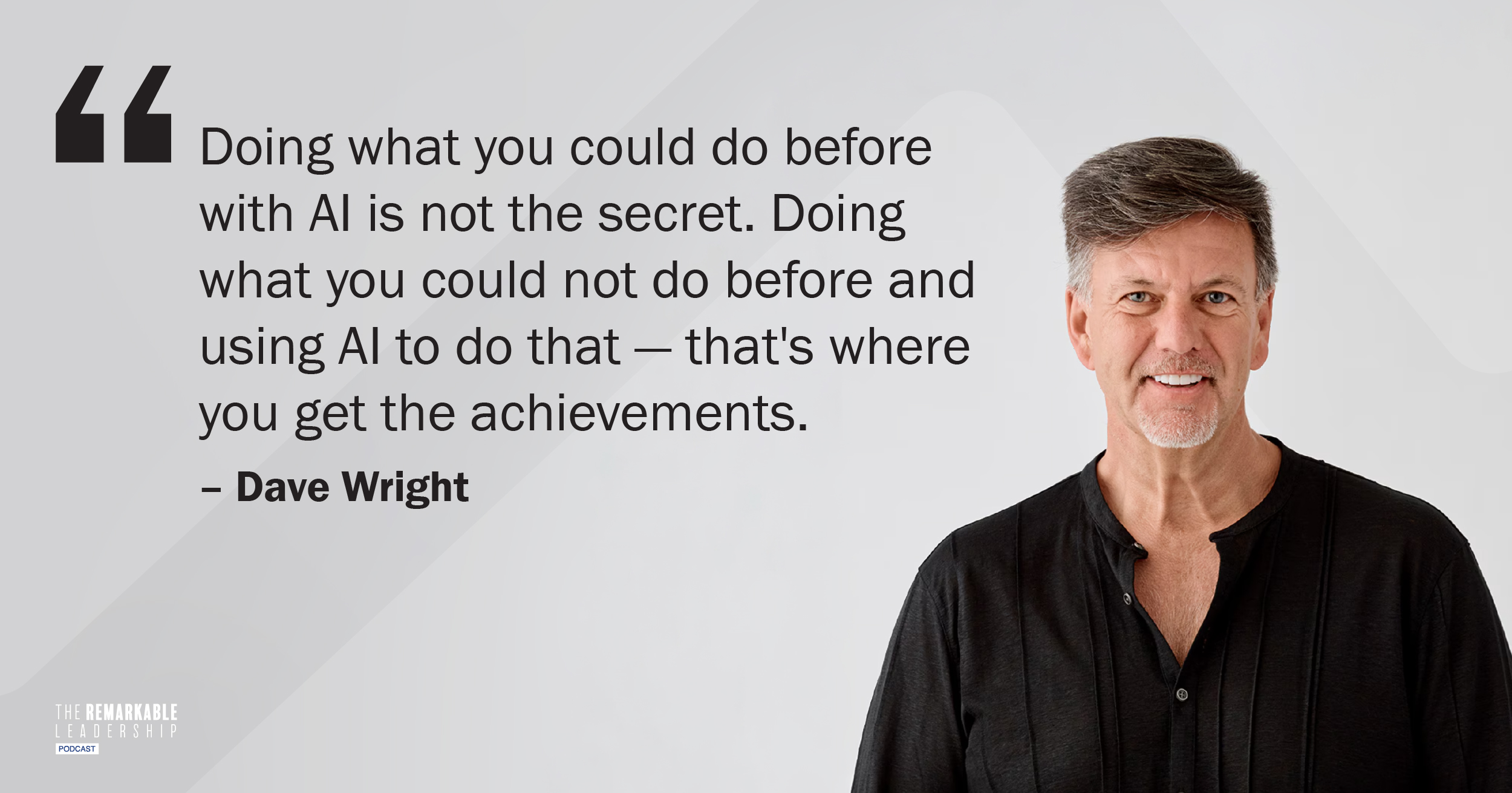
Using one to fuel the other is is the method that we recommend. But if you if you just use AI as RPA 2.0 and just use it as a really expensive automation tool, you really don't get the benefit doing doing what you could do before with AI is not the secret. Doing what you could not do before and using AI to do that.
00:14:42:06 - 00:15:03:00
Dave Wright
That's where you get the achievements. So it's not being able to use it for summarization, it's being able to use it for summarization and then understanding what you could have done better. How could you improve that? How could you? How could you make that process better than it was before? And the way we describe it is, is kind of mode one and mode two thinking around AI.
00:15:03:02 - 00:15:22:19
Dave Wright
So mode one is very iterative. I'm going to just repeat I'm going to awesome AI's. I'm going to have this gradual increase in productivity as opposed to mode two, where I'm going to think in an innovative way. I'm not gonna ask, how do I do something? How do I make it faster? I'm going to say, why do we do something?
00:15:22:19 - 00:15:43:10
Dave Wright
Why? Why do we execute in this way? Because all the, all the workflows that you've built in an enterprise over the past 3 or 4 decades are all based around. Discuss the resource you have. You don't have enough people to do what you want. You put workflows in place to try and streamline that, to try and make sure everyone does it the same way.
00:15:43:10 - 00:16:03:17
Dave Wright
Everyone does it in an optimal way. But what are you doing now is you're getting the gift of boundless resource. You know, you can run as many agencies you want. So that's the that's the whole vision of what you see with frontier companies trying to build artificial AI researchers. When when you get to the point where you're not bound by resource, you're probably bound by your workflow at that point.
00:16:03:17 - 00:16:15:23
Dave Wright
So so you should be rethinking those workflows as part of this process as well. Brian, do some business that used you. Tell me about some industry data around what workflows do for a business.
00:16:16:01 - 00:16:39:15
Brian Solis
Oh, yeah. Absolutely. I'll, I'll tackle that and I'll come back, Kevin, to the word you use, which was philosophical. Because that that's, that's an important part of this conversation, too. This study that Dave's referring to is one that was published by, McKinsey's Quantum Black in a report, I think, in 2025 that came out called The State of AI.
00:16:39:15 - 00:17:01:14
Brian Solis
They've they've updated it this year, but basically finds the same thing. They said that as in trying to in trying to measure the ROI of AI investments, they found 25 attributes that they were trying to measure. And the number one attribute was reimagining how work flows in your enterprise from end to end with AI at the core.
00:17:01:14 - 00:17:23:15
Brian Solis
So essentially what they what they were saying is that McKinsey found that essentially, at some point you're going to have to say, we have this, this incredible technology. We're bolting it on to the way that we've worked for ten, 20, 30, 40, 50 years, how old the organization is. But we haven't stopped to ask, is this the right way that we should move forward?
00:17:23:17 - 00:17:48:20
Brian Solis
And in a world where everybody now has access to a surplus of intelligence, maybe, maybe we should think about what what it is we're trying to do and what it is that we're trying to scale. And so if you think about then what it means to reimagine a workflow. Well, workflows, oftentimes within silos, companies are designed around silos and systems support those silos, because that's how companies had to work in the past.
00:17:48:22 - 00:18:10:22
Brian Solis
But now you have the ability for information to travel end to end. So you can shift now, essentially, if you take one workflow, you can realize that, wow, it's pretty limited to a vertical stack. What if we could create a horizontal stack where I was actually following it along? What what could the business look like? And once you do one you could do a lot.
00:18:11:00 - 00:18:49:06
Brian Solis
And so that comes back to the the philosophical shift that you had talked about, the, the idea that we have to ask different questions in this moment. I was telling Dave I had the opportunity recently to spend time with about 75 CEOs and these little, little small groups throughout the whole day. And the idea was, if you could, if you could create a small, intimate dynamic where CEOs could breathe and relax and let down the ego and the guard, you know, we might have some pretty interesting conversations and sure enough, that it did work, because in pretty much every conversation I heard, I don't know what to do.
00:18:49:07 - 00:19:11:22
Brian Solis
I'm the CEO and I'm supposed to have the answers and I don't know what to do. And so when you think about this philosophical switch, it should be okay for someone to say that out loud, but they don't. And so they're they're largely surrounded then by people who reinforce, then the past. And so you're not going to get a reimagined workflow from end to end in that, in that type of environment.
00:19:11:22 - 00:19:35:13
Brian Solis
So this really is that philosophy of having more of a beginner's mind, which is just one approach to this. But a beginner's mind is someone who's a little bit more, childlike in terms of wonder and in terms of curiosity and the psychological safety that's there to be able to admit you don't know what you don't know and surround yourself with people who admit the same and work together to figure it out.
00:19:35:15 - 00:20:04:22
Brian Solis
Because there's a the old mantra is, or the old. The old philosophy says that the beginner's mind. In the beginner's mind, there are, anything is possible in the experts mind, very few things are possible. And so this is really the shift that we, we unpack because I it's I know it's a long answer, but last but not least, what Dave and I had learned, was that if you are limited to the philosophy of efficiency gains and cost cutting, that's all you'll ever be.
00:20:05:00 - 00:20:22:11
Brian Solis
But you're now competing in a world where AI natives are measuring revenue per employee and outcomes. And so that's a different level of performance. And you're organizing around that performance. And at some point that AI Darwinism comes into play and not in your favor.
00:20:22:13 - 00:20:45:15
Kevin Eikenberry
One of the things that comes to my mind, Brian, as you're saying that about the beginner's mind and I'm right with you, there is this idea which I've, the coaching that I've given to many leaders who have hair the color of mine. It is you need to do some reverse mentoring. In other words, you need to find someone younger than you with a different perspective than you to mentor you.
00:20:45:17 - 00:21:20:17
Kevin Eikenberry
And that might be inside of your organization, which I think would actually be most powerful. But it shouldn't have to be, it could be your children, I suppose. Or if you're old enough, I am not that old, your grandchildren. But the point is that, you know, there's you talk at the end of the book about this, this sort of profoundly true thing that it's really hard for people who have been in an organization for a long time and have a lot of vested interest and a lot of legacy to say, we gotta we can't we can't just fix the old process because the old process is content, context connected and that context has
00:21:20:17 - 00:21:22:16
Kevin Eikenberry
changed.
00:21:22:18 - 00:21:51:16
Dave Wright
All right. So I, I've got some funny stories about that. Some, some interesting takes on that because interestingly enough, my, my oldest son just went through an internship and part of that internship program was reverse mentoring. So she was mentoring one of the SVP of the company, around artificial intelligence, which is interesting because she is an expert on artificial intelligence, but but she, I asked her what she what she thought about this.
00:21:51:16 - 00:22:15:21
Dave Wright
What the what the findings were, and she said she had a great expression. And she said she said, I'm amazed by the the millennials use of AI. And I said, what do you mean? And, and a very harsh on millennials, but why are you picking on millennials. And she said because they use it for everything, but they use it for, whether something looks good, they use it for making life decisions.
00:22:15:21 - 00:22:43:03
Dave Wright
And she said, this is this is all we found a things I was particularly bad for is doing these type of things. But but this is what everyone's using it for. And and she said to me, she said why, why do you think people want to use AI for everything? And I thought about it for a while and, and I realized and this kind of shift, that a few months ago I realized this because almost every company had come in and said, we're going to be an AI coming.
00:22:43:05 - 00:23:02:15
Dave Wright
Everyone needs to use AI. Everyone should be using AI. We're going to measure how effectively you use AI. And then six months later, everyone's like, oh my God, this AI costs an absolute fortune. What are we? What are we achieving with it? We're burning through all these tokens. What benefits are we getting? And and it goes back to we were joking before about trust and transparency.
00:23:02:17 - 00:23:27:17
Dave Wright
But you need to you need to dispel the Emperor's new clothes. Mystique of AI. At the moment it sits, though, if you see a use case where someone is using AI and you argue against it, you can be seen as like a Duma or negative against the AI. But. But that's not the case. You need this open environment where you can look at something and go, actually, AI isn't the best solution for that.
00:23:27:17 - 00:23:49:16
Dave Wright
Or we've built a solution with AI, but we could actually build a better solution. We're not we're not really improving it in any way. So you need to have, I think one of the processes of this AI opening exercise is to be able to have the freedom to be able to say no, or the freedom to be able to question, and I don't see it happening often enough, to be honest.
00:23:49:18 - 00:24:24:11
Kevin Eikenberry
So, Dave, your, your example there raises an interesting question. It was another one of the questions I want to ask. So, Brian, I'll ask you, we, we want people to build some skill. We want people to build some fluency with AI, if you will. And Dave, your daughter said that maybe they're picking the wrong stuff, but I guess the question I would ask you, Brian, is if you're giving advice to leaders, whether they're in the C-suite or not, like, what's the AI fluency that we should be trying to build as leaders with our leader?
00:24:24:11 - 00:24:27:01
Kevin Eikenberry
Hat on?
00:24:27:03 - 00:25:03:15
Brian Solis
Yeah, okay. So let's let's talk about that. So I'm gonna I'll, I'll just say this explicitly to those listening and watching as Kevin said, let's put our leader hat on, not our manager hat, because those are two very different hats. And I see a lot of manager hats masquerading as leader hats right now. So if in a world where traditional organizations are measuring adoption and also usage, you propagate probably all of the worst behaviors with AI, as Dave was saying in the millennial use case, what happens then if you use AI for everything?
00:25:03:15 - 00:25:30:13
Brian Solis
Well, it turns out that you lose your ability to critically think, you lose creativity. You lose a whole bunch of resources necessary to be able to ascertain whether or not what you're doing is the right thing to be doing, or if there are other possibilities to do something bigger or better. And so that leads to things like, cognitive decline that leads to AI sycophancy, that leads to AI slop, and not even being able to recognize AI slop.
00:25:30:13 - 00:25:54:05
Brian Solis
Whereas in Dave's daughter's approach, she's having to pay an AI tax against that AI slop, which means that she's having to make sense of something that you didn't spend the time on making better. And so you create this. Then false impression and false environment of how we think we're supposed to be working with AI. So when you put on a leaders have you have to bring in that beginner's mind.
00:25:54:07 - 00:26:18:04
Brian Solis
You also have to bring in, you know, Disney, Walt Disney used to go through this process that he used to refer to as the Seven Dwarves. And he used to surround himself with people who were optimists, but also pessimists, also skeptics, and just different perspectives intentionally to have a real more open conversation about where we could end up on the other side of the conversation.
00:26:18:04 - 00:26:44:08
Brian Solis
And we need we need more of that right now. So I took even I even had a chat. Right. So before we we talked a tech. This book, you know, Dave has done this in his own world. Two I wrote a piece for Harvard Business Review where I needed to challenge myself and how I was using AI to see if there were better, bigger, better ways to use AI.
00:26:44:09 - 00:27:09:14
Brian Solis
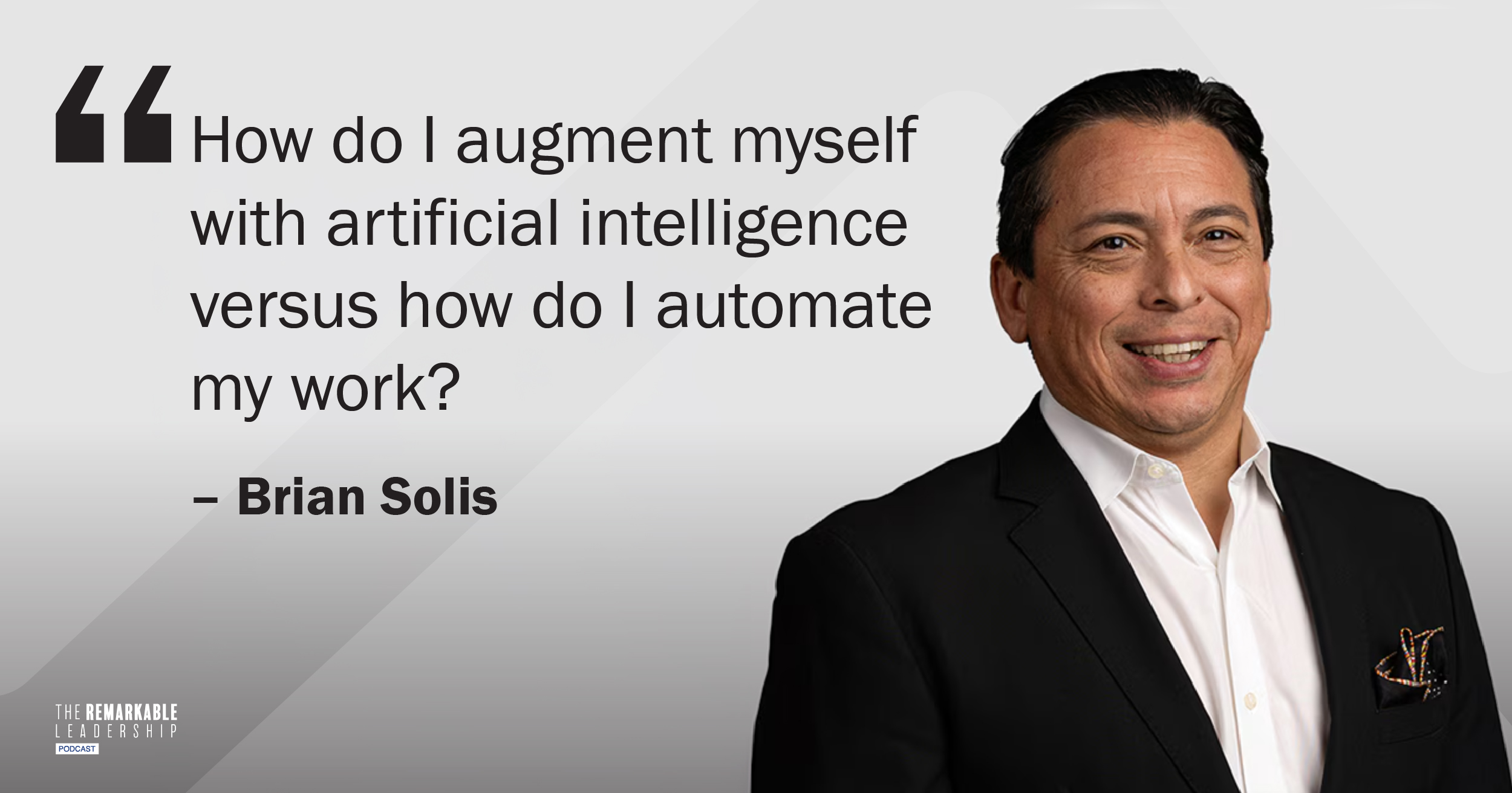
And so I went through this whole mental exercise to be like six months to write this article. Then how do you rewire your brain against the unknown? I don't know what I don't know, so how am I going to figure that out? And so what ended up happening is there were 12 steps that I ended up with on how to rewire your brain with AI, meaning like, how do I augment myself with artificial intelligence versus how do I automate my work?
00:27:09:14 - 00:27:30:10
Brian Solis
How do I summarize emails? Dave has this joke that where he says, I want to transform these three bullets into a full email, and then the person who gets the email is, I need to take this email and transform Rebecca to three bullets, you know? But instead it's like, how can I use it to do something I couldn't do yesterday or wasn't possible yesterday?
00:27:30:10 - 00:27:51:14
Brian Solis
And so just even having that question ask, it's hard because you don't know how to answer it. So you got to break. You got to break into some neuroplasticity and start asking different questions, practicing in different ways, exploring different things, and using it so that you can see what you couldn't see before.
00:27:51:16 - 00:28:16:03
Kevin Eikenberry
Yeah. To me, I mean, it's the idea some people talk about the idea of the second brain. It's the idea of augmenting. It's the idea of, one of the ways that I am using these tools is to help me find connections that I'm not necessarily finding for myself. And and that is augmentation, right? That's not replication. That's not, that's not substitution.
00:28:16:05 - 00:28:39:10
Kevin Eikenberry
So I think it's a really, really good point. There's so much that I would love to talk to you guys about. But there's one thing, as we're having this conversation and I have to timestamp it, right. Because I, I might not have asked this question ten days ago, but on the 17th of September, the biggest thing that everyone's talking around, around AI is and they've you said the word a minute ago, doomsday.
00:28:39:12 - 00:29:02:08
Kevin Eikenberry
There are lots of worries and, I'm just curious where you guys are, and I'm not saying how doomsday are you? That's not really my question. My question really is, here's how I look at it. Everyone is somewhere on this. This tension between this is the best thing ever. And oh, my gosh, the world is going to end from this.
00:29:02:10 - 00:29:24:13
Kevin Eikenberry
And everyone's somewhere in between. And the current conversation on the 17th of September, 2026 is moving a lot more towards the oh my gosh side for a lot of people. I'm curious what you guys think individually as it relates to how we do this and use it in our businesses. Either of you want to take that or do you both want to take that too?
00:29:24:18 - 00:29:32:19
Brian Solis
But I'm smiling because David, I just had this conversation. You go for a day, I'll jump in.
00:29:32:21 - 00:29:53:18
Dave Wright
So. So I think at the, at the moment, one of the, you know, everyone's like, everyone's out there with this, as you say, there's this doom mentality. Yeah, we need to slow down. AI is going to going to end the world. No one's defining how it's going to happen. No one's no one's saying whether it's, it's a Cyberdyne model or whether it's the creation of a virus.
00:29:53:20 - 00:29:56:13
Dave Wright
00:29:56:15 - 00:30:14:10
Dave Wright
It's hard for me to believe that's going to happen, you know, when we're still at the point where type of head doesn't always get it right and spell checker still can't correct the word should if I just put the day in the wrong place. And I'd like it to do that automatically. So so I think the.
00:30:14:12 - 00:30:52:18
Dave Wright
I don't see it as an existential risk at the moment, but I can see I can see if we continue to increase the kind of self-replication of AI where it's starting to create its own models, I could see that becoming more recursive and more dangerous. But right now I think it's it's up to people in the in the frontier models to be able to define that control, define those rules for, for us looking at it from an enterprise AI deployment perspective, there has been a shift recently that people, people started off initially with how do I deploy it?
00:30:52:20 - 00:31:15:21
Dave Wright
Then it moved, how do I manage it? Then it moved to how do I regulate it? And in the latest iteration, this is the first time we got the request. How do I kill it? So I want to be able to build a kill switch where if I have an A workflow that goes rogue, I don't want to have to trace down where it's being executed from.
00:31:15:21 - 00:31:33:22
Dave Wright
I just want to be able to hit one button and say, you need to stop right now and then do the investigation afterwards. So I think humans are naturally starting to put these circuit breakers into what happens in the world of AI, and I hope it continues to develop that way. But I don't think I should stop developing.
00:31:34:03 - 00:31:38:01
Dave Wright
I'm I'm all for improving. I just think it needs controlled improvement.
00:31:38:02 - 00:32:03:08
Brian Solis
Yeah, yeah. And I'll add to that, just just more of an observation. You know, if you look at all of the all of the things happening in the world right now, a lot of that is caused by human beings. And we we've got a we've got to look, we gotta look at morals and we have to look at all of the the drivers of where we are and where we're headed on that front.
00:32:03:10 - 00:32:30:00
Brian Solis
And some of that does play into this conversation, by the way, there are reasons why certain people are stakeholders in, in, in, in driving, in driving fear. But I will say this is that as Dave said, you have to if it's artificial intelligence, if it's quantum, you have to build in an infrastructure to help manage this, and you have to have a strategy to help understand what you're doing and why you're doing it and where you're trying to go with it.
00:32:30:00 - 00:32:58:16
Brian Solis
And we see that governance is probably one of the most important, but often least understood or at least practice conversations right now. And so that that's that's where to start. And we we build on that. We've also as a, as a company at service now published this is our third year, in publishing the AI index. It's a maturity model that our org, built about almost four years ago now, where we started recognizing how companies weren't weren't involved, evolving.
00:32:58:16 - 00:33:22:00
Brian Solis
This was before we tackled the book, and we looked at all of the pillars that led to successful evolution and maturity and things like vision, strategy, culture, governance. These were the underlying foundations that became pillars for that type of growth, and that those are the important conversations to have.
00:33:22:02 - 00:33:44:21
Kevin Eikenberry
Bringing us right back to what we said earlier, that it's about technology, but it's not necessarily about technology. Before we close, guys, I've got a question that I well, let me just do this first. Anything. There's so much we could talk about, but is there anything we didn't that you really wish we had? In other words, is there a question you wish I would have asked you?
00:33:44:23 - 00:34:13:13
Brian Solis
You did. You did bring it up. We didn't get a chance to talk about it. And I don't know if there is time to talk about it, but I will say that the word culture has been instrumental in every type of transformation that we've been part of. And so much so that back in the days when I was a full practicing futurist and analyst, it's a series of reports that I wanted to break into.
00:34:13:13 - 00:34:42:00
Brian Solis
You didn't they didn't really exist at the time. Was corporate innovation. So how do how do incumbents actually innovate and how do they not? And it was interesting because I studied this every year. The number one catalyst for innovation was culture. The number one inhibitor for it was culture. But if you ask leaders how they define culture, I would I would be surprised if you got consistent answers from leaders.
00:34:42:02 - 00:35:10:14
Brian Solis
It is a it is a conversation that most leaders culture is a byproduct of just how they lead or a byproduct of a vision statement. But really, a culture is sort of this aspirational model of a future motivated state that people buy into and that people understand the role they play in bringing that vision to life. And that those that those behaviors become the norms and those norms become the construct for what we what we manage, what we what we what we deter from.
00:35:10:16 - 00:35:31:13
Brian Solis
And and if you look at a high level, some, some companies that I had the opportunity to work with specifically on cultures of innovation. So culture was a part of it, which meant that culture had to be designed where companies like Zappos, where the culture was happiness, employees were happy. That was a measure. Customers were happy. That was a measure, southwest before they became an efficiency company.
00:35:31:13 - 00:35:53:07
Brian Solis
That was about love. And that was a measure for employees and for customers. Nordstrom was about customer satisfaction. These are things that were intentionally built and managed until they weren't. And so that that culture conversation, we we tackle it in the book. But it would probably need a book on its own to.
00:35:53:09 - 00:35:56:14
Kevin Eikenberry
Dave, anything you would add before I take us into wrapping up.
00:35:56:16 - 00:36:15:18
Dave Wright
I think it would have gone on to probably probably an extension of culture would have gone on to what does your organizational design look like after this? So, you know, do we move away from traditional org charts where we look at who reports into who? And so looking at work charts that actually looks at how value flows across an organization.
00:36:15:18 - 00:36:35:10
Dave Wright
Because as you as you start to increase the ratios in your hybrid workforce, where you've got managers managing people and agents, the relevancy of who reporting to who is nowhere near as important as how the work actually gets done. So. So that probably would have come out of the culture conversation.
00:36:35:12 - 00:36:46:18
Brian Solis
Yes. And we do tackle that in the book. So I hope that at least there's some curiosity to want to at least look at it at a high level. Yeah.
00:36:46:20 - 00:36:57:11
Kevin Eikenberry
So before we give you guys a chance to point us to the book and all of those things, the question I promised I would ask you both and Brian, your first, what are you reading these days?
00:36:57:13 - 00:37:02:23
Dave Wright
And I can't help you with copy one of your books. Copy one of your books. Brian. It's got to be something else.
00:37:03:01 - 00:37:34:06
Brian Solis
That's a good habit. I. I, I have about 8 or 9 research reports open up on my desktop right now, but I guess that's not what you're looking for. Book wise, if that if that's where we're going. I am rereading, Creativity Inc by Ed Catmull. I've had the privilege of being in a small little author group with him for about 15 years, and his his philosophy and the philosophy of the founders of Pixar still still inspire me.
00:37:34:06 - 00:38:01:19
Brian Solis
And the reason why I'm rereading it is that I was in a I was in a conversation with executives, of all of them in their own right, representing different stages of the customer journey, after they have a car accident. And so it's insurance providers. It's it's repair shops. It's you name it. And it was, was really fascinating that everybody started the conversation with wanting to know about AI.
00:38:01:19 - 00:38:22:10
Brian Solis
But at the end, the conversation said, so we go into a room as executives, and we're going to try to figure out what different questions we need to start asking. How do we do that? Because if you bring a bunch of people in a room, they're going to try to solution around what they know and they're going to come out with a new version of that.
00:38:22:14 - 00:38:45:07
Brian Solis
So how do you break that cycle? And it made me want to go back to creativity to, you know, think about, well, these people wanted to figure out how to create an animated movie using computers, and that didn't exist yet. So how did they get there? And needed to replenish myself with some fresh ideas and optimism.
00:38:45:08 - 00:38:47:10
Kevin Eikenberry
Excellent. Dave, what are you reading?
00:38:47:12 - 00:39:26:10
Dave Wright
I'm reading two at the moment. One was, one was one that I was catching up on that I'd been meaning to read for a while, and that was, moonshots by, Sophia Carl. So, so understanding how people come up with these outrageous ideas sometimes, why they get those outrageous ideas wrong. And the other one I'm actually reading is from, a friend of mine, a woman called Kelly Stephen Weiss, who went round and interviewed, different female stars in Silicon Valley and wrote a book called Valley Girls that talks about the the evolution of of women in leadership positions in Silicon Valley over the last three decades.
00:39:26:11 - 00:39:31:07
Dave Wright
Really, really insightful to see how that's swept over the last 30 years.
00:39:31:09 - 00:39:50:20
Kevin Eikenberry
We'll have those links to those books, as well as to Brian and Dave's book, Infinite How Visionary Leaders Transform Today's Businesses into AI Forward Companies. We'll have that. All of that on the show notes. Brian, where can we learn more? Where do you want to point people? Having having heard what you had to say and wanting to learn more?
00:39:50:22 - 00:40:07:09
Brian Solis
Well, the, the book URL is Infinite Company dot I or, you could go to Amazon or your favorite bookstore and, Dave and I are on LinkedIn, but Dave, you have a special edition and your LinkedIn URL. Is it? Dave. Right.
00:40:07:13 - 00:40:13:16
Dave Wright
Two. Dave. Right. Two. Yes. I wanted to be I wanted to be more individual than Dave. Right.
00:40:13:16 - 00:40:19:11
Brian Solis
One I'd I've just pride sold this, on LinkedIn.
00:40:19:12 - 00:40:39:18
Kevin Eikenberry
All right. Well, we will have all of those links, everybody in the show notes. And so before we go in, before I thank Brian and Dave for being here, I have a question for all of you as listeners and viewers. It's the question that I ask every single episode because it's an important question. And the question is this now what?
00:40:39:20 - 00:40:58:17
Kevin Eikenberry
What action are you going to take as a result of this? Now, obviously, Brian and Dave would love for you to buy a copy of the book. I would highly recommend that, but that's not really what I'm talking about. What I'm really talking about is what idea did you hear that? You know, you need to take some action on whether that's for you, whether that's for your team, whether that's for your enterprise.
00:40:58:19 - 00:41:16:11
Kevin Eikenberry
The only way this is of great, the the way this is of greatest value for you is if you take some action, not just soak it in, not just think about it, not just nod your head, but act. And that's what I hope that you will do. And that question of action. Now, what is what I will leave you with?
00:41:16:13 - 00:41:22:23
Kevin Eikenberry
And I will leave, Brian. Dave, with my thanks. Thank you guys for being here. It was a pleasure to have you.
00:41:23:01 - 00:41:24:11
Dave Wright
Okay. Thank you for having us.
00:41:24:13 - 00:41:43:17
Kevin Eikenberry
Thank you. And everybody. If you enjoyed this, make sure that you send someone else this way. Have them listen to this conversation and I'd like you make sure they're subscribed so they don't miss it. Wherever you're watching or listening, you know how to do that. I don't need to tell you. I just know that you need to make sure you're back next week for another episode of the Remarkable Leadership Podcast.
Meet Brian & Dave

Their Story: Brian Solis and Dave Wright are the authors of Infinite: How Visionary Leaders Transform Today's Businesses into AI-Forward Companies. Brian is Head of Global Innovation at ServiceNow. He is a world-renowned digital futurist, 9x bestselling author, and international keynote speaker. Brian is one of the world’s foremost authorities on corporate innovation, digital transformation, and AI business reinvention. He has published over 60 widely read research reports exploring the future of business, disruptive technologies, and shifts in consumer behavior, and regularly advises business and technology leaders and boards around the world on how to navigate AI-driven reinvention.
Dave Wright is Chief Innovation Officer at ServiceNow. With nearly 30 years in the IT industry, Dave has spent his career helping organizations leverage technology to boost productivity, streamline operations, and create new value through business transformation, not just incremental improvement. His expertise spans virtualization, cloud infrastructure, service management, data center automation, and software development. Over his decade-plus tenure at ServiceNow, Dave has held leadership roles including Chief Strategy Officer and Global Vice President of Solutions Consulting, giving him a practitioner’s perspective on what it takes to embed intelligence into an organization’s structural core rather than layering it onto legacy systems. He draws on extensive experience designing and deploying AI-driven workflows at scale across thousands of global enterprises.
Follow The Remarkable Leadership Podcast


Looking to Develop Stronger Leaders?
Want help developing the leaders in your organization? Reach out to explore how the Kevin Eikenberry Group can support your team.
Book Recommendations
Like this?
Join Our Community
If you want to view our live podcast episodes, hear about new releases, or chat with others who enjoy this podcast join one of our communities below.
Leave a Review
If you liked this conversation, we'd be thrilled if you'd let others know by leaving a review on Apple Podcasts. Here's a quick guide for posting a review.