How can leaders move beyond the noise and overwhelm of AI to create value for their teams and organizations? In this episode, Kevin talks with Matt Kesby about why AI is not just a technology challenge, but a change management challenge. Matt explains why organizations should avoid chasing shiny tools and instead focus on the systems, processes, and repetitive work where AI and automation can create measurable “value impact.” He also introduces the difference between makers, watchers, and blamers, encouraging leaders to act now by documenting tasks, identifying opportunities for improvement, and building clear procedures that both people and AI can follow.
00:00:09:09 - 00:00:41:13
Kevin Eikenberry
When you hear the title of this episode untangling, I, I suspect you have one or maybe both of two immediate thoughts. Finally. Or is that even possible? We're not going to talk about prompts or tools or one of the massive images about AI that you're seeing every day on LinkedIn. Now we're going to talk about how you can put AI to real use in your organization and on your team, and what that looks like and what to be aware of.
00:00:41:15 - 00:01:05:05
Kevin Eikenberry
And I've said this before in other episodes I know I have, but this may be the most important episode that you hear this year. I'm so glad that you are here. Welcome to another episode of The Remarkable Leadership Podcast where we are helping leaders, excuse me, organizations and their leaders grow and lead more effectively so they can make a bigger difference for their teams, communities, and the world.
00:01:05:07 - 00:01:34:21
Kevin Eikenberry
If you are listening to this podcast, you can join us in the future for live episodes on your favorite social media channel. You can find out about when those live episodes are happening, and therefore interact with us and see them sooner by joining our Facebook or LinkedIn groups. Just two of the platforms where these are live streamed and just go to remarkable podcast.com/facebook or remarkable podcast.com/linkedin to get connected and then find out what's going on.
00:01:35:01 - 00:01:54:06
Kevin Eikenberry
If you like what you're hearing today and want help in developing the leaders in your organization, let's talk. Reach out to info at Kevin eikenberry.com, and we'll schedule time to learn about your needs and how we might be able to help. With that, I'm going to bring in my guest. If you give me just a second so I can click the button, I need to push.
00:01:54:08 - 00:02:29:13
Kevin Eikenberry
There he is. His name is Matt Kedzie. He is a serial entrepreneur and AI transformation leader and a business strategist with only 29 over 29 years of experience and helping organizations achieve triple digit revenue growth and sustainable profitability based in the Philippines, which means it's 2:00 in the morning for him right now. He leads a team of over a thousand people across seven countries using AI to accelerate operational, financial, sales and marketing performance by up to five times.
00:02:29:16 - 00:03:02:14
Kevin Eikenberry
He is the founder of Go Team and multiple tech companies dedicated to helping businesses scale and people succeed. Additionally, he is the founder, chief AI officer and Master Coach at AI coaches.com. He's partnered with more than 300 businesses worldwide to help them grow their businesses. He's now the author of an ambitious and important book. It's titled untangling AI Driving Business Success Through Enterprise Automation and AI agents.
00:03:02:16 - 00:03:06:10
Kevin Eikenberry
Matt, welcome. So glad that you are here.
00:03:06:12 - 00:03:10:06
Matt Kesby
Thank you. Kevin, great to be here. Incredible I appreciate that.
00:03:10:08 - 00:03:27:20
Kevin Eikenberry
I'm going to do my best to keep you awake for the next. So, before we started, I saw you sipping on something out of a cup. I'm going to presume it had caffeine. Maybe it didn't tell you what to know. But, man, I'm so glad that you're here, to talk about this really, truly timely topic.
00:03:27:20 - 00:03:32:20
Kevin Eikenberry
So let's just start there. Why? Why this book and why you.
00:03:32:22 - 00:03:51:15
Matt Kesby
The, why why the book is because, like, for me, I built my first product with AI back in 2007, another 1 in 2020. And a lot's changed since those days, early days I think. And yeah, yeah, absolutely. And watch that.
00:03:51:17 - 00:03:53:09
Kevin Eikenberry
Tuesday. What are you talking about?
00:03:53:11 - 00:04:16:04
Matt Kesby
Yeah. You know, the last seven weeks have been remarkable. And and you know, I think we've had more advances in the last seven weeks, same the previous year. And we're going to see that trajectory and continue. And so, look, I found myself over 12 months ago in a room with 3000 CEOs, all gathered together to learn about AI and different workshops.
00:04:16:04 - 00:04:44:08
Matt Kesby
And the most common thing that was happening was people were feeling overwhelmed. They felt like the behind that we need to do this, but where to look and how to get started? And it seemed it was very evident that, everyone's like chasing towards the tech to. Because that's what we're talking about AI, right? It's all technology. And what was getting missed is some of the key fundamentals in business that need to be in place.
00:04:44:08 - 00:05:05:03
Matt Kesby
Because this is as exciting as the tech is, this is a change management challenge when within an organization. And, most of the presentations that were going on were either too high level and not really landing for people or although so deep in the technical side of things, which is exciting for me, but too scary. And everyone even more.
00:05:05:05 - 00:05:06:03
Matt Kesby
And, I.
00:05:06:03 - 00:05:07:10
Kevin Eikenberry
Talk about that a little bit.
00:05:07:12 - 00:05:32:23
Matt Kesby
Great great, great. I found myself just sharing our approach as we work with organizations and what we do within our own, which is a decent size organizations as well. And that the fundamentals that playing out like we still need strategy and we definitely need execution because that's, you know, the result where we're looking to get to and, and how you get there is through people and technology.
00:05:32:23 - 00:06:00:16
Matt Kesby
And if you don't have those four pillars in place, things fall over, right? Because you go straight for technology and that can bring fear for people or confusion and, and so, it, it actually brought to the table the AI sweet spot, which is our framework. That is the foundation in the book to give the guidance, and, why why me?
00:06:00:19 - 00:06:22:16
Matt Kesby
Well, I've been building technology for a long time now, and you need to get this, intersection of, once again, not just the technology, but it's to understand the people side. And I'm super passionate about the people side. And I feel very fortunate to have spent close to a decade as the head of strategy execution at Franklin Covey across Australia and New Zealand.
00:06:22:17 - 00:06:50:19
Matt Kesby
Franklin Covey, beautifully well known for seven habits of Highly effective people and four disciplines of execution. Leading the trust. All these amazing programs that have frameworks that underpin how to actually share that message in a way that guides people to be able to have the structure for safety, that plenty of room for freedom, and to be able to play within that structure itself and the creativity that's required.
00:06:50:21 - 00:07:20:09
Matt Kesby
And so with with that inspiration, you know, my own time, not only is it in my DNA to, to have this, understanding of people and, and making changes occur, but also to change the language so it's easier for people to understand, and, for me, we've we've now got over 1200 employees, across our organizations. We, we, transact that $1.8 billion a year in transactions.
00:07:20:09 - 00:07:48:18
Matt Kesby
We even collect the rent for 38,000 homes in Australia. We work with clients all all over the world. And, of the 14 software products. So we're just moving at such pace that this isn't a book that's come from some ideas. We're in the trenches implementing and executing. And I think that that that's the why me side is that we can run alongside people.
00:07:48:18 - 00:08:15:16
Matt Kesby
And I'm constantly, you know, building software and systems at the same time as we're educating and learning because the speed, it can't be what we were doing even three months ago. It's it's changing. The good news is, though, that that frameworks the sweet spot. It's principle based. So it has the freedom for the change in the technology. It's the people side and the guidance.
00:08:15:16 - 00:08:17:21
Matt Kesby
It isn't the biggest problem.
00:08:17:23 - 00:08:40:17
Kevin Eikenberry
One of the things you said at the very beginning, one of the one of the first times that I nodded during that, during as you were chatting, was that this isn't really a technology. It is a technology thing. It is a code. I think it's change management. And so one of the things that I took as I was reading the book is, yes, it's it's got, it's, it's got this clothing called AI.
00:08:40:18 - 00:09:10:05
Kevin Eikenberry
And yet underneath it and the reason I'm reinforcing this is that we can get overwhelmed by those two letters and we can get caught in the noise of all the stuff which we can talk about a little bit. But if if people will step back and apply what they already know about strategy, about execution, about people and technology like they're heading, that doesn't mean you don't need to read the book.
00:09:10:05 - 00:09:28:23
Kevin Eikenberry
It doesn't mean that. But what it means is that what I found a long time ago about change is that when people start thinking about change, they think everything's changing and what's happening here is there's a lot of stuff you already know that you need to be applying in the context of this particular one. Agree? Disagree.
00:09:29:00 - 00:09:54:23
Matt Kesby
Yeah. You know, and I think to like is is business leaders and you're running the pace all the time anyway. You're always going to be learning. There was always going to be ambiguity in what's happening in business. It's just been accelerated. And so while all these new things are coming at you, it's time to have the big deep breath, take a step back, get into a framework so you can have the safety follow the steps.
00:09:55:01 - 00:09:57:22
Matt Kesby
Because it was already overwhelming in business.
00:09:57:22 - 00:10:23:09
Kevin Eikenberry
And this is exactly, exactly, at the beginning of the book, like in the introduction, the very first thing, you quote, Peter Didymus, who says there is oh, there are only excuse me, there will be only two types of businesses in the future, those that use AI and those that are out of business. Well, that's pretty stark.
00:10:23:11 - 00:10:25:09
Matt Kesby
So it is really different.
00:10:25:09 - 00:10:26:00
Kevin Eikenberry
Second.
00:10:26:02 - 00:10:59:18
Matt Kesby
Yeah, absolutely. And if we look at the compounding impacts of AI and and that the ability especially for those that as you start to move past the using a little bit of ChatGPT here and there, and, and and real and I think the real discovery or when you really uncover this is that in order to actually achieve any goal in AI, it's also said very, very well in atomic habits, we don't rise to level our goals.
00:10:59:18 - 00:11:21:07
Matt Kesby
We fall to the level of our systems. And and so every time you look at inside the business, in order to achieve a goal, you've got a system which is made up of processes, procedures and steps. And when you get that system running, well, and, as a human being, it's hard to do consistently. Let's just face that fact for a moment.
00:11:21:07 - 00:11:42:02
Matt Kesby
But when we get an automation running it and you can like even just a very small piece, get that running well, and then you layer another one on top of it and another one on top of another one on top of it. You start to get the compounding impact. And so all of a sudden, one person can do the equivalent of 1.5 people's roles or two people's roles.
00:11:42:04 - 00:12:05:10
Matt Kesby
And that business is now able to have greater profitability, pay people more, more for the work that they're doing. They can win together and the business can rise. Now, if you look at in six months time, someone who's got to that, even 30% or 40% or 50% of productivity gains, and that's really under cooking. What's possible at the moment.
00:12:05:12 - 00:12:39:07
Matt Kesby
And they look at you, look at the competitors in the market and realize they are just streets ahead, and it's going to be hard to catch the person that's out the front. And if you hear that and then suddenly think, oh my goodness, we're nowhere near that yet, it's okay. But you do need to take action because it's coming really quick and it will be often the the, the business that you never even saw coming or the competitor that you thought they'll never catch us, that suddenly gets into it and starts to eat everyone's lunch.
00:12:39:09 - 00:12:40:09
Matt Kesby
Yeah, yeah.
00:12:40:11 - 00:12:57:19
Kevin Eikenberry
So you, you talk about three, you're, you're heading toward my next question, which is you describe three kinds of businesses that we could put all the businesses on the planet into one of these three buckets. And you, you almost got there. So let's go to the rest of the.
00:12:57:20 - 00:13:13:13
Matt Kesby
There's two types of businesses and three types of people because businesses are made up by by people. But and these are the, the makers, the watches and the playmates. And so the makers I say is everyone that's going to be on this call still listening right now because they're like, okay, we got to we got to do this.
00:13:13:13 - 00:13:29:23
Matt Kesby
We got to figure it out. Even if you're not a maker yet, you don't think that you are okay because you're here and you'll stick right the way through. The makers are the ones that are in there right now taking action and starting to apply it. And yes, there might be people that are further in front of you, but don't worry about that.
00:13:30:01 - 00:14:02:20
Matt Kesby
It's actually taking even carving out an hour a day and making sure that you are, making progress in the business. And it doesn't always have to be actually using the AI just yet. Even one of the best things you could do today is document throughout the day the tasks you're actually doing, so you can start to uncover where it is that you're going to start applying AI next, where the really repetitive tasks you're doing because our brains are not databases of all the information that creativity engines just like generative AI.
00:14:02:22 - 00:14:19:20
Matt Kesby
So you're not going to actually remember everything anyway. So start documenting that. What did you do? How long did it take? Wow, I do that 100 times a month and it's five minutes each time I do this 500 minutes. I wonder if we could squash that down to five minutes for the whole 100 times together. Yes, you probably can.
00:14:19:22 - 00:14:49:16
Matt Kesby
The makers are in there thinking about this and and taking action. Now. The watches are the ones that are had a little devil struggling a little bit. And so they went, yeah, I'll just wait to see if this passes or see what someone else is doing. And they're the ones that are going to, sometimes even reduce their productivity in the next 12 months because they're getting distracted by it.
00:14:49:18 - 00:14:52:22
Kevin Eikenberry
This is not really doing anything.
00:14:53:00 - 00:14:53:20
Matt Kesby
Really doing it.
00:14:54:00 - 00:14:59:00
Kevin Eikenberry
It's on the back half of the adoption curve. When we get to these folks. Really or. Yeah.
00:14:59:06 - 00:15:20:02
Matt Kesby
Well and and well interestingly even in the adoption curve. Right. So your innovators are the first 2 to 3%. And so they're the ones if you're on the call, you know who you are because you're super overwhelmed at the speed of everything. That and how it's moving. And many of the makers are going to be there and they're the, early adopters as well, taking the action.
00:15:20:04 - 00:15:42:20
Matt Kesby
And yeah, so the, the, the, the watches are on the back half and they're heading towards the very tail end. Which of the blame is so makers watches and blame is the blame is are the ones who are going to turn around in 12 months time ago what happened? And it wasn't my fault and I didn't know and no one told me.
00:15:42:20 - 00:16:11:13
Matt Kesby
And all this type of communication that we would call below the line victim, language, blame, excuse, denial, create. And it's, I feel a little bit sad because it it will be a shock to many people, at that point in time. And it will be hard to catch up for many, because it's not that it wasn't the technology's fault, it was that there's a a maturity of learning.
00:16:11:13 - 00:16:32:09
Matt Kesby
That's required to actually take responsibility, accountability and ownership for our thoughts, our feelings and our actions. And that's a fundamental leadership, culture within our organizations, maturity that's required in order to handle any change, any time of ambiguity.
00:16:32:10 - 00:16:55:04
Kevin Eikenberry
Absolutely. So, if we so so you said something a few minutes ago, and I'm also aware that as you are, I are having this conversation. Some people are going to be listening this a long time from now. So I'm going to date stamp right now. We're in the middle of March of 2016. And you said more has happened in the last seven weeks than in the last year.
00:16:55:07 - 00:17:15:14
Kevin Eikenberry
Only the makers even have a clue or an inkling that you set about what you meant when you said that everyone else is like, what, what, what? And so again, I hear you and I, and I hear it in the book. This isn't about guilt, shame. It's about like, okay, now what? Here's what wherever I am, here's where I am, here's what I need to do to move forward.
00:17:15:18 - 00:17:42:14
Kevin Eikenberry
So let me ask this sort of practical question. If I'm a leader, listening to this whenever it is, and I'm here and I feel like I may be at a different spot, than the organization, and maybe I'm not the CEO. I'm a leader somewhere in the middle. Yeah. What's your advice to me? Or what's your advice to the HR, the leader of the HR department or the leader of the IT department or whomever?
00:17:42:17 - 00:17:58:23
Kevin Eikenberry
Like, how do we help change the focus of our organization, or at least start to raise this conversation beyond the. Yes, but, let's wait and see kind of conversation.
00:17:59:00 - 00:18:22:23
Matt Kesby
So so this is where we go back to some really important business fundamentals and how you communicate to achieve any type of change in an organization. And it's to speak the language of business and not not everyone has been taught how to do that. Maybe if you've done an MBA or you're once again, if you're up in the C-suite, you'll be talking this language.
00:18:23:01 - 00:18:48:03
Matt Kesby
But if you're a leader that's wanting to drive, change and get results, it's really important that you do get noticed by the C-suite, the CFO and the CEO. Why? Because ultimately, the change to really occur through the organization, you need buy in from the top. And they also in many organizations, well, there's someone above them that can be a board and chairmen and investors and so forth.
00:18:48:03 - 00:19:03:04
Matt Kesby
And they've got accountability, responsibility that they need to deliver to that board. And the good news is that the board will be saying to the C-suite, do I? And then the C-suite will go, okay, because you're out and this is you on the board.
00:19:03:04 - 00:19:05:20
Kevin Eikenberry
But I don't know what that means. I don't know what that is.
00:19:05:22 - 00:19:42:11
Matt Kesby
So you have an opportunity to actually have the biggest impact of your career right now. But but it's not just about the technology. That's cool. You've got to do that. It's also understanding the language of business, of how to build a business case. And I'm going to make it really easy for you today, because there is one normalized metric across every department that you can bring forward that will bring simplicity and clarity and shift them to looking at you like, oh my goodness, where have you been all my life?
00:19:42:11 - 00:20:10:00
Matt Kesby
And why are you seven steps down the rung? And you need to get into the room with the C-suite now and teach everyone this. And it's called value impact, value impact. If you just remember this from today, I think is probably the best thing to do for your career because every, every department, has KPIs. There's metrics, and they're all different and there's hundreds of thousands of them.
00:20:10:02 - 00:20:31:08
Matt Kesby
Even if you don't know what they are, they're going on inside the business right now. And that makes it quite overwhelming and confusing because it's so many different metrics in business. But interestingly, that any time we deliver upon a goal, it requires some form of action. Us taking action, human beings and now AI as well, in order to get to achieving that goal.
00:20:31:11 - 00:20:50:22
Matt Kesby
And so it's going to take time, energy and effort to get there. And, right now, as us, as humans, when we do an activity, let's say it takes an hour to do it. Well, that's an hour of, hourly rate of labor time. Let's say we do it 100 times per month. Let's say it's $45 an hour, some 100 times per month.
00:20:51:00 - 00:21:23:02
Matt Kesby
There's $4,500 in labor effort to get that done. Now, we want to amplify the intelligence and the effort of a human being to be able to actually achieve that in less time. So one human being can multiply their output and the value that saved in that different set of time, not only could you do it, let's say in a 10th of the time, and be saving, that's easy math.
00:21:23:04 - 00:21:57:06
Matt Kesby
$4,000 of value impact. You could now do double that output and it's still the same person and increase that to over. Let's do rough math here. Back the envelope. Call it $8,000 of value. Impact. And now the business itself is able to achieve more with the same number of people. So as the whole business grows, the profitability increases, which then connects to the business valuation.
00:21:57:06 - 00:22:20:17
Matt Kesby
And some of these larger businesses, the way they value can be eight times ten times that number in the in the bigger ones, in the small ones three times. Yep. But that is the language that gets the attention of the C-suite, raises your stock. You become one of the most valuable voices in the room. And yes, then we need to talk about the technology to to drive that.
00:22:20:19 - 00:22:49:11
Matt Kesby
But the first thing is, where are the processes in the business that we can increase the speed, quality? Time to get it done and have less effort. So we can then focus on more strategic activities. And you'll you'll land this, get the support you need to then go to the next step. And the you know, I clearly I'm a little biased, but when you read the book, you'll get all the language you need to to actually, I was.
00:22:49:11 - 00:23:08:09
Kevin Eikenberry
Talking with Matt Kazmi, the author of UN. If you came in in the middle for some reason, untangling AI driving Business success through enterprise automation and AI agents, and some people are listening and they're saying, okay, get, get, get us back to the technology, even though or I said at the start, we're not going to talk about prompts.
00:23:08:11 - 00:23:31:06
Kevin Eikenberry
I do think we have to talk about something. So the last word in the subtitle, it's agents. Because one of the things, again, middle of March 2026, that's changed in the last seven weeks has a lot to do with agents. And so, let's just take like three minutes. Now, we would like to take, you know, 83 minutes, but this is three minutes.
00:23:31:08 - 00:23:49:02
Kevin Eikenberry
And talk about what our agents. How are they different from what people have already been thinking about and doing in a with AI stuff? Yeah. What are they? And and let's just do that. What what do we mean when we say AI agents.
00:23:49:04 - 00:24:14:23
Matt Kesby
Yeah, right. If you look at just even the word itself AI agent to have agency, it is that this is essentially a small little piece of software that can take action. That's kind of really neat little way to say it. And sometimes you're not even going to see it because today you're using agency. Don't even realize when you go to Google and you do a Google search now and it comes up with an AI and so will that is an AI agent that's delivering that information.
00:24:15:01 - 00:24:36:14
Matt Kesby
But it's basically at that point because it's it's actually just a knowledge, reference point to bring it through. And it's, and it's using a different technology than what we would normally do in search because it's using generative AI. And so the generative AI is like the brain of the agent, but the agent have agency needs arms and legs to go out and take action.
00:24:36:16 - 00:25:07:20
Matt Kesby
Like as humans, we we click on the keyboard and we click on the mouse in order for the computer to show different things on the screen. Well, the the agent itself has access to what we call tools. And those tools are our software as a service systems. And they're able to connect to those via APIs, application programing interfaces, which is kind of like if you had two electrical cables and you plug them together so that electricity could flow well, the is like connecting software together.
00:25:07:20 - 00:25:32:10
Matt Kesby
And rather than using the keyboard Texas, it's going to send information directly through that path. Or now also the agents can do something called browser use and actually use the browser like a human can. And this is where probably our biggest advancements that we've seen. This year is where, agents started out. Very simple in their ability.
00:25:32:12 - 00:25:57:12
Matt Kesby
Now we move through to full genetic processes where one agent can pass, information to another agent and to another agent to take action. And they, they can plan reflectively, check their work and take another action, just like we do as human beings. We do a little bit of work and replan and take action again. So, that and we moved into, really adaptive skills.
00:25:57:12 - 00:26:30:21
Matt Kesby
Orchestration is the next real big piece in the genetic space. So we can give agents new skills that they can then do additional planning with, find the right sub agents and other agents to, to work with in order to progress forward on tasks for a much long, longer period of time. And every time our our large language models become more advanced, we see a longer level of attention that can be placed against tasks to be delivered.
00:26:30:23 - 00:26:37:10
Matt Kesby
And that's one of the biggest breakthroughs that we're seeing how long agents can work now without guidance for him.
00:26:37:12 - 00:27:00:20
Kevin Eikenberry
Some people are leaving this conversation overwhelmed. But I have to ask one more technical, one more sort of question that people might be wondering about because almost, you know, even if you're in the blame or group and not in the, the watcher or maker group, there's so much out there like it's you almost have to be under a rock to not be hearing some of it.
00:27:01:01 - 00:27:14:11
Kevin Eikenberry
Right. And so the question is how. And this applies to us even if we're far down this path, like how do we deal with the noise? How do we not get lost in the shiny object syndrome?
00:27:14:13 - 00:27:43:19
Matt Kesby
That's such a good question, right? That whole noise and signal. And how do the because you will feel like you're falling behind and because of all the noise and because with that, as your reticular activating system kicks off and next thing it's AI is everywhere. And of course that social media does that because now it will fly because of this conversation, watching this live session.
00:27:43:21 - 00:28:09:15
Matt Kesby
And you are going to feel. How do I even keep up? And it's actually with all of the changes going on. And you if you start to try and copy what other people are doing because you saw this idea and you want to quickly go and do it, and you don't run your own race in your business around understanding what your goals are and the systems and processes that will actually drive those.
00:28:09:17 - 00:28:15:07
Matt Kesby
You're going to actually get stuck in the what you category and not into the make up.
00:28:15:08 - 00:28:16:02
Kevin Eikenberry
With.
00:28:16:04 - 00:28:43:06
Matt Kesby
Without, without the clarity of the systems and processes in the business and the documentation of it. Standard operating procedures, you're not going to get the most out of all these changes that are coming anyway. So right back to that first one. If you if you did one thing today, start tracking what your tasks are that you're doing and then look to see, do we have we actually documented procedures that articulate with specificity how to actually do that.
00:28:43:08 - 00:28:53:02
Matt Kesby
And the one of the best tests for this is that once you've got a standard operating procedure, give it to another human and see if they can actually follow those instructions.
00:28:53:04 - 00:28:55:23
Kevin Eikenberry
Yeah, most of you are in our heads.
00:28:56:01 - 00:29:22:13
Matt Kesby
Right. So like my my son, he's a Lego master builder is unbelievable. He's built every every piece of Lego. Not on earth. Lego is amazing because the instructions are so clear you can follow them. It works every time. Masterful. In business, we're not so good like that. Like to you said, it's in everyone's heads that it's passed on and it's like, we'll ask Kevin 17 times in a week, the same question to get the answer.
00:29:22:15 - 00:29:39:06
Matt Kesby
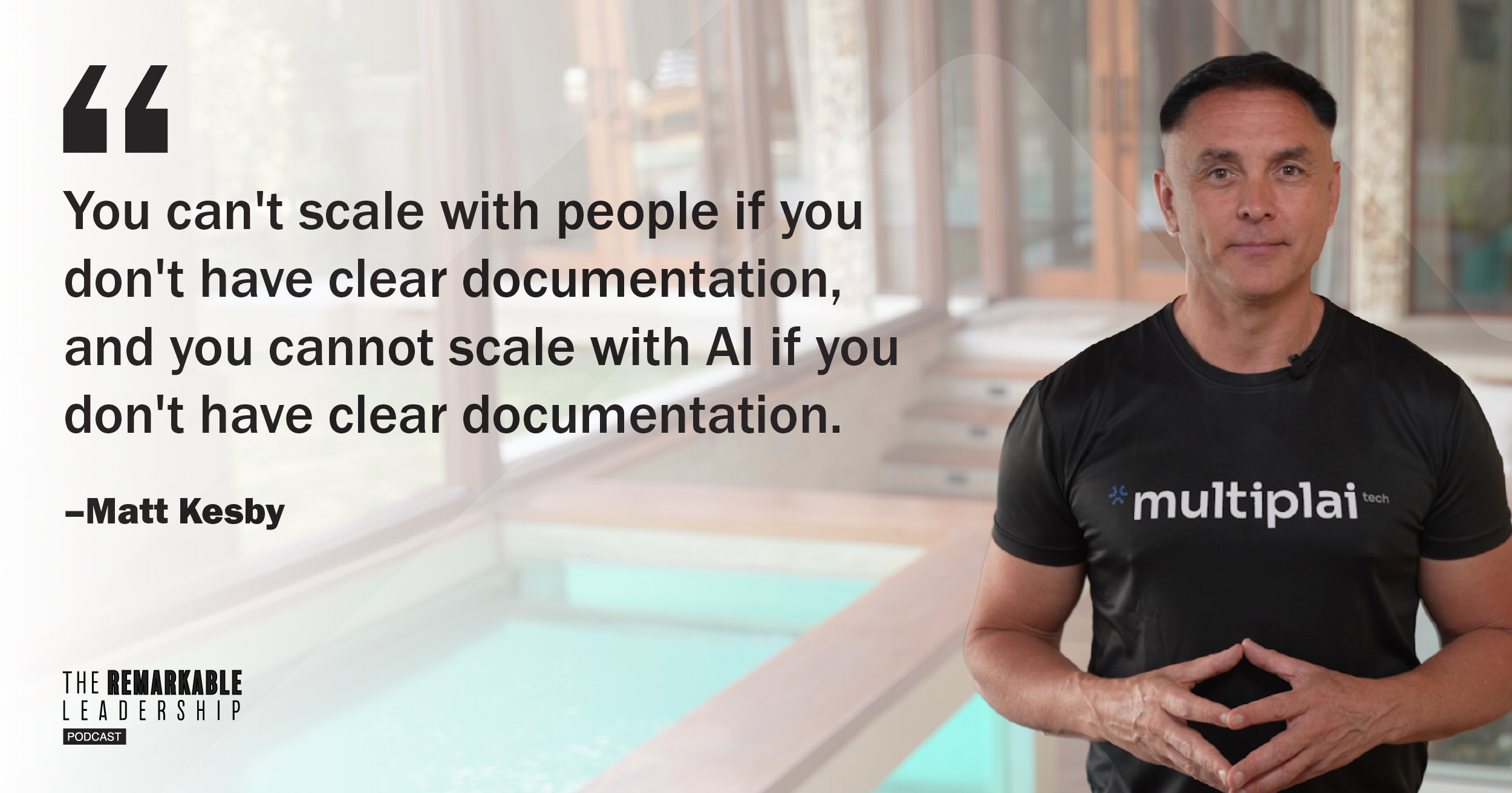
And as McKinsey says, 20% of the week is wasted on just asking these internal questions because we don't document well enough in business now, you can't scale with people if you don't have clear documentation, and you cannot scale with AI if you don't have clear documentation.
00:29:39:08 - 00:29:51:05
Kevin Eikenberry
That I think it's a pretty good place for us to and not because we want to. And there's so many things I would love to talk to you about, but I have a couple of final questions before we go. And one of them, is this the only thing you knew for sure? I was going to ask you.
00:29:51:07 - 00:29:54:10
Kevin Eikenberry
And that is, what are you reading?
00:29:54:12 - 00:30:26:23
Matt Kesby
Do you know, I one of the things I go back to most regularly is actually on communication. And because the frameworks and communication is so, so powerful and, because we're communicating to the AI, generative AI and so, I'm flipping at the moment between, rereading Nonviolent Communication by Marshall Rosenberg, interestingly, because it also leads to empathy, which we need more empathy through this time of change.
00:30:27:01 - 00:31:13:05
Matt Kesby
And, I'm actually rereading the seven Habits of Highly Effective People again at the moment, because I think that book will it will in old books like this will continue to reteach you again and again and again. You'll get another lesson out every time you learn it and why reading. And I'll read a lot of technical stuff, but why reading the communication piece becomes so important is in this time of rapid change, your leadership with people will be more needed than ever before, and the communication that you learn through those will actually help you to articulate with greater specificity and creativity and critical thinking and agility with with the AI at the same time
00:31:13:05 - 00:31:15:13
Matt Kesby
as well.
00:31:15:15 - 00:31:30:18
Kevin Eikenberry
Matt, be the author of untangling. I work at MIT. Where can they get the book? Where do you want to point them? Where can they connect with you? So you've got the actual one. I still got the I've got the what I've got is the valuable one because it's the uncorrected proof you got.
00:31:30:20 - 00:31:59:22
Matt Kesby
Yeah, the early one. We're proud to say that we're now USA today national bestseller. So jump on Amazon is probably one of the great places globally. You can get it there. So Amazon's the top spot to get it. And and yeah, if you need some additional help or guidance, you can jump over to, I could just com and would love to our, our certified consultants and coaches around that to help give guidance and organizations as well.
00:32:00:00 - 00:32:18:20
Kevin Eikenberry
That's AI coaches.com. You can find Matt on LinkedIn. You can go get your copy on Amazon. We'll have a links to all that as well as the other two books he's talked about in the show. Notes, as we always do. Before I say thanks to Matt and we say goodbye, I have to ask you the question.
00:32:19:02 - 00:32:47:00
Kevin Eikenberry
I ask you every single episode. If I if I am nothing, Matt, I am consistent. The question is, now what? So what did you get from this that you found interesting is a good question. A much better question is what action are you going to take because you were here. And maybe it's to think about, framing your ideas and your influence around value impact.
00:32:47:00 - 00:33:10:23
Kevin Eikenberry
Maybe it's around thinking about that question of tracking your tasks. Maybe it's about working to build your SOPs. I don't know what those are, just a few of the things I wrote down. I don't know what it is for you, but what? I know that until you do that step, you have no chance to make this conversation as useful to you, your team, and your organization's future as it could be.
00:33:11:01 - 00:33:27:06
Kevin Eikenberry
Which is, of course, why we did this to start with. So, Matt, thank you so much for being here. Thanksgiving is such a pleasure to have you. And, you know, we found that we have some mutual friends before we started, which just made this even more fun for me. So thanks so much for being here.
00:33:27:07 - 00:33:29:06
Matt Kesby
Thanks again. Thanks everyone. Have a great day.
00:33:29:08 - 00:33:41:20
Kevin Eikenberry
Hey everybody, that means it's time for this episode to be over. Which means make sure you're subscribed. Make sure you're liking and subscribing. Telling somebody else, and making sure you're ready to come back next week for another episode of the Remarkable Leadership Podcast.
Meet Matt
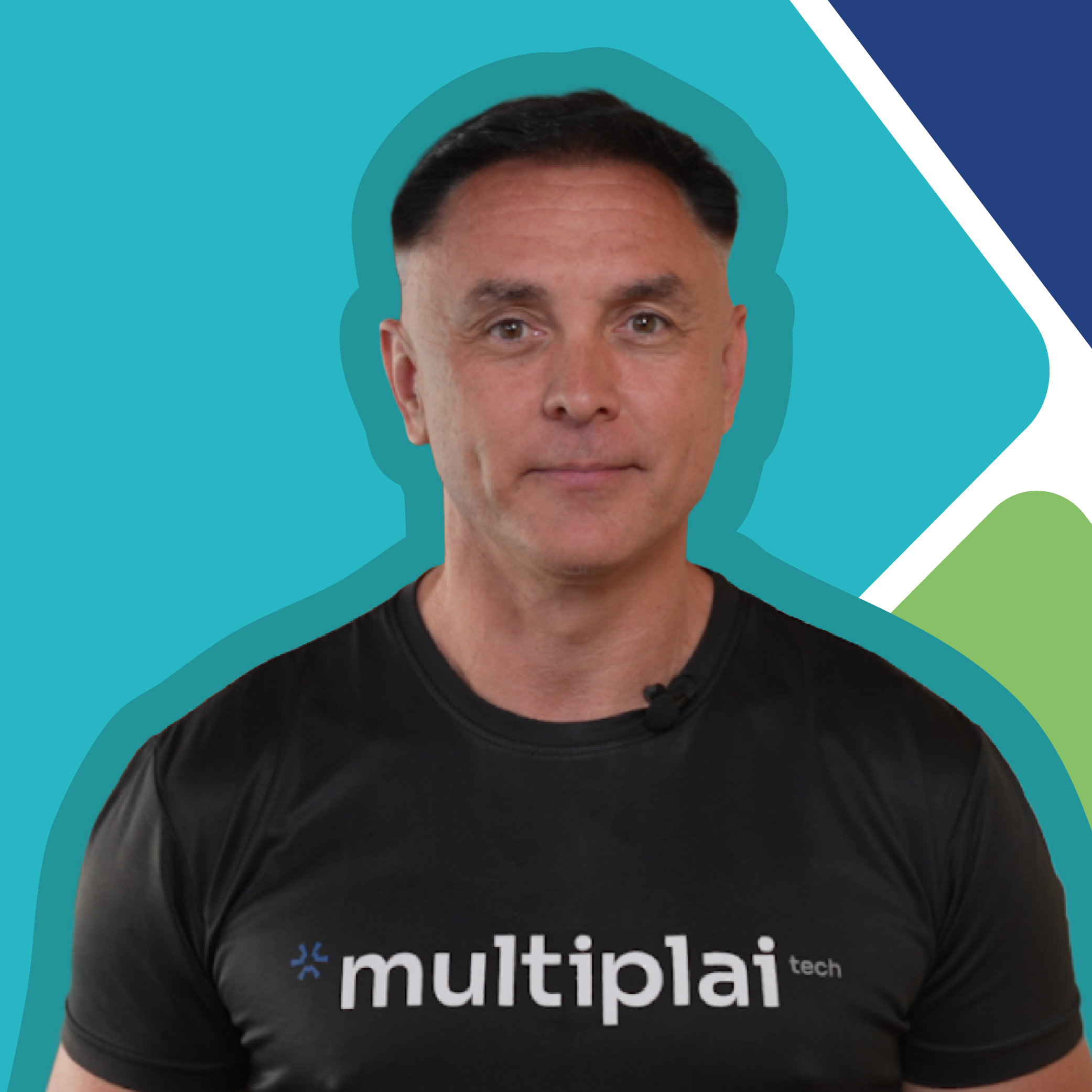
Matt's Story: Matt Kesby is the author of Untangling AI: Driving Business Success Through Enterprise Automation and AI Agents. He is a serial entrepreneur, AI transformation leader, and business strategist with over 29 years of experience helping organizations achieve triple-digit revenue growth and sustainable profitability. Based in Cebu, Philippines, Matt leads a team of over 1,000 professionals across 7 countries, using AI to accelerate operational, financial, sales, and marketing performance by up to 5x. Matt is the founder of GoTeam and Multiplai Tech, companies dedicated to helping businesses scale and people exceed. Additionally, he is Founder, Chief AI Officer and Master Coach at www.aicoaches.com. He has partnered with more than 300 businesses worldwide, building high-performing offshore support teams and embedding automation-driven solutions into their DNA. A member of the Forbes Technology Council, Matt is a trusted voice at the intersection of people, growth, and emerging technology.
Follow The Remarkable Leadership Podcast


Looking to Develop Stronger Leaders?
Want help developing the leaders in your organization? Reach out to explore how the Kevin Eikenberry Group can support your team.
Book Recommendations
Like this?
Join Our Community
If you want to view our live podcast episodes, hear about new releases, or chat with others who enjoy this podcast join one of our communities below.
Leave a Review
If you liked this conversation, we'd be thrilled if you'd let others know by leaving a review on Apple Podcasts. Here's a quick guide for posting a review.
