How much of your team’s struggle is really about the work and how much is about everything else? In this episode, Kevin talks with Dr. Liane Davey about why the real challenge many teams face isn’t simply workload, but “thought load”. Liane defines this as the rising cognitive demands, emotional burdens, and depleted energy reserves that make work feel heavier than it may appear. She explains how multitasking, constant urgency, oversized meetings, unclear priorities, and poor energy habits quietly drain performance and create more rework, stress, and burnout. She also shares practical ways leaders can help, including replacing urgency with true priority, creating space for focused work, taking real breaks, managing emotions rather than ignoring them, and modeling healthier boundaries.
Listen For
00:00 Introduction & today's topic: thought load vs. workload
01:38 Introducing Liane Davey, the "Teamwork Doctor"
02:48 Why Liane wrote Thought Load
04:01 The big idea: it's not workload, it's thought load
05:31 Why this problem is bigger now than ever
09:13 The myth of multitasking
11:42 Sense of urgency vs. sense of priority
13:19 Busy vs. productive vs. effective
16:34 Restoring your energy: waterfalls, wells, and cracks in the cup
20:51 Why breaks are for winners, not losers
22:30 How leaders unknowingly transfer thought load to their teams
25:16 Can AI help manage thought load?
28:46 One thing organizations can do: shrink teams, strengthen communities
31:04 What Liane is reading right now
32:06 Where to find Liane and her work
33:05 Kevin's closing challenge: now what?
00:00:08:23 - 00:00:33:20
Kevin Eikenberry
You want to do great work. Your team wants to do great work. You even hearing those statements? There is tension, the tension between great work and maybe more work. My guest today says that the workload isn't the real problem. That our problem is the thought load we carry and even our. And even transferring that thought load to others.
00:00:33:22 - 00:00:54:15
Kevin Eikenberry
That is our focus today. So welcome to another episode of the Remarkable Leadership Podcast, where we are helping organizations and their leaders grow and lead more effectively to make a bigger difference across their teams, communities, and the world. If you are listening to this podcast, you could join us on a live stream in the future on your favorite social media channel.
00:00:54:20 - 00:01:18:15
Kevin Eikenberry
You can find out when those live episodes are happening, so you can interact and learn these valuable ideas and insights sooner. And you can do that by joining our Facebook or LinkedIn groups. Just two of the platforms where these are live streamed. Just go to remarkable podcast.com/facebook or remarkable podcast.com/linked in. And if you do that you can get in the know.
00:01:18:16 - 00:01:38:05
Kevin Eikenberry
Be ready to go and join us and get this information sooner. If you like what you're hearing today and want help in developing the leaders in your organization. We should probably talk. And you can reach out, to me and get to me at info at Kevin eikenberry.com, and we'll schedule time to learn more about your needs and share how we might be able to help.
00:01:38:07 - 00:02:04:22
Kevin Eikenberry
And with that, I'm going to bring in my guest, and I'm going to introduce her. And then we're going to dive in to what you really came for, which is to get, some new insights. So, my guest today is Leanne Davey, and she is an organizational psychologist, a CEO, advisor, and keynote speaker with more than 25 years of experience researching and advising teams on how to perform at their best known as the Teamwork Doctor.
00:02:05:00 - 00:02:28:14
Kevin Eikenberry
She works with teams from the frontline to the boardroom, across industries and around the world. Through her work, hundreds of teams, within hundreds of teams, she has developed a practical, research based approach to solving the challenges that prevent teams from working effectively together. She is a New York Times bestselling author of You First. Inspire Your Team to Grow up, Get along, and get Stuff Done.
00:02:28:16 - 00:02:44:18
Kevin Eikenberry
The good fight. Use Productive conflict to get your team and organization back on track. And her new book, thought, load, Manage the Madness and free your team to do great work. And that will be our focus today. And Leanne, welcome.
00:02:44:20 - 00:02:48:04
Liane Davey
Thanks, Kevin. I'm excited to be here.
00:02:48:06 - 00:03:01:18
Kevin Eikenberry
So we should probably start with, you know, you've written other books and all that sort of thing. And I'm curious why this one? Like, why did you decide or what was the prompter to you to write this book?
00:03:01:20 - 00:03:35:10
Liane Davey
Yeah. So the easiest answer is because I needed to read it. But but I would say, the, the, you know, which is why most nonfiction authors, I think, write the books that are honest. Yeah. Honest. Right. I was really struggling with my thought load. And every one of my clients, this is what they were struggling with. And so the really the, the most succinct answer is because, I have walked around the world, with this organizational psychology, both lens and toolkit in my backpack for about 30 years now.
00:03:35:16 - 00:03:54:08
Liane Davey
And, you know, about every 6 or 7 years, there's a new problem that I see wearing that lens and that I think I can help with, with that toolkit. And and this was the one so, it's been a few years of making sure that I understood the problem. Well, both, you know, from the research and in the field.
00:03:54:08 - 00:04:01:00
Liane Davey
And then it was time to let's get this out there. People need help with their thought load.
00:04:01:02 - 00:04:09:07
Kevin Eikenberry
So, we'll we'll get to what thought load is. It's probably partly the same question, but the question is what is the big idea here?
00:04:09:09 - 00:04:34:04
Liane Davey
Yeah, the big idea is that we are, you know, our productivity is plateauing and declining for human productivity for the most part, we're seeing levels of engagement as low as they've ever been, levels of burnout and stress and and even heart attacks and stroke and all these things as high as they've ever been. But we keep zeroing in on claiming that it's a workload problem.
00:04:34:04 - 00:05:00:12
Liane Davey
It's because we're doing too much work. And the big idea is it's not the workload that's killing us, it's the thought load. And that's where we probably have to define the difference. Thought load is sort of everything, the work plus everything. So, one, the rising cognitive demands, just the good Jillian things from both work and home that you have to pay attention to that are dragging on your attention at every moment.
00:05:00:14 - 00:05:26:08
Liane Davey
Plus, if only it were just how much we have to pay attention to. But we also have these emotional burdens. We're living in a really emotionally dysregulated society. So we have all of that roller coaster. That's the load. And unfortunately we're carrying that load with depleted energy reserves. So that's the treacherous triad of thought load rising cognitive demands, increasing emotional burdens and declining energy reserves.
00:05:27:02 - 00:05:31:02
Liane Davey
And that's what we all feel like at the moment, I think.
00:05:31:04 - 00:05:49:17
Kevin Eikenberry
So that's what we're going to talk about, those sort of, sort of the combination of those three things, over the next little bit. So from, from your perspective, what and you've sort of said this, but I'd like you to dive deeper like, why is this a bigger problem now than ever?
00:05:49:19 - 00:06:12:16
Liane Davey
Yeah. So if you take each of the three pieces, so, you know, why is it such a big problem that our attention is being diluted? Well, technology has done a number on our attention, and it turns out there are lots of people in the world who profit from stealing our attention. So, you know, partly it's the, you know, the phones and the notifications and the technology.
00:06:12:22 - 00:06:35:04
Liane Davey
It's the tech stack we have to work with. So the average North American employee has to toggle between 1200 different screens every day. Plus it's it's like all of the things competing for our attention, our, our kids can reach us all day, every day. Now, my my parents, I could never reach my parents during the day. So that's one piece of the puzzle.
00:06:35:08 - 00:07:07:21
Liane Davey
Second piece of the puzzle is that emotionally dysregulated society goes back to the same theme, which is there are a lot of people who make more money when we're outraged, when we're upset, when something is triggering. And so like the amount of people in, you know, other countries in farms putting outrage farms, just making sure that people are getting comments or things in their feed to freak them out, plus real things, existential dread over the climate or wars that are happening or, you know, all of those sorts of things.
00:07:07:21 - 00:07:31:22
Liane Davey
So there's a lot going on there. Plus, at home, we're raising the most socially anxious generation of children ever. And then on the energy reserve side, it's just a lot to do with terrible habits. We're putting ultra processed food into our body, which does not actually give our brains the fuel they need, where we're doing terribly on sleep, often because we're sleeping beside those little machines that are, you know, competing for our attention.
00:07:32:01 - 00:07:53:17
Liane Davey
So it's really a whole bunch of reasons, I think, in organizations, a big sort, low driver is the matrix organization. You know, we used to work in a small team, and we had our job and we had our 5 or 6 teammates, and it was all very kind of vocal and controlled. Now we're in our seven slack channels coping with our priorities.
00:07:53:17 - 00:08:10:16
Liane Davey
And, and you know, seven other for, you know, committees were in or account teams we have to be a part of or so it's all of this the amount that is getting into our thought load every day is higher than it is ever been.
00:08:10:18 - 00:08:31:22
Kevin Eikenberry
Yeah, I think it's really an amplification. Right. Like in each of the three areas, there's there's always been stuff there. I think the thing here is the amplification, that's, that's, that's the key. And one of the things that you say in the book, you talk about the fact that the stock load stuff is hidden and you call it a hidden drag on sort of everything.
00:08:32:10 - 00:08:54:08
Kevin Eikenberry
And certainly in terms of a drag as I framed it and as your subtitle frames it as a drag on getting great work done, accomplishing great work. So and I'm pretty confident that anyone who's watching us or listening to us, you know, wants to do great work. I mean, I think most people do, but certainly when people are choosing this, to use some to for some of their time that they want to do great work.
00:08:54:08 - 00:09:13:08
Kevin Eikenberry
And so, and I think that, you know, this is probably resonating with people. And I wanted to say, liane, that I hoped it was resonating. I really hope it's not resonating, which means it's not a problem for you. I think the reality is it probably is. So, I want to kind of get into each of these areas a little bit.
00:09:13:09 - 00:09:35:13
Kevin Eikenberry
Yeah. And just dive into a few things that I thought were interesting. And I have been teaching people and talking about multitasking for a long time, that multitasking is a myth. And yet I'd like you to. And I'm always surprised that although it's getting less true that generally speaking, anytime I bring it up, you get a bunch of people and say, I'm really good at that.
00:09:35:15 - 00:09:51:09
Kevin Eikenberry
I'm really good at that. Almost with pride. That's getting a little less true. But I'd like your take on multitasking specifically as it relates to how it's actually furthering this problem. We think it's helping us. It's actually hurting us.
00:09:51:11 - 00:10:11:08
Liane Davey
Yeah. So I'd say the research suggests about 2 to 5% of people can do it. So maybe that if you have ten hands go up in the room, just give them a like, sure. So it is a multitasking is a great example of why we need all three pieces of that load. So, we're multitasking often starts us with something emotionally triggering.
00:10:11:08 - 00:10:33:04
Liane Davey
So we're feeling anxious about how long our to do list is. So it starts with an emotional reaction. The response to that is to try and divide our attention. Right. And like, oh, I can do this and this. I can attend this meeting and knock off three emails or whatever else. What happens is as we multitask, we get fewer things done, right?
00:10:33:04 - 00:10:58:03
Liane Davey
So we go slower and we make more errors, which means we probably have more firefighting and rework to do. As we multitask, we know we burn energy more quickly, so we're depleting ourselves as we do it. And interestingly, some some new research emerging that multitasking is creating mental health challenges that can, in the short term, even mask or mirror depression.
00:10:58:07 - 00:11:19:17
Liane Davey
You get these depressive symptoms because you're getting further behind, feeling like you're spinning your wheels, putting in so much energy and getting further behind. And that can have a depressive effect. So multitasking is terrible. Terrible. It will make your thought load higher and won't do much to reduce your workload.
00:11:19:19 - 00:11:40:17
Kevin Eikenberry
Yeah, I was trying to find the thing that you said directly that I wanted to comment as well. You're anxious about how much you have to do. You tend to multitask to alleviate anxiety. Ironically, it leaves you more anxious. So I that was to me the piece that, was, was an insight that I think that we don't often hear.
00:11:40:18 - 00:11:41:18
Kevin Eikenberry
And I love that.
00:11:42:00 - 00:11:59:03
Liane Davey
And I think it's so true, though, like I, I've talked to, I'd be interested if you hear this from your clients as well. I hear so many senior executives say to me, we just don't have a sense of urgency. My people don't have a sense of urgency. And when I look like now, I think the problem is we have a sense of urgency for everything.
00:11:59:08 - 00:12:01:02
Kevin Eikenberry
And having a sense of priority.
00:12:01:02 - 00:12:33:12
Liane Davey
That's right. That's what we don't have. And I caught myself where this sense of urgency is so physiological. It is so emotionally triggering. And one day I was going down the stairs to start my workday and trying to put on my hoodie while going down the stairs, wiping out, like, what am I doing? What was it in my body and my brain that decided I had to get to my computer so fast that I couldn't wait the three seconds to actually put on my hoodie and try to multitask.
00:12:33:12 - 00:12:54:16
Liane Davey
Stairs and and a very crazy garment. Right? But that's what it feels like, is that that's how urgent it is. I can't wait to get down the stairs. And that's my brain telling me a lie. But it's a lie that's being perpetuated across society. So leaders stop with the sense of urgency. Go to the sense of priority and focus.
00:12:54:18 - 00:13:00:23
Liane Davey
You'll see there's a lot of energy to move quickly. If people know just one thing, they can move quickly on.
00:13:01:01 - 00:13:19:18
Kevin Eikenberry
Urgent versus important. Urgent is always going to win. So we have to we have to make the important more of a touchstone for what we're really trying to do. And then you'll move that, you'll move the urgency in the right direction. And oh, by the way, back to your rework thing. We have to rework stuff. That's what creates that urgency.
00:13:19:18 - 00:13:45:08
Kevin Eikenberry
So, you talk about, you talked about the word busy. I say that busy is the most dangerous four letter word in the English language, because it's all about activity, which you say, and then you talk about being more productive, which is about outputs, but then you further say, when is it really just productive? But to be explicit, it needs to be effective.
00:13:45:13 - 00:13:52:03
Kevin Eikenberry
So talk about that just a little bit because, because people need to hear it.
00:13:52:04 - 00:14:13:12
Liane Davey
Yeah. So we, we worry in an activity trap and probably lots of people will relate that their manager still has them in an activity trap, which is just like how many hours you putting in, how responsive are you, how fast you reply to my email. That's just celebrating. Busy. Some of us have made the leap to go from, paying attention to activity, to paying attention to outputs.
00:14:13:12 - 00:14:30:06
Liane Davey
But I do think that that is a massive problem. Our society is very stuck on rewarding productivity. Who can churn out the most stuff without asking the hard question? Is that stuff moving the needle on the business outcomes that matter?
00:14:30:08 - 00:14:32:05
Kevin Eikenberry
It's the right stuff. It's back to what we were talking about.
00:14:32:05 - 00:14:53:11
Liane Davey
Before, right? And so, and this is a big AI challenge, right? Is we now have very many of us can now produce a lot of stuff with AI and a very short order. Right. But is it actually moving the needle on the outcomes, the ways we need the world to be different? You know, in some cases, yes.
00:14:53:11 - 00:15:13:07
Liane Davey
But in lots of cases, no. So does it matter that you're more productive if what you're producing is not creating the outcomes you look for? So watch that you don't fall into the productivity trap of patting yourself on the back for how much you are producing without asking the very hard questions about is that creating the outcomes?
00:15:13:07 - 00:15:38:00
Kevin Eikenberry
What am I doing? Right? So, some of you are watching this on LinkedIn and LinkedIn is a perfect example of that, right? Because now you got all these things that are showing up in your LinkedIn feed that people are feeling great about the fact that they created them. And don't they look pretty and yet they're not moving the needle, because mostly we're just scrolling on past them because they're not adding value.
00:15:38:05 - 00:15:43:02
Kevin Eikenberry
They're not really helping that that person's feeling like they got another thing posted.
00:15:43:04 - 00:16:12:04
Liane Davey
Yeah. Exactly. Right. And what did it do. Right. It just it did nothing. So it's really, really important that we and I, I know of this because I have made this mistake like 13 years of patting myself on the back for producing a blog every week. And, you know, 13 years ago, a blog was uncommon. People would read it and comment and think about it and change their behavior because of it.
00:16:12:06 - 00:16:34:07
Liane Davey
Now nobody's got time for that. Nobody's. And everybody in their brother has a blog. And so, I was so proud of myself for consistently producing and I lost sight of. But is it helping people achieve amazing things together? Because that's the outcome I'm after. So I've fallen into the productivity trap myself.
00:16:34:09 - 00:16:55:00
Kevin Eikenberry
So, the two parts of the book that, were most interesting to me and I think, you know, we could spend this whole conversation on the productivity stuff, and it was great value without question. And yet that's not where in this book I think you're adding the most sort of new value, if you will. Yeah.
00:16:55:01 - 00:16:56:01
Kevin Eikenberry
No disrespect to the.
00:16:56:01 - 00:16:57:16
Liane Davey
No, no, no, I agree with you. Right.
00:16:57:16 - 00:17:12:02
Kevin Eikenberry
So so I want to talk about the the energy piece specifically in restoring your energy. What what are a couple of things that people can do from your perspective to help restore their energy.
00:17:12:04 - 00:17:32:17
Liane Davey
Yeah. So the book takes it is three things. Thinking about it, as with the metaphor of filling your cup. So number one, fill your cup from waterfalls. And what that means is find places where the energy just flows through you. And you don't get that. If you're trying to do all your work in 11 minute chunks that are interrupted, that's the data.
00:17:32:17 - 00:17:54:02
Liane Davey
The average person can only go 11 minutes without their work being interrupted. So if you're only going 11 minutes, you are not finding the energy of working in flow. So create. Where is 90 minutes in your day, where all the distractions are off? Where you've set up everything mise en place before you start. So that you can just literally start and do a piece of work.
00:17:54:07 - 00:18:20:18
Liane Davey
So that's finding a waterfall. Second, tapping into your wells, because sometimes you can't feel your cup from a some beautiful waterfall. Sometimes it's, I gotta I gotta get the well, I gotta dig deep. And that's in understanding. So, on, thought load.com. I have this assessment that allows people to understand what is my specific kind of overwhelm and for, for different types of overwhelm, you probably have a different well of energy.
00:18:20:20 - 00:18:42:17
Liane Davey
So it's understanding what's your. Well. But I think the biggest thing for smart folks like your listeners is not knowing what your wellspring of energy is. It's changing the story you're telling yourself. Because most of us know. I know for me, it's reading fiction that reading fiction just takes me to another world. It gets me away from screens.
00:18:42:17 - 00:19:03:09
Liane Davey
It's really, really good for restoring me. And then I tell myself, it's book launch week. I don't, it's so busy. I don't have time to read this week. And that's the mistake. Because when you need the energy, when you need to carry a heavy thought load, that's the line that should come out of your mouth is it's so busy.
00:19:03:09 - 00:19:08:05
Liane Davey
I can't afford not to prioritize my reading this week. So that's a big one. Maybe you do.
00:19:08:05 - 00:19:10:05
Kevin Eikenberry
A little less, but you don't not do it.
00:19:10:08 - 00:19:29:10
Liane Davey
Right. And so I've been good this week. I actually finished a book this week, which I'm very proud of. So, and then the third one is if you go back to the cup metaphor, you know, you can be filling your cup all day long if it's got cracks in it. That's a huge problem. So the third thing you have to address is where are the cracks in your cup?
00:19:29:14 - 00:19:52:00
Liane Davey
Are there meetings you're going to that you haven't spoken in three years? You know, are there relationships you have that are really draining you? In what ways do you need to fill the cracks? Maybe a health issue you've been ignoring, right. So whatever the cracks are in the cup. So yeah, really thinking about I think so many of us are treating our energy right now like fossil fuels.
00:19:52:00 - 00:19:58:20
Liane Davey
It's like I have a finite amount, I'm burning it and then I'm going to be burned out. The tank is going to be empty instead.
00:19:58:22 - 00:19:59:16
Kevin Eikenberry
When you're dead.
00:19:59:16 - 00:20:24:01
Liane Davey
That's what I literally have heard. I did I was in I was in a meeting where somebody proclaimed in a 3.5 hour meeting, breaks are for losers, like, excellent. And of course, breaks are for winners. The Microsoft EEG studies on what, just ten minutes of break does for, you know, changing your beta waves and like it, it works and we're ignoring it.
00:20:24:01 - 00:20:51:14
Liane Davey
So, we need to treat ourselves as the ultimate renewable energy machines and behave that way. Because, you know, otherwise, we're just we're doing ourselves damage, and our work is not as creative. It's it's going back to old playbooks that aren't up for the task of what our world looks like now. So there's a lot of reasons why our organizations deserve for us to be renewing our energy.
00:20:51:16 - 00:21:10:05
Kevin Eikenberry
You know, one of the things that I do, and if I'm teaching a two hour, virtual session, yeah, we're going to take five minutes at the end of the first hour. If I'm teaching an all day workshop, seven minutes every hour. Yeah. And the number, the what you just described is the number one reason why. Yes.
00:21:10:11 - 00:21:27:04
Kevin Eikenberry
And and people go, wow, this is so great. Well, first of all, there's all sorts of reasons, but there's first of all, like, okay, normally people take one 15 minute break, and we're way better off with two sevens or in that same amount of time, maybe it's two and a half sevens, depending on how it would play out.
00:21:27:04 - 00:21:43:23
Kevin Eikenberry
But the difference is, it's tangible and it's it's even observable by me. As the, you know, as the person in the front of the room. And so we ought to be doing that for all kinds of stuff that we're doing. And it's not for losers. It's it's for winners.
00:21:43:23 - 00:21:44:15
Liane Davey
I always think.
00:21:44:15 - 00:22:01:18
Kevin Eikenberry
I would say if you're taking that 3.5 hour meeting, and if you took the breaks, you'd get the same amount done. You'd get better quality work in the same three and half hours. If 30 minutes, 7 or 20 minutes of it was a break, you'd get better work in it. Because we also know that the work expands to the time allotted.
00:22:01:20 - 00:22:30:06
Liane Davey
Oh yeah. Yeah, I just look at high performance athletes. Right? What a high performance athlete. Ever skip the rest? Never. Never. They're obsessed with getting their training schedule, their rest schedule, their, performance get right. Because that's how you optimize performance. So I'm not sure why we think we get high performance out in an office environment by just trying to, like, go for hours without a break.
00:22:30:08 - 00:22:51:07
Kevin Eikenberry
So, we have to have this. We have to have this conversation for a second. And that is and I hinted at it in the opening when I said, that the what our thought load is doing to us and how we're transferring it to others. So let's just take a minute or two, because I'm presuming, based on the title of this show, that most everyone here is a leader, positional leader.
00:22:51:09 - 00:23:04:02
Kevin Eikenberry
And so what are we doing as leaders that we are unaware of that's transferring this thought overload to our folks?
00:23:04:04 - 00:23:14:23
Liane Davey
Yeah. So take the three categories. So first we are failing to prioritize right. So we've lost the plot on the fact that the word priority is Latin for first.
00:23:15:01 - 00:23:22:07
Kevin Eikenberry
There was there was no don't get me going on this that, that there was no plural.
00:23:22:09 - 00:23:54:04
Liane Davey
500 years. The word priority existed in the language without a plural, because we understood, I think in the 80s, some consultant decided that it means important, not right. And now we can have seven priorities. So that's the first mistake that we're making. Not helping people with the really hard tradeoffs of what comes first. Second, we are making the mistake as leaders of thinking that emotions slow us down in the workplace and treating emotions as something unwelcome.
00:23:54:04 - 00:24:19:12
Liane Davey
When emotions are in the human operating system, and by trying to invalidate or deny or smooth over those emotions, we're we're probably leaving ourselves stuck with them. Either they'll become explosive or they'll go underground into covert resistance or passive aggressiveness. So I think the second thing we're getting wrong is that we're trying to we're failing to extract the data out of emotions.
00:24:19:14 - 00:24:43:16
Liane Davey
And in doing so, we're allowing the drama of feelings to kind of mount and take us down big, big problem. Plus, we're not addressing our own feelings. We're not making places for those. And so we're creating emotional contagion to our teams. Managers spread emotional contagion to their teams very readily. So that's the second thing. And the third, we're being terrible role models on energy.
00:24:43:18 - 00:24:51:08
Liane Davey
We're we're making it look like we should be able to go nonstop. We're responding to messages that, you know, 11:00 at night, we're answering.
00:24:51:08 - 00:24:51:19
Kevin Eikenberry
Do it.
00:24:51:21 - 00:25:11:21
Liane Davey
Don't do it. We're answering everything while we're on vacation. What are you doing? You're just saying to me, if I'm invested, I guess I better work on my vacation. Two terrible role models. So we're making a lot of mistakes because we haven't managed our own thought load. And when we have a very high thought load as a leader, we create a big wake behind the boat.
00:25:11:22 - 00:25:15:23
Liane Davey
So there's a big wake behind the boat. For a lot of us.
00:25:16:01 - 00:25:35:19
Kevin Eikenberry
100%. That's a great list of stuff. I mean, it's a great list of stuff to not do. So I, we talked about AI earlier and you talked about how, it could be hindering us. But I'm curious what your thoughts are about how about how I might be able to help us? Yeah. Manage our thought load.
00:25:35:21 - 00:25:56:00
Liane Davey
Yeah, I definitely think it can. I've been using an AI for a couple of things that have been super helpful to me. So one is it has access to my email, my calendar, my Google drives, all those sorts of things. And each morning at 7:00 am, I get the daily command center, and I've built into it what my goals are and what matters.
00:25:56:00 - 00:26:16:14
Liane Davey
I've even built in some of my foibles and what mistakes I'm likely to make. And then it says, here's what you need to be paying attention to. And my favorite thing is the last thing is something I'm likely to procrastinate based on what it knows about me and why I need to do it today. So it's lovely. That's very helpful because I'm not good at the detail.
00:26:16:15 - 00:26:34:23
Liane Davey
There's a lot coming at me and having I just monitoring all of that super good. The second thing is my work is very research oriented. And so each Sunday it goes, it's read all my books, it knows all my work, and I send it out into the world looking for new research that may be very topical or relevant.
00:26:35:11 - 00:26:53:02
Liane Davey
And it creates a digest and helps me to make sure I'm on top of the latest research. That's great. But what I'm really being careful not to do is when I'm writing for a little while, I would be like, oh, I'm going to write this blog and put it through, you know, ChatGPT and see what it says.
00:26:53:02 - 00:27:17:21
Liane Davey
And the first few times I was like, oh, this is so good, I love it, it's better than me. And then like the third time I was like, oh, it's all starting to sound very the same. And I started noticing that I would. I love alliteration and I would be looking for an alliteration and I wouldn't even think for 10s I would be like, okay, what are three words that start with F that?
00:27:18:02 - 00:27:44:00
Liane Davey
I was like, okay, I don't want to outsource my brain. So the thing for AI with me is which pieces of thought load are central to who you are, what you love, the value you bring. Don't give that thought load to AI, but what are the pieces of your thought load that are detracting from your unique value? That are a bad fit with your personality, your style, your skills, whatever.
00:27:44:02 - 00:28:02:12
Liane Davey
Give it that stuff. So that's what I've been working on for the last year or so, is to to get a better sense of the difference between those two lists, because if I think about what I did with Google Maps, I outsource my entire sense of space and place to Google Maps. And now I'm an idiot. I'm an idiot.
00:28:02:12 - 00:28:15:08
Kevin Eikenberry
I will have a love hate relationship with Google Maps. I love real maps. And second of all, I get in a car with someone who's going to go some place. They've been to 712 times and they put it in there like, don't, don't, don't do that.
00:28:15:10 - 00:28:24:15
Liane Davey
Well, you know why? Because they might have been there 712 times and they literally couldn't find it with it because they have never paid attention. They've never been present.
00:28:24:20 - 00:28:46:11
Kevin Eikenberry
I'm talking about they definitely knew before or now there's no but yes, you. But your point is equally equally accurate. So, people are some some people are here listening, thinking about this with the organizational head on. Right. Not just. So we've asked the and we've talked about some individual stuff. We talked about some leader stuff. But what what can organizations be doing.
00:28:46:13 - 00:29:02:07
Kevin Eikenberry
Yeah. Or is it. Well what is one thing organizations could be doing if someone's in the C-suite, in a senior leadership, a divisional leader role, a lead role, like, what's one thing that you'd recommend them to do besides buying a copy of your book?
00:29:02:09 - 00:29:35:15
Liane Davey
Okay. So that that'll be like 0.0. Now we'll make point one, not just one copy copies for everyone. Come on, come on. Okay, so if I go down to one just to make it something very practical. So I have a chapter called Shrink Teams and Strengthen Communities. I think that's the one. So cross-functional collaboration and matrix structures all of a sudden now I've been going to meetings where there's a meeting room with a table that fits ten people, and then there's a back row, like, what do you mean, the back row in a meeting?
00:29:35:17 - 00:29:54:04
Liane Davey
What are we doing at Amazon? They call it a two pizza meeting. That Jeff Bezos, that was one of his sort of founding principles is no meeting that you can't feed the participants with two pizzas. And we've really lost that. And so the problem is, first of all, it makes for a very ineffective meeting, right?
00:29:54:06 - 00:30:13:00
Liane Davey
Everybody's trying to say something and take up space so you don't get very far. But if you think about it from a thought load perspective, that's way too many things I have to pay attention to. But also importantly, now I'm I've got 20 people around the room who I don't really know I don't trust, they don't trust me.
00:30:13:00 - 00:30:39:09
Liane Davey
We're probably not giving each other the benefit of the doubt. A lot of my energy as a human animal is going to try to read their body language and like, are they do they like me? Do they? Am I in trouble with them? And all of that just is huge. Thought load was zero workload benefit. So shrink your teams down to very core groups of people that need to do the work, but then strengthen the communities.
00:30:39:09 - 00:30:55:16
Liane Davey
We don't have a very strong community so that I could tap into ad hoc knowledge I need, or so that I would say for leaders, the matrix has run amuck. We got to bring it back. Smaller teams, stronger communities.
00:30:56:00 - 00:31:04:09
Kevin Eikenberry
I love that. So, there's a question that you knew I was going to ask you, so I'm going to ask it right now. What are you reading these days, Liam?
00:31:04:11 - 00:31:27:02
Liane Davey
So I mentioned the importance of fiction to me. And I just just just finished a book called There Are Rivers in the Sky. And it was an absolutely beautiful, beautiful novel. So that was amazing. And then, I like I'm. This is about how far I always am from my book. Oops. From my books. So now I'm reading two really good ones.
00:31:27:08 - 00:31:30:00
Liane Davey
Dan Pontefract. I don't know if you've had Dan on the show.
00:31:30:00 - 00:31:31:14
Kevin Eikenberry
I know, Dan, I do, yeah.
00:31:31:15 - 00:31:58:11
Liane Davey
That's a great guy. So his brand new book, just out last week about how the future of work is gray and are we thinking about, the rubies in our workforce that are, how the workforce is changing? Super, super interesting. And then, this because when you are talking about thought load, you know, it's so interesting to me to know how much our brain is trying to keep up with while we're, sleeping so the brain never sleeps.
00:31:58:11 - 00:32:06:08
Liane Davey
Karen van Kampen, those are the two, nonfiction that are within arm's reach at the at the moment.
00:32:06:09 - 00:32:22:22
Kevin Eikenberry
We will have all of that in the show notes. Yeah, I hope that you will take advantage of that. So, now, the question, Leanne, that you most want me to ask is, where can people get Ahold of you? Where do you want to? How do you want to connect with people you've already mentioned thought load.com. I know you have other websites, so like where do you want to point people?
00:32:24:06 - 00:32:24:18
Liane Davey
To learn more.
00:32:24:18 - 00:32:25:19
Kevin Eikenberry
About you, your work in the.
00:32:25:19 - 00:32:42:11
Liane Davey
Book. So my work would be Leanne davey.com. But when you spell your name as crazy as I do, that is hard. So, thought local is easier and that's all of the tools around. Thought load. And then I would love the folks connected with me on LinkedIn, because that's where we can actually, you know, you can ask me a question.
00:32:42:11 - 00:32:48:02
Liane Davey
We can have a conversation. So that's some, some places to find me.
00:32:48:04 - 00:33:05:04
Kevin Eikenberry
All right. So before we go, everybody, now, I've been asking questions of Leanne, and now I have a question for you. Even though you can't really respond, this is the most important question of the day, and it's simply this. Now, what? You've been with us for 30 ish minutes, and the question is, what are you going to do with what you got?
00:33:05:14 - 00:33:29:20
Kevin Eikenberry
There. I guarantee you, if you were paying any attention, you have ideas about what you'd like to try or would like to go do, pick one and go take that action. Because until you take that action, nothing's going to change your thought loads not going to be made or operated in any way, shape or form. In fact, if you don't close that loop, that might actually add to your thought load, like pick a thing, go do it and get started.
00:33:29:20 - 00:33:39:15
Kevin Eikenberry
And if you do that, this will have been a much more beneficial time for you. I hope you'll do that. Leanne, thank you so much for being here. It was a pleasure to have you. Thanks. Thanks so much.
00:33:39:17 - 00:33:41:03
Liane Davey
Thanks, Kevin.
00:33:41:05 - 00:33:51:22
Kevin Eikenberry
And with that, everybody, that's the end for now. Which simply means I'll be back next week. And so next week, come join us again for another episode of the Remarkable Leadership Podcast. We'll see you then.
Meet Liane
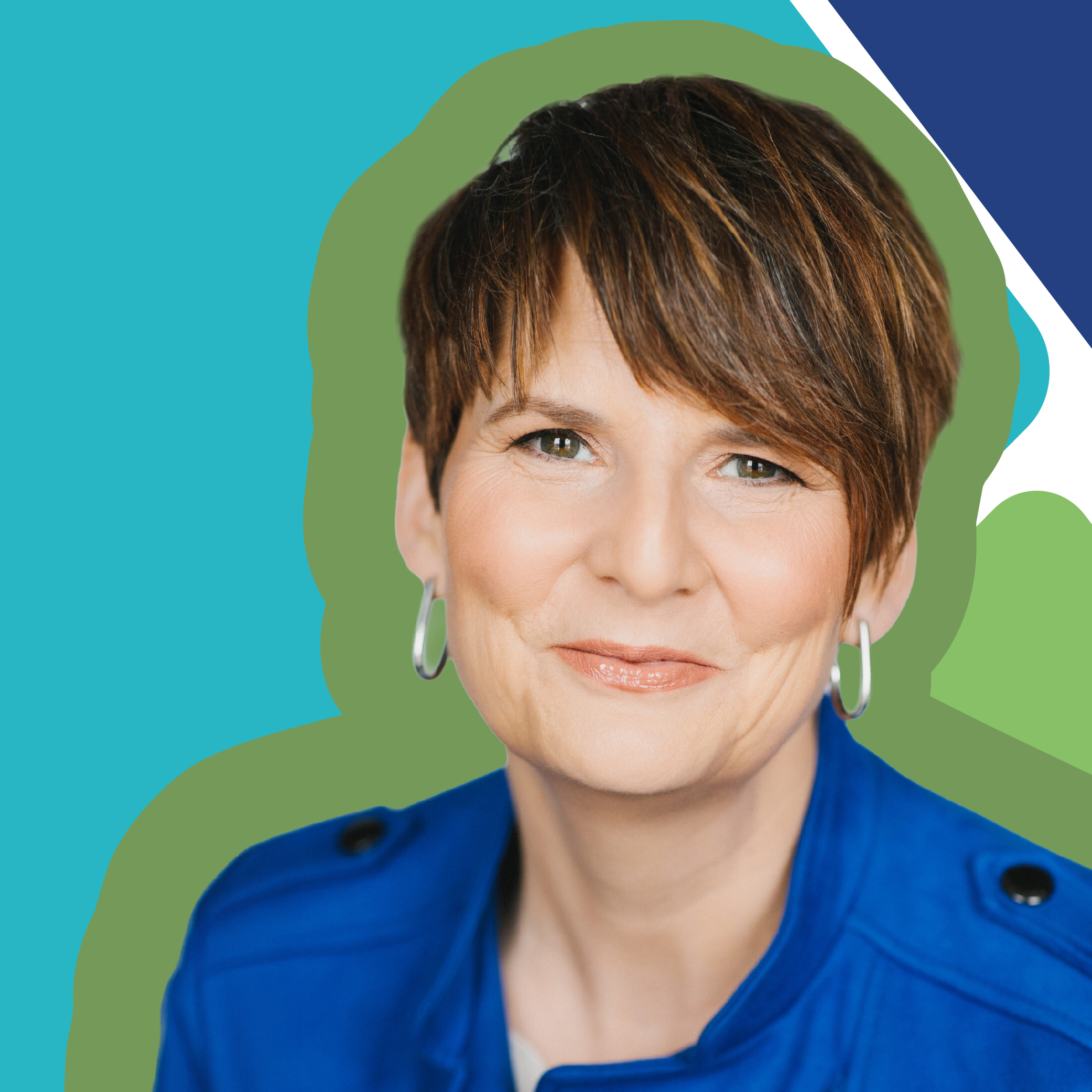
Liane's Story: Dr. Liane Davey is a New York Times bestselling author of You First: Inspire Your Team to Grow Up, Get Along, and Get Stuff Done, The Good Fight: Use Productive Conflict to Get Your Team and Organization Back on Track, and her latest, Thoughtload: Manage the Madness and Free Your Team to Do Great Work. She is an Organizational Psychologist, CEO advisor, and sought-after keynote speaker with more than 25 years of experience researching and advising teams on how to perform at their best. Known as the “teamwork doctor,” she works with teams from the frontlines to the boardroom, across industries and around the world, from Boston to Bangkok. Through her work with hundreds of teams, including 26 Global Fortune 500 companies (and counting), she has developed a practical, research-backed approach to solving the challenges that prevent teams from working effectively together.
Follow The Remarkable Leadership Podcast


Looking to Develop Stronger Leaders?
Want help developing the leaders in your organization? Reach out to explore how the Kevin Eikenberry Group can support your team.
Book Recommendations
Like this?
Join Our Community
If you want to view our live podcast episodes, hear about new releases, or chat with others who enjoy this podcast join one of our communities below.
Leave a Review
If you liked this conversation, we'd be thrilled if you'd let others know by leaving a review on Apple Podcasts. Here's a quick guide for posting a review.
