How can leaders use AI without allowing it to erode the human skills that make leadership effective? In this episode, Kevin talks with Johan Roos about the choice leaders face between amplification and erosion as AI becomes more integrated into our work. Johan identifies five essential human capabilities (curiosity, creativity, critical thinking, communication, and collaboration) and explains how leaders can use technology to strengthen rather than weaken them. They discuss the warning signs of cognitive offloading, why leaders need to model thoughtful AI use themselves, and how practical wisdom and human judgment remain essential for deciding what matters, what is right, and what will work in practice.
Listen For
0:00 Is AI a threat or a promise?
1:30 Meet Johan Roos
2:46 Why this book, why now
4:02 The big idea: amplify or erode
5:40 The 5 C’s of human capability
7:42 Which capability is most at risk?
8:50 Why everyone is starting to sound the same
10:21 Curiosity is the door to everything else
12:01 How to use AI to amplify creativity
13:56 What the calculator teaches us about AI
15:56 Warning signs start with the leader
19:01 Signs your team is choosing erosion
21:06 Cognitive overload vs. cognitive offloading
22:15 Practical wisdom and human magic
25:08 Why every chapter starts with history
27:19 What Johan is reading
29:26 How to connect with Johan
30:13 Now what?
00:00:08:20 - 00:00:36:15
Kevin Eikenberry
AI artificial intelligence. Is it the bane of human existence? Or a promise of an exciting and opportunity filled future? It could be either. It could be both. Rather than cheering or wringing our hands, we need to examine what we can do to live, work and lead with wisdom. Allowing human magic to win even when I seems pretty magical itself.
00:00:36:17 - 00:01:07:00
Kevin Eikenberry
Welcome to another episode of the Remarkable Leadership Podcast, where we are helping organizations and their leaders grow and lead more effectively and make a bigger, positive difference across their teams, communities, and the world. If you are listening to this podcast, you can join us in the future. For live episodes on your favorite social media platform. You can find out where those live, episodes, when those live episodes will take place, and find out how you can then join us by joining either our Facebook or LinkedIn groups.
00:01:07:00 - 00:01:30:19
Kevin Eikenberry
Just two of the platforms where these are, simulcast. And so you can go to remarkable podcast.com/facebook or remarkable podcast.com/linkedin to get all the scoop. And since you're here listening to this podcast, make sure you get my free Special Action Practical Action Guide that will help you get more value from this episode or any other podcast you listen to.
00:01:30:20 - 00:01:58:12
Kevin Eikenberry
Just go to Kevin I can berry.com/get more. I hope you'll do that so you can get more out of conversations like this one. Johan Roos is joining me today from strategic alliances and knowledge Management to Human Magic. Johan has written more than a dozen books across three decades on how organizations think, decide, and renew themselves. His latest is Human Magic Leading with wisdom in an Age of Algorithms.
00:01:58:18 - 00:02:22:12
Kevin Eikenberry
He co-founded the Imagination Lab Foundation with third generation owner of the Lego Group. He is senior advisor to the Global Peter Drucker Forum and a partner for R&D at Interface, and he advises, invests in leaders and institutions building for the next decade. He has taught strategy and leadership at business schools across Europe and the United States, and helped lead four of them.
00:02:22:13 - 00:02:40:23
Kevin Eikenberry
He is a professor and board member at Luxembourg School of Business and associate faculty member at Hut Ashridge. And he's my guest. He's also a forester. I just got to get that. I have to get that out there. That's the. Thanks, Kevin. You said that you own a podcast, that you own a forest.
00:02:41:01 - 00:02:46:20
Johan Roos
I'm delighted to be a forest owner and on be on your podcast, Kevin.
00:02:46:22 - 00:02:59:19
Kevin Eikenberry
Well, thanks for joining me. I'm so glad that you're here. Let's start, let's start with the book, because that's sort of what led us to being here. So why this book and maybe why now?
00:02:59:21 - 00:03:26:12
Johan Roos
I would say why last year? Because I worked a lot on this last year. And it was, I put the final touches to it in February and it was published in May. So I had a hunch last year that this topic is going to be really, really important. Now. And I think it is becoming important now because I feel like a lot of the things that's in the book is also now being talked about, which is great.
00:03:26:14 - 00:04:02:17
Johan Roos
It's gone from just focusing on the technology of the technology can do sort of for us, and it's magnificent ways which we can see every week to the conversation I'm really interested in, which is what does the technology do to us. And that's sort of where it is. And that was my hunch. And having spent decades as a professor, educator and sort of also as a business person and a leader, I think this would be a really important topic.
00:04:02:19 - 00:04:12:18
Kevin Eikenberry
So what's the big idea of the book? I mean, obviously I lead with wisdom. It's in the subtitle of the book, and we're going to get there before we're done. What's the big idea here?
00:04:12:20 - 00:04:37:01
Johan Roos
The the big idea is that we have a choice, how we use these amazing and awesome technologies to use some good American lingo. It is our choice. That is the message. And that is the idea. Every day we make hundreds of decisions or zillions of decisions a week, whatever, on how to use these tools. And that is the idea.
00:04:37:03 - 00:04:58:18
Johan Roos
The question is, do we use it in a way that makes us grow? I call that amplify or does it? Do we use these tools to make our jellybeans weaker and weaker? I call that erosion. The idea is the choice we have. It's a design thing that we can get to the bigger picture wisdom later.
00:04:58:20 - 00:05:19:22
Kevin Eikenberry
Well, yeah. So we're going to talk about those two things. It's it's the core idea of the book. The idea of there's either an erosion curve or there's an amplification curve. And, and there's a choice that we make, and I, I, I think it states it clearly. We talked before we went, before we, we turned on the tape, if you will.
00:05:20:00 - 00:05:40:17
Kevin Eikenberry
About how simple that idea is and yet how I think it's exactly right. So talk a little bit more about what those two things mean, because it's sort of it's sort of bifurcates what I said in the open. Right. People either think this is awesome or they think it's the worst thing ever. So talk a little bit more about those two curves and that idea and that choice if you would.
00:05:40:18 - 00:06:02:16
Johan Roos
Well, we can say we can start with the scary one. And that's not me saying it. There's a lot of doomsday sayers out there. And you know, you sell a lot of books by telling the world, we'll go under in a year or ten years. And that's not the point. And I think we now we can see there's some young people, bailing out of these big tech companies saying that I will kill us next year or in a few years.
00:06:02:18 - 00:06:24:09
Johan Roos
I think we can take that seriously. And I think there are some, some important things on the macro level. My focus is really on the micro level or organizational and leadership level. That's my perspective. I don't want to talk too much about the big thing, although I have some views. But but so so I said before, this is a choice.
00:06:24:10 - 00:06:47:15
Johan Roos
And the unit of analysis I use in the book are basic human capabilities, and I've simplified it to find the problem more and then a bigger overall one. And they're cute because they all start with the C, you know, curiosity and that curiosity, creativity, critical thinking, communication and collaboration. And you can say that those two is a little bit cluster.
00:06:47:15 - 00:07:15:17
Johan Roos
And the first three is one cluster. And then there's an overall one which is about judgment or wisdom. Judgment to me is the behavior of faith or of wisdom. But the that is what I'm talking about. And each one of them has this fork. Or you decide whether they fork in the amplification way or the erosion way with how you approach, think and work with AI tools, no matter what tools.
00:07:15:19 - 00:07:42:10
Kevin Eikenberry
You make an excellent point because you are talking about this on the micro level, and I think that it's easy to fall into either the erosion or amplification camp, if you will, on the macro level, but it's not nearly as useful, or immediately applicable for us then to get micro, to get personal, to get about us as a human, about us as a leader, about us as a team.
00:07:42:10 - 00:08:15:03
Kevin Eikenberry
Yes. And that's really where you go and where I'd like us to go in the time that we have. So, yeah, you've laid out the five, right? Curiosity, creativity, critical thinking, communication and collaboration. Let's just start here. Among those which if there's if this is a fair question, is there one of those five human capabilities where you think more folks are are choosing erosion rather than amplification?
00:08:15:03 - 00:08:23:10
Kevin Eikenberry
Like, is there one of those that concerns you more or could should concern us as leaders more?
00:08:23:12 - 00:08:50:17
Johan Roos
I'll try not to talk about all five because you pointed out that. But I but it is a way to start. But, I'll try to respond to it in a way. I usually respond to a similar question. And that is what happens. What happens first when people started to and we I'll say we when we started to figure out the amazing tools that they can actually respond to us and write stuff for us and do stuff for us.
00:08:50:19 - 00:09:12:21
Johan Roos
For me, it was I started to observe. I'm a writer and I've written a lot of stuff, but I start to observe people all starting to write in the same way, you know, they were starting to use their, you know, that, the M hyphen and all that stuff. You know, that was sort of they coded the chat to t hyphen to, to start with.
00:09:12:23 - 00:09:34:20
Johan Roos
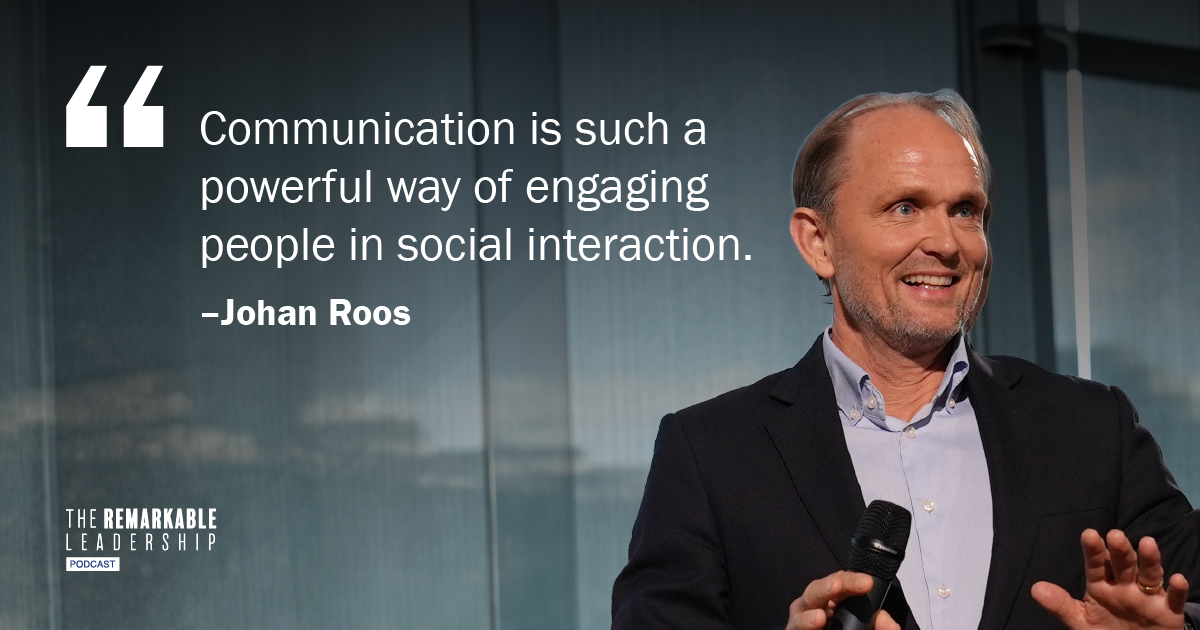
But like, everybody started to sound the same. You look at even now I looked at something the imports this they they all sound the same. It's the same lingo. So that to me is very disturbing because I think communication is such a powerful way of engaging people of of social interaction. You and I are sitting in flatland now, only two dimensions and well, I move.
00:09:34:20 - 00:09:57:18
Johan Roos
So there's another. But if we were together, at least I could smell you. I could see the micro shift in your face of, you know, of excitement or disgust or whatever, but that I would interpret. I can't really do that when I'm doing this right now. We add to it. I speak through a machine. The machine gives me the language to speak through, and I have friends who seriously using AI agents to read their emails.
00:09:58:00 - 00:10:21:20
Johan Roos
These are leadership, friends and agents writing the response, and they're leaning back and it's sort of so you're pushing yourself out of the famous loop, right? The human outside the loop. To me, this is very disturbing because I love communicating. I love the embodied communication that I talk so much about in the in the book. So that is, to me, an alert.
00:10:21:20 - 00:10:47:11
Johan Roos
I read an hour. It's already on Amber, you know, and it's getting to read the other one. If I I'll say, well, it's not, it's the curiosity. I put that first in the book, Kevin, that's, you know, and I argued for it that way because I said it's the door to the others, because if we start to, not the the machine will actually if we don't watch out, make us less curious.
00:10:47:13 - 00:11:08:13
Johan Roos
It sounds weird, but it is the whole idea of not hanging on to a question long enough. It's not to. It's to take the first reply you get and run with it because of stress and the bosses pushing you and everything and all of that. So. But communication and curious and curiosity are really important matters to our job.
00:11:08:15 - 00:11:40:13
Kevin Eikenberry
The thing that that I think about a lot is that all of these, you know, we're talking about AI, we're really talking about LMS, generative AI, you know, and, and they're all they're all predictive engines, which mean if we don't if we don't challenge it, if we just ask, I mean, for two years, the big thing was what's the writing, the right prompt, which isn't part of this, but but it's going to devolve to the average, which is not which is not what we want.
00:11:40:16 - 00:12:00:22
Kevin Eikenberry
Right? So if we can remain curious and we can then use it to spur our creativity, which is actually what I want to talk about back then, it can be to our great, great advantage. So what can we what is your advice around using these tools to actually amplify our creative ity?
00:12:01:00 - 00:12:21:11
Johan Roos
Well, it's to amplify all of them in a sense, and that is to use them. I'm a techno optimist. I'm not a doomsday. I love the technology, I develop, agents. I have agents running for me all the time. I've developed interview, based. I've used, what's called, voice assistants for interviews and stuff. Super amazing stuff.
00:12:21:11 - 00:12:43:07
Johan Roos
I did that a year and a half ago, and I love this technology, but my whole message is just be a little bit careful, just a little bit careful. That's all I'm saying. Just to do this. Amazing. It's fantastic. And, be at the forefront and be in awe. Just watch out because there is a there is a path of least resistance.
00:12:43:09 - 00:13:19:07
Johan Roos
And that is a slippery slope to not asking questions, asking why, asking for the reasoning behind whatever comes out of it. Because as you say, Kevin, what do you expect from a a and model that is trained on all the, the information that's out there? And you will get a median type of reply from this and you will say, wow, it's amazing because it's the recombination of words and some means, some parts of meaning is is amazing to you, but it's still a recombination of what's in there.
00:13:19:07 - 00:13:35:18
Johan Roos
And it can be super creative. I'm just saying, be careful, just act with responsibility and some caution. You know, it's like the old saying, right? Who? Whoever said that an American president or whatever, you know, trust but verify, be a little bit caution, you know. And so that's all.
00:13:35:20 - 00:13:56:03
Kevin Eikenberry
I, I love this I love what you said a minute ago to me is one of the things I would underline if I were listening to this myself. The path of least resistance is a slippery slope. Yeah, and I think that's right. Right. We can take any past check. Now, one of the things that I've observed is that people want to treat this technology different than anyone that's ever come before.
00:13:56:05 - 00:14:07:02
Kevin Eikenberry
And yes, every technology is different. But basically everything people are saying about this, people said about the internet, people said about the railroad, like it does. It doesn't matter which one.
00:14:07:02 - 00:14:08:09
Johan Roos
You the calculator.
00:14:08:11 - 00:14:22:15
Kevin Eikenberry
The calculator. That one actually crossed my mind a lot as I was reading out there. Like, because just this week, as you are here and I hear live, you know, OpenAI is saying that they've cracked one of the major mathematical.
00:14:22:17 - 00:14:24:08
Johan Roos
So that theorems.
00:14:24:08 - 00:14:42:06
Kevin Eikenberry
I'm not sure even when someone's going to correct me here. But but, you know, we worried about we're not going to do math because of a calculator, but what it did was allowed us to move past that to think differently about mathematical concepts. And I think the same thing applies here. Yeah.
00:14:42:09 - 00:15:05:19
Johan Roos
Yes, yes yes. No, no, no, I think we're evolving as a species. You know, we're building the way we think we do it not biologically that fast, but in our brain we can deal with things we couldn't deal with 50 years ago with the calculator. The the thing is like that, this is probably the time, at least in my lifespan or adulthood, things have gone really fast.
00:15:05:20 - 00:15:32:10
Johan Roos
You know, the amplitude and the speed are faster than than before. And I think this is shaking our system, our society's system, our organizational system, our managerial system. And I think also our self, our social system as well. Just just look at, you know, maybe you noticed the OECD report that came out yesterday about, kids, 15 year olds performance in school.
00:15:32:12 - 00:15:53:14
Johan Roos
Right. There's been a since 2000. There's a Pisa report, you know, and it shows a steep decline from 2015. And, the UN started earlier, but really it's happening. And people are saying, why can't people read and write these days? That's a good 20 years ago. Well, because we are training different things. You know, but it is a slippery slope.
00:15:53:14 - 00:15:55:23
Johan Roos
One has to just be careful, that's all.
00:15:56:01 - 00:16:14:23
Kevin Eikenberry
So what are the signs? And you could do it across any of the five C's. Or you want to talk about all five of them. That's fine as well. What what are some what are some signs. What are some Amber alerts to use your language earlier? For us as leaders, as we look at our teams and what they're doing or not doing, what are maybe some do it this way.
00:16:14:23 - 00:16:21:12
Kevin Eikenberry
What are some Amber alerts that we might see our teams choosing the erosion curve rather than the application.
00:16:21:18 - 00:16:52:00
Johan Roos
And this is a very good quite an interesting question. Do not be judgmental. This is an interesting question, Kevin, because we typically talk as leaders, you know, about your leaders and your team. And so I'll I'll start with you, Kevin, as the leader, you know, or me as the leader. And I always when I've led and I've been a leader of several organization and a part of leadership team more, I always thought about the leader as somebody who has to don't be an expert to everything, but you have to be a role model of something.
00:16:52:02 - 00:17:09:12
Johan Roos
So if you you are and I have some military training as well, this is the whole idea of you have to kind of show that you are opening a welcoming. You can't just sit in your office and say you have to show it. So I went on two months after ChatGPT was launched, I had launched a global task force in the organization.
00:17:09:12 - 00:17:26:06
Johan Roos
I was with that repeat from all over the world working on this, and I said this very simple. We welcome this and we try to get the best practices and ideas of how we can adapt and so forth. I don't have to be the expert, but I have to be there a little bit on the frontline and saying, we're in the town hall, you know, say, hey, this is what we do.
00:17:26:06 - 00:17:52:00
Johan Roos
I'm going to be let me I want to learn, you know, and all of this stuff. And I think that's, that's very important. So one amber light, one warning early warning sign is if the boss is talking about this without having a clue. I know all listeners here are at the forefront of this technology. There's no one that, would not be, of course, but there are some people that are still telling others to do this without having a clue.
00:17:52:02 - 00:18:13:19
Johan Roos
And I meet a lot of boards and I meet a lot of leadership teams, and I see anxiety, I see stress, and I see outright panic in some of the board where there's a lot of, what should we call it, more senior people that have been around for a while in certain worldviews that have a hard time thoroughly comprehending this.
00:18:13:21 - 00:18:21:07
Johan Roos
And I often urge them to talk to their children, or rather, grandchildren. I may say to see what this is about, because they.
00:18:21:09 - 00:18:21:22
Kevin Eikenberry
Of the person.
00:18:22:02 - 00:18:30:16
Johan Roos
Care, they have to to to know that. So this is very important. I start with the boss, Kevin. Then there are signs for the team, but I'll stop.
00:18:30:16 - 00:19:01:22
Kevin Eikenberry
Oh no, I agree 100%. You know, I, if we want to if we want our teams to use it to amplify, we have to be showing that ourselves for sure. So having said that first and looking in the mirror first after that, what are the things? Because I guess partly what I would say is, if you feel like your team is on the erosion choice, you should look in the mirror closer.
00:19:01:22 - 00:19:10:09
Kevin Eikenberry
But but beyond that, like, what should we be noticing seeing in our team members? What are the concerns that might raise a flag for you?
00:19:10:11 - 00:19:35:15
Johan Roos
There is some research more or less verified. You know, that talk about, what's called cognitive offloading and some call it cognitive risk. Surrendered. And there's even a term called brain rot, which I think is a little bit too extreme. But but this whole idea is that you start to not just think through the machine. So there is a very clear, clear indicator of this.
00:19:35:15 - 00:19:57:03
Johan Roos
If somebody comes to you with the report and it looks amazing and fantastic and you as a leader, probably more experienced, you have some questions you can draw on. You ask some of these questions. And this person had a hard time responding to follow up questions. This is typically the job of a journalist 20 years ago. They don't do that a lot these days.
00:19:57:03 - 00:20:33:07
Johan Roos
I think this notion of follow up questions. So you ask, well, what makes you say that? Not too many. Why? Question because you put people on the defensive. What makes you say that? Could you give three examples? What's the analogy? And when people have a hard time ground pounding their claims indicator, this may be extremely uncomfortable for a lot of junior people that have, that have now come out with, you can say three years of AI based training and not the kind of hardship that perhaps you and I had in at junior roles and so forth.
00:20:33:07 - 00:21:06:20
Johan Roos
This is can actually also result in what some people call the imposter syndrome, that junior people feel they have to labor so quickly, so good, because we put in their hands the tools of almost like experts tacit knowledge, without the experience that caused that created that expertise that that is super dangerous, in my view, super dangerous. So number one sign difficulty to answer follow up question or even reason without the machine.
00:21:06:22 - 00:21:41:17
Kevin Eikenberry
And that's a really, really good point. And and I'll admit that if we're not careful again, it's a slippery slope. We have to be really, really clear. Right. The the other thing that comes to my mind is, as we're having that conversation is because I had this thought the other day, you know, we talk about the, the cognitive offloading, but I actually am finding that the tools can help me with my cognitive overload, because if I've got so many things I need to work on, I can hand something to it and I can be careful and show it, choose what I hand to it so I can let go of that.
00:21:41:17 - 00:22:02:13
Kevin Eikenberry
And to me, I'm like you. It's not. It's not about writing an email. But I can hand something off. And and then when it comes back, then I can use my judgment. Then I can use my wisdom, which is obviously where I want us to start to land this plane. What are your thoughts about that? Like, that's the that's the end goal of the book.
00:22:02:13 - 00:22:15:06
Kevin Eikenberry
It's the end of the book is about creating practical wisdom. So, like, how do we hook all of this magic together, keep the human magic and, and really start to create practical wisdom.
00:22:15:08 - 00:22:44:04
Johan Roos
In the book, I talk about this concept of practical wisdom, which has been around for quite some for hundreds of years and is a ancient and it's across culture, actually, and it's called the hikma in Islamic scholarship, it's called viveka in embedding science. And you can talk about it in Confucian science and so forth. Everywhere. It's sort of a the idea of that we are capable of making decisions and taking actions that are good, not just from me, myself and I, but for the community.
00:22:44:04 - 00:23:03:18
Johan Roos
I'm part of a little bit of a more of a common or grander good or greater good. And I actually talk about it as an emergent property of these other human capabilities interacting. All right. That's that's the conceptual model for this. Now, Kevin, you said you can make a judgment because of your experience. Of course. So you have experienced a lot.
00:23:03:18 - 00:23:32:09
Johan Roos
You've got the scars to prove it. That is the idea of like, well, I should be able to make sort of an assessment of this and a judgment call, which is the behavioral phase of wisdom, because I've been there before, I've seen something similar. I've talked to some of my peers. I can do that now. Think of Kevin the Jaws, right, who do not have this experience, but they suddenly get the tools of, experts in their hands.
00:23:32:09 - 00:23:54:07
Johan Roos
You can say, I think it's very difficult to request or ask of somebody to make a sound judgment call if you don't have that experience. And this has been a this is something we learn gradually over as older as we get. Hopefully we don't have to look like yet. Gandalf or Dumbledore, you know, before we we are considered to be wise.
00:23:54:09 - 00:24:23:17
Johan Roos
But this idea of of gradually learning and failing and standing up and going, moving is very it's human life, right? It's lived experience. You talk now to machines that do not have or are capable of this lived experience, including assessing what matters, what is right, what resonates with people that you're working with, and what will actually work in practice.
00:24:23:19 - 00:24:48:20
Johan Roos
Those are important questions that I think we should hold on to. Right. And that to me is the, and manifestation of what's called practical wisdom. You know, one way or another. So I often tell people, hold on to your human magic, but if you start letting go of those four questions in particular, what is right? Because that is right versus wrong, good versus bad.
00:24:48:22 - 00:25:08:11
Johan Roos
You're in you're in dire straits in a sense that you've delegated moral assessments to a machine that does not have any capability, or making moral assessments, unless based otherwise than in the training data. But those are very important questions to hold on to.
00:25:08:13 - 00:25:27:09
Kevin Eikenberry
Which reminds me of one of the things everyone, before you go get your copy of Johan Rousseau's book Human Magic Leading with Wisdom in an Age of Algorithms, one of the things that you might expect in a book like this is a bunch of current stories from hot, high visibility companies, but rather at the start of every chapter.
00:25:27:11 - 00:25:51:16
Kevin Eikenberry
What you have is a story, from somewhere between 500 and 3000 years ago. And so it's, it's, it helps to frame what you on, what you just said. And it also is a way that that makes this book different, I think, than pretty much anything else. Anyone has read this year or maybe ever, when it's talking about these topics around AI.
00:25:51:18 - 00:26:08:17
Kevin Eikenberry
So, Johan, before we start to wrap up, is there anything that I didn't ask or that maybe that you wish I had asked? Or is there something else you want to mention that we haven't gotten to before we start to close?
00:26:08:19 - 00:26:23:21
Johan Roos
I'm fine. I hope people will enjoy the possibility to meet Socrates. Leonardo DaVinci. You know Cicero? Pericles. And, some constructions of, of, cathedrals, and so forth in the which was.
00:26:23:21 - 00:26:26:13
Kevin Eikenberry
My favorite, by the way. That one was my favorite.
00:26:26:15 - 00:26:28:07
Johan Roos
The cathedral builders.
00:26:28:09 - 00:26:29:16
Kevin Eikenberry
One was. Yeah.
00:26:29:18 - 00:27:01:04
Johan Roos
But it's just a page of to, to contextualize all of this, because I'm putting it in historical context because there's nothing new. There's nothing new. It's a reminder of our amazing human capabilities that people have pondered throughout history. I'm just adding a little bit and putting it in context of this amazing technology. And again, I'm a techno optimist, but the book also have a lot of practical help for small self-assessments, tips and tricks for what you can do that I hope is helpful, but feel free to visit the website.
00:27:01:04 - 00:27:05:02
Johan Roos
Human magic .10 any. Should you be interested in the book?
00:27:05:04 - 00:27:19:19
Kevin Eikenberry
That's all 100% human magic dot one before we before we give you a chance to talk a little bit more about the book, I've got a question that I told you I was going to ask you. What are you reading these days?
00:27:19:21 - 00:27:40:04
Johan Roos
It's interesting. I just got delivery of one book today and one book yesterday from Amazon, and. But I have two book next to my bed, and the one book is, in French. It's. I'm struggling with French. I did 13 years in Switzerland, but I try to keep the French up and running. It's a book by historical historian, a historian called Charlotte Summer.
00:27:40:06 - 00:28:05:08
Johan Roos
He's the ultimate French expert on D'Artagnan. You know, The Three Musketeers. D'Artagnan, who actually was a living person. He was. 400 years ago, there was a D'Artagnan, romanticized in The Three Musketeers that I'm reading, and it's taking me a bit of time, but it's because it's tough. The second book I have on the shelf that I'm reading in parallel is a book from 1953 by Isaac Asimov.
00:28:05:08 - 00:28:24:05
Johan Roos
The Amazing Asimov. And I do refer to Isaac Asimov, some, some other high quality science fiction authors in the book as well at the time, but it's called it's in Swedish, it's translation, but it would be The Cave of Steel's. It's actually about an interaction between a police officer and a very capable robot. And it's all about their interactions.
00:28:24:05 - 00:28:48:07
Johan Roos
So they're trying to solve a case. So this is a few years ago. Unbelievable. Very, very, very eagerly. Yeah. Now, the two books I got was, yesterday, I got, Ponzi and other short stories by this Pascal. You know, the mathematician, mathematician and the prodigy who would, 12 years old, solve all kinds of amazing problems.
00:28:48:09 - 00:29:14:09
Johan Roos
And the one I got today is a novel by one of my favorite novelists, which is, Richard Harris, who's written Pompeii and or the conclave and all the some of the stuff. I've read all of his books, and I love all of them except one. The new one is called Agrippa, and it's, about, Octavian, Emperor Augustus, who became the emperor of Rome after beating up everybody, his best friend.
00:29:14:09 - 00:29:26:11
Johan Roos
They basically ruled the Roman Empire for 20 years together. I can't wait to get them that. I get goosebumps when I think of it because I'm fascinated, like everybody else, about the Roman and the Roman Republic. Those are the four books.
00:29:26:11 - 00:29:43:18
Kevin Eikenberry
And there you go. Well, we're not going to keep you much longer. Then you can go dive in if you want. But you've told us that, you know, people can get the book anywhere. Fine books are sold. They can go to human magic, that one. Anything else you want to say about connecting with you, getting connected and anything else that you want to share?
00:29:43:20 - 00:30:13:14
Johan Roos
Feel free to ping me. I'm on LinkedIn. I'm not on Facebook or anything, or I'm on LinkedIn as a doctor. Dr. Johann Ross, you will find me Johann s because I have like in Sierra, I have a more complicated family name. I only use euros. Feel free to ping ping to me. I put a lot of stuff on, on LinkedIn and, and, and on Eurosport one, you will find all of my podcasts, publications, of which there's a lot the last three months based on the book.
00:30:13:15 - 00:30:33:10
Kevin Eikenberry
Johann Roos that one and human Magic, that one. Everybody, before we go and I say goodbye to Johann and all of you, I have a question that I'm going to ask all of you, my fabulous listeners and viewers. The question is this is I ask you this every week. The question is now what? Like, what are you going to do now?
00:30:33:12 - 00:30:55:07
Kevin Eikenberry
Like listening to us for 30 minutes is one thing. Taking advantage of it by acting on something will make all the difference. So the question for you is to think about what was the one thing that you got today that you're going to act on. Maybe you need to act on looking in the mirror about whether you're you're in the erosion curve or the amplification curve.
00:30:55:09 - 00:31:11:11
Kevin Eikenberry
I don't know. I'm not judging you or anything along those lines. I am asking you, though, urging you to take action on something from today, because if you do, it will have been a far better use of your time. Johann, thanks so much for being here. It was such a pleasure. I enjoyed our conversation a great deal.
00:31:11:12 - 00:31:14:05
Johan Roos
Kevin. Thank you for having me.
00:31:14:07 - 00:31:32:01
Kevin Eikenberry
Well everybody, that's a that's a wrap for today. If you found this useful, invite somebody else. If you're not subscribed and you just found us. Luckily. Thank you. Do subscribe. You know all that. Wherever you're watching, listening, make sure you're subscribed so you don't miss any future episodes of the Remarkable Leadership Podcast.
Meet Johan
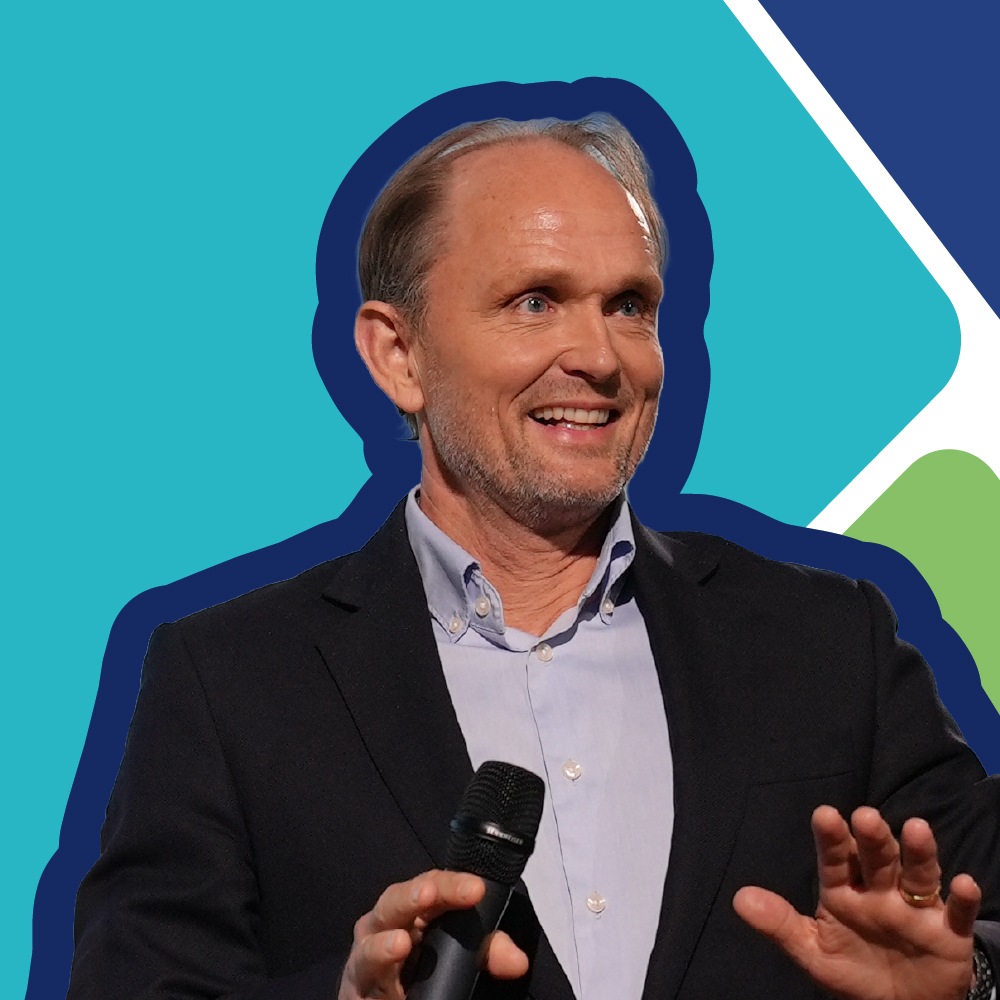
Johan's Story: From strategic alliances and knowledge management to Human Magic, Johan Roos has written more than a dozen books across three decades on how organizations think, decide, and renew themselves. His latest book is Human Magic: Leading with Wisdom in an Age of Algorithms. Johan co-founded the Imagination Lab Foundation with the third-generation owner of the LEGO Group. He is Senior Advisor to the Global Peter Drucker Forum and Partner for R&D at Interface, and he advises and invests in leaders and institutions building for the next decade. He has taught strategy and leadership at business schools across Europe and the United States, and helped lead four of them. He is Professor and Senior Strategic Advisor at Luxembourg School of Business, and Associate Faculty at Hult Ashridge. His work lives where rigorous research meets the realities of running an institution.
Follow The Remarkable Leadership Podcast


Looking to Develop Stronger Leaders?
Want help developing the leaders in your organization? Reach out to explore how the Kevin Eikenberry Group can support your team.
Book Recommendations
Like this?
Join Our Community
If you want to view our live podcast episodes, hear about new releases, or chat with others who enjoy this podcast join one of our communities below.
Leave a Review
If you liked this conversation, we'd be thrilled if you'd let others know by leaving a review on Apple Podcasts. Here's a quick guide for posting a review.